|

Map of the Kingdom of Harak | Kingdom of Harak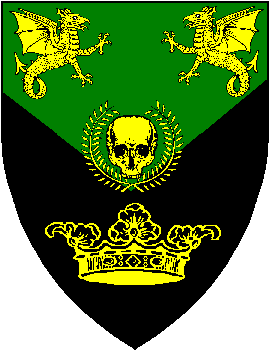
Flag and Heraldry of the Kingdom of Harak |
Population: The Kingdom of Harak has a population of approximately 250,820,528. The racial breakdown is 95% human and 5% other races, with no elves allowed within the kingdom. This racial composition has led to a human-dominated culture, with a focus on ensuring human supremacy in all aspects of life.
Government: Harak is a monarchy ruled by King Sigmar Corvase, a powerful warrior-priest who harbors a deep hatred for elves. Despite his desires to see elves eradicated, he understands that it is nearly impossible due to the strength of the Elven King and his armies, as Harak was previously defeated by the elves under Sigmar’s great uncle, Seth Corvase. Sigmar presents himself as a reluctant politician, maintaining a fragile peace with the elves to prevent another catastrophic war. However, he secretly plots and strategizes, seeking any opportunity to one day rid the world of elves. Sigmar’s rule is defined by both his cunning and his devout religious belief in a blend of light and dark forces, which guides his decisions. His government is supported by a council of military leaders, priests, and influential landowners. The Church of Duality, which worships both light and dark aspects, is intertwined with the ruling structure and plays a significant role in the kingdom’s direction.
Military: Harak maintains a strong military, with a special focus on defense and conquest. Sigmar Corvase himself is a warrior-king, often leading his armies in person. However, the emphasis on agricultural productivity means much of the kingdom's military strength is deployed to protect the food supply and ensure stability within its borders.
- Sigmar’s Paladins of Light and Dark: An elite order of warriors who combine holy and dark magic, embodying Sigmar’s dual religious doctrine. These warriors are feared for their ferocity and their ability to use both healing and destructive magic.
- Harakite Farmers' Militias: Since Harak is a breadbasket kingdom, many of its soldiers come from farming backgrounds. The militias are highly disciplined, protecting the vast farmlands from raiders, monsters, and external threats.
- The Iron Shield: Harak’s heavy cavalry unit, known for its impenetrable formations and ability to quickly mobilize across the kingdom’s sprawling plains.
- Frost Reavers: Trained for cold-weather combat, these warriors defend Harak’s northern borders, where the kingdom meets harsher climates and mountainous regions.
Though Sigmar desires the destruction of the Elven Kingdom, Harak currently avoids direct military confrontation, focusing instead on defending its land, especially its valuable farmlands, while subtly gathering strength for a future opportunity.
Geography and Climate: Harak is located in a fertile region of wide-open plains and gently rolling hills, ideal for farming. The southern areas of the kingdom are known for their temperate climate and rich soil, making Harak the agricultural heart of the region. These southern lands are where most of the kingdom's wealth is generated, and they produce vast quantities of wheat, barley, vegetables, and livestock. The northern part of Harak is more rugged, with mountainous terrain and colder climates. Though farming is less prominent here, the north contains valuable mineral deposits, which are mined and exported. This duality of terrain, fertile farmlands in the south and resource-rich mountains in the north, makes Harak a self-sustaining and economically powerful kingdom.
Economy: As a breadbasket kingdom, Harak’s economy revolves around agriculture. Its farmlands are highly productive, and the kingdom exports massive quantities of grain, vegetables, and livestock to neighboring regions. Harak is known for producing some of the best-quality food in the region, making it a critical supplier for kingdoms that lack fertile land. In addition to agriculture, Harak’s economy benefits from its northern mines, which produce iron, copper, and other metals. While Harak focuses mainly on farming, the wealth from its mineral resources allows it to maintain a well-equipped military. The kingdom has trade agreements with its human neighbors, but it is cautious when dealing with the Elven Kingdom. Harak avoids trading directly with the elves, relying on intermediaries for goods that cannot be produced domestically.
Culture: The culture of Harak is heavily centered on both agriculture and religion. The majority of the population works the land, with farming families holding a high social status. Farmers are respected for their vital role in sustaining the kingdom’s prosperity. The government provides extensive support to agricultural efforts, including protections for farmsteads and incentives to expand production. Religion also plays a significant role in daily life. Harak’s people worship a blend of light and dark deities, following the tenets of the Church of Duality, which teaches balance between opposing forces. This duality reflects in the kingdom’s values: while they prize hard work, discipline, and community, there is also a darker undercurrent of ambition, conquest, and a desire for vengeance against those who have wronged them, especially the elves. Due to the kingdom’s isolationist policies regarding elves, Harak’s people harbor deep resentment toward them, seeing elves as rivals to be distrusted, even though Sigmar’s political stance keeps them from open conflict. Despite the peace that Sigmar maintains with the Elven Kingdom, tensions run high, and trade between Harak and elven lands is minimal. Harak keeps its borders tightly controlled and only engages with trusted allies. Much of the kingdom’s wealth from farming is reinvested into its military and religious institutions.
Religion: Harak’s people follow the Church of Duality, a religious order that worships both the forces of light and dark. This reflects the kingdom’s belief in balance: while the people strive for prosperity and peace, they also recognize the darker aspects of ambition, vengeance, and power. Sigmar Corvase himself is a devout practitioner of this faith, and the church holds significant influence in the kingdom’s politics and culture. The religious doctrine encourages both hard work and the acceptance of harsher realities, such as war and survival. Farmers often invoke blessings of light for bountiful harvests, while soldiers and the more ambitious seek the favor of the darker aspects for strength and victory in battle.
Notable Locations:
- Sigmar’s Capital (Diquinndre): The political and religious heart of Harak, where King Sigmar Corvase holds court. The city is known for its impressive temples to the dual gods of light and dark.
- The Southern Farmlands: Vast expanses of fertile fields, producing the grain and livestock that form the backbone of Harak’s economy. These lands are heavily protected by the Harakite militias.
- Northern Mines: Though less hospitable, the northern regions are rich in minerals, contributing to the kingdom’s wealth and supplying the forges that arm the Harakite military.
History of the Kingdom of Harak: The Kingdom of Harak like most of the continent, was once part of the Elven Kingdom of Kael. For centuries, it flurished, but internal strife and a growing sense of entitlement among its nobility sowed the seeds of its downfall. Secondly, the ancient Kingdom of Myretch, a kingdom of Human Wizards,tried to dominate the entire continent and loosed hundreds of tribes of Humans. As KAel enevidably faltered one of its regions, Rhyanne became the only elven kingdom left on the continentwith Harak being it's southern Duchy. Over time the Humans, initially marginalized and viewed as mere subjects, began to coalesce under the banner of Mikal Corvase, a charismatic warrior. Mikal’s vision was clear: unite the disparate tribes against their Elven overlords.
The Great War: The turning point came during the Great War, a cataclysmic conflict that erupted as the Humans sought their freedom. Mikal led the charge against the Elves, igniting the spirit of rebellion. The brutal battles culminated in the Battle of Black Fire Pass, where Mikal's strategic genius shone. It was here that he earned his place in history, emerging victorious despite overwhelming odds. This battle marked the official birth of the Kingdom of Harak, as Mikal proclaimed himself king, establishing the Corvase dynasty.
Legacy of Mikal Corvase: Mikal’s rule was characterized by both valor and vision. He recognized the need for alliances, fostering a bond with the Dwarfs that would become crucial for Harak’s development. The Oath of the Dwarfs solidified this partnership, establishing a pact of mutual defense and trade that benefited both races. Mikal also set the foundation for Harak’s military traditions, emphasizing the importance of strength and honor, enshrined in the annual Trial by Combat, which became a symbol of Harak's resolve.
The First Millennium:
As centuries passed, Harak flourished but faced constant threats. The rise of powerful factions within and the encroachment of external enemies, such as Orcss and Beastmen, tested the kingdom’s resolve. Despite these challenges, the Corvase lineage remained resilient. They expanded their territory and influence, forging new provinces and reinforcing the central authority of the king.
Decline and Turmoil: The Second Millennium was marked by internal discord. A series of weak rulers led to a fracturing of power among the noble houses. Ambitious lords vied for dominance, undermining the unity that Mikal had fought so hard to achieve. Amid this turmoil, a malevolent cult, The Order of the Black Flame, emerged, seeking to exploit the chaos for their sinister agendas. They performed dark rituals and sacrificed innocents, spreading fear and paranoia among the populace. The many provinces split off to form their own kingdoms.
The Rise of the Death Knight: Many years later, in the shadows of Harak's history lurked Seth Corvase, a duke turned death knight. Once a celebrated warrior, Seth was consumed by ambition and jealousy, leading him to commit atrocities against elven communities. His descent into darkness served as a grim reminder of the fragility of power. Seth’s reign of terror sparked a renewed conflict between Humans and Elves, igniting old hatreds and further complicating the kingdom's political landscape.
A Resurgence of Faith: Faced with the chaos wrought by Seth and the cults, a revival of the Church of Light and Dark emerged as a counterbalance to the darkness. The church preached unity, faith, and the righteousness of Harak’s cause, offering hope to the beleaguered citizens. The clergy gained political influence, using their power to rally the populace against both internal and external threats, while also calling for a return to the martial traditions of their forebears.
Modern Era: In the contemporary period, the Kingdom of Harak stands at a crossroads. Under the rule of King Sigmar Corvase, descendant of Mikal, the kingdom faces new challenges, including the resurgence of old foes and the insidious growth of cults. The whispers of skaven in the shadows and the everpresent threat of war force the kingdom's leadership to navigate treacherous waters. Paranoia grips the hearts of the citizens, yet the spirit of resilience remains strong.
Trial by Combat in the Kingdom of Harak
The Trial by Combat is a revered and brutal tradition in the Kingdom of Harak, serving as both a method of justice and a means of determining leadership. Here’s a detailed overview of how it works:
- Purpose and Significance: The Trial by Combat is held to resolve disputes, challenges to authority, or to elect a new king. It embodies the kingdom's martial culture, emphasizing strength, honor, and the divine right of the strongest.
- Challengers: Any noble or warrior can challenge the reigning monarch or another noble to a Trial by Combat. Challenges can arise from personal grievances, political disputes, or even as a means to claim a title or territory.
- Rituals and Preparation: Before the combat, rituals are performed to invoke the favor of the Church of Light and Dark, with participants seeking blessings and guidance from their deities. These rituals also serve to legitimize the trial and ensure a fair contest.
- The Arena: Trials typically take place in a designated arena, surrounded by spectators, including nobles, commoners, and clergy. The atmosphere is charged with tension, as the outcome of the combat could alter the kingdom’s power dynamics.
- Combat Rules: The combatants may choose their weapons, though a code of honor mandates that the fight remains fair—no ambushes or underhanded tactics. The combat can be to the death, though yielding is also an option, allowing for mercy and maintaining honor.
- Judging the Outcome: A panel of judges, often composed of respected nobles or clergy, oversees the trial to ensure the rules are followed. They have the authority to intervene if necessary, although such interventions are rare.
- Aftermath: The victor is celebrated as a hero, receiving accolades and possibly a title or land as a reward. The defeated may face exile, death, or be granted mercy depending on the circumstances and the outcome of the trial.
- Cultural Impact: The Trial by Combat is deeply ingrained in Harak’s culture, symbolizing the values of strength and honor. It reinforces the idea that power belongs to the strongest and that justice is served through might.
In essence, the Trial by Combat is not just a mere contest of strength; it is a vital aspect of Harak's identity, reflecting its tumultuous history and the warrior spirit that continues to define its people. The history of the Kingdom of Harak is one of triumph and tragedy, shaped by the valor of its founders and the struggles of its people. As Harak looks to the future, the echoes of its past serve as both a warning and a guide, reminding all of the price of ambition, the weight of legacy, and the power of unity in the face of adversity.
Return to Maps and Floor Plans
Return to Arethane
|

