
A)
1. The motion of the particles is opposite to the direction of the wave in a traverse wave.
2. Water ripples, earth quakes (Primary Waves) and Musical instruments strings
3. In longitudinal waves the particles generally move parallel to the direction of the wave
B)
4. The speed of a wave moving in a constant medium is not affected by the amplitude of the wave.
5. The speeds are always constant, irrelevant of the amplitude of the wave.
C)
6. The larger the wave length the lower the frequency.
D)
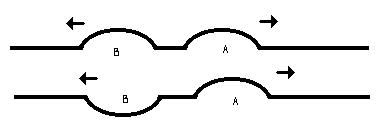
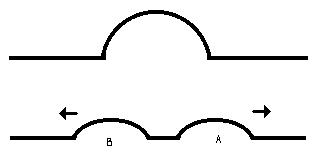
7. The magnitude of the displacement is the combination of the amplitude of both of the waves.
8. The magnitude of the wave when two oppositely phased waves meat is the difference between the two amplitudes.
9. The amplitudes are added.
10.
11.
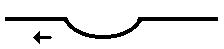
12. The reflection from a less rigid medium dose not affect the phase of the wave.
F)
13. When the wave reaches the boundary of the first spring it is reflected out of phase by the denser coil.
14. Another wave continues on into the denser coil at an increased speed.
15. The amplitude is decreased as the wave moves from the less dense to the more dense coil.
16. The frequency remains unchanged in the transition.
INTERPRETATION
1. V = fλ is proved by sections B and C. All the speeds remained constant in the same medium because the wavelength remained inversely proportional to the frequency.
2. Waves can be reflected or be transferred between two mediums. Waves can be one of two types, transverse or longitudinal. Transverse waves can be either in or out phase. Waves are fun. So is physics!
3. Physics class, imagination, sports games ("The Wave"), ELLIOT! sorry..., water , earthquakes and electricity.
4.

5.
6.

7.

8.

9. A) 5 and 6
B) 4, 7 and 8
10. 4 and 8
