
Safety
Although cars have become faster, current models are safer than many of those manufactured in previous decades. Modern cars incorporate beams at their front and rear, which crumple progressively in order to absorb energy, while having a strong central cell to protect occupants in the event of a crash.
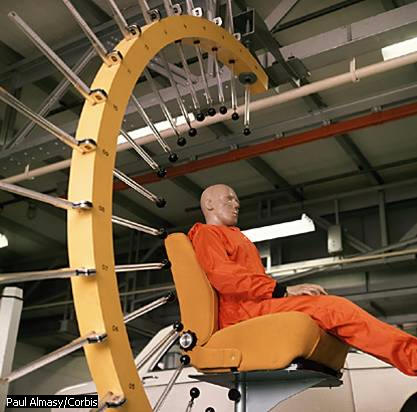
Braking has greatly improved in recent years and most systems feature servo assistance. This harnesses the vacuum produced by the engine to actuate the brakes, so that the driver does not need to apply an excessive amount of pressure to the pedal.
A further refinement is an automatic braking system. This sophisticated anti-locking device operates in conjunction with the vehicle’s engine management unit, and was initially used on expensive cars to prevent skidding.
Electric Cars
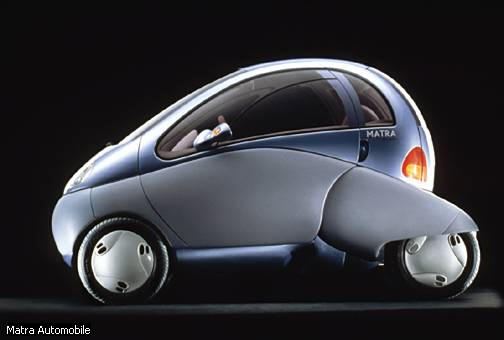
Reducing Car
Pollution
All new cars sold in Europe since 1990 have had to be capable of running on unleaded petrol. Lead has been added to petrol since the 1920s to improve engine performance, but was found to be a health hazard when emitted from car exhausts. In Britain unleaded fuels account for 67 per cent of petrol sales.
Similarly, the exhaust systems of all new cars have had to be fitted with catalytic converters since 1993. In its basic two-way form, the catalytic converter uses platinum and palladium to catalyse the carbon monoxide and hydrocarbons that are produced by the engine’s combustion process into carbon dioxide and water.
Manufacturers are currently undertaking research into "lean-burn" engines, which use less petrol and therefore produce a lower level of harmful emissions. The diesel-engined car has grown in popularity but recent evidence shows that the minute specks of soot, called particulates, that it produces are likely to exacerbate conditions such as bronchitis and asthma, mostly in city centres.
Performance and Four-Wheel Drive
Performance cars were usually front-engined (and sometimes rear-engined) until the appearance, in 1966, of the Lamborghini Muira, which had a mid-located power unit. This meant a better-balanced car, but at the expense of greater interior noise and loss of rear seating.
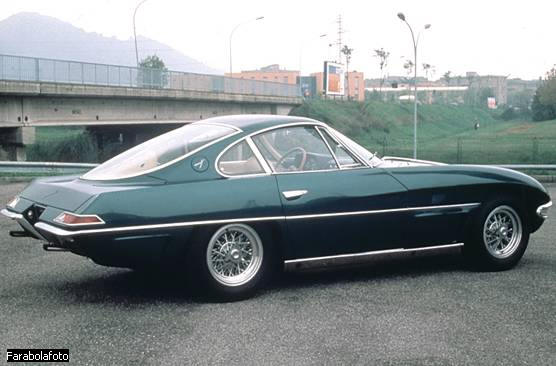
Yet a further development in performance was the four-wheel drive with superior road holding. This was a luxury fitment until the arrival, in 1980, of the Audi Quatto, a make that had also introduced, in 1976, the petrol-fuelled five-cylinder engine. Four-wheel drive had already been incorporated in the cross-country Land Rover, its design inspired by the American Jeep. It first appeared in 1948 and paved the way to the better-equipped Range Rover.
