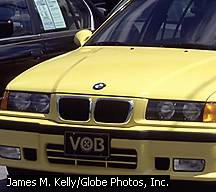
Automobiles Through the Years
Since they originated in the late 1800s, automobiles have changed and developed in response to consumer wishes, economic conditions, and advancing technology. The first gas-powered vehicles looked like horse buggies with engines mounted underneath because this was the style to which people were accustomed. By 1910, however, features like the front-mounted engine were already established, giving the automobile a look that was all its own. As public demand for cars increased, the vehicles became more stylized. The classic cars of the 1920s and 1930s epitomize the sleek, individually designed luxury cars called the “classic cars.” During the 1940s and 1950s, automobiles generally became larger until the advent of the “compact” car, which immediately became a popular alternative. The gasoline crisis is reflected in the fuel-efficient cars made in the 1970s and 1980s. Current designs continue to reflect economy awareness, although many different markets exist.
Internal-Combustion Engine
Development of lighter steam cars during the 19th century coincided with major developments in engines that ran on gasoline or other fuels. Because the newer engines burned fuel in cylinders inside the engine, they were called internal-combustion engines.
In 1860 French inventor Jean-Joseph-Etienne Lenoir patented a one-cylinder engine that used kerosene for fuel. Two years later, a vehicle powered by Lenoir’s engine reached a top speed of about 6.4 km/h (about 4 mph). In 1864 Austrian inventor Siegfried Marcus built and drove a carriage propelled by a two-cylinder gasoline engine. American George Brayton patented an internal-combustion engine that was displayed at the 1876 Centennial Exhibition in Philadelphia, Pennsylvania.
In 1876 German engineer Nikolaus August Otto built a four-stroke gas engine, the most direct ancestor to today’s automobile engines. In a four-stroke engine the pistons move down to draw fuel vapor into the cylinder during stroke one; in stroke two, the pistons move up to compress the vapor; in stroke three the vapor explodes and the hot gases push the pistons down the cylinders; and in stroke four the pistons move up to push exhaust gases out of the cylinders. Engines with two or more cylinders are designed so combustion occurs in one cylinder after the other instead of in all at once. Two-stroke engines accomplish the same steps, but less efficiently and with more exhaust emissions.
Automobile manufacturing began in earnest in Europe by the late 1880s. German engineer Gottlieb Daimler and German inventor Wilhelm Maybach mounted a gasoline-powered engine onto a bicycle, creating a motorcycle, in 1885. In 1887 they manufactured their first car, which included a steering tiller and a four-speed gearbox. Another German engineer, Karl Benz, produced his first gasoline car in 1886. In 1890 Daimler and Maybach started a successful car manufacturing company, The Daimler Motor Company, which eventually merged with Benz’s manufacturing firm in 1926 to create Daimler-Benz. The joint company makes cars today under the Mercedes-Benz nameplate (see DaimlerChrysler AG).
In France, a company called Panhard-Levassor began making cars in 1894 using Daimler’s patents. Instead of installing the engine under the seats, as other car designers had done, the company introduced the design of a front-mounted engine under the hood. Panhard-Levassor also introduced a clutch and gears, and separate construction of the chassis, or underlying structure of the car, and the car body. The company’s first model was a gasoline-powered buggy steered by a tiller.
French bicycle manufacturer Armand Peugeot saw the Panhard-Levassor car and designed an automobile using a similar Daimler engine. In 1891 this first Peugeot automobile paced a 1,046-km (650-mi) professional bicycle race between Paris and Brest. Other French automobile manufacturers opened shop in the late 1800s, including Renault. In Italy, Fiat (Fabbrica Italiana Automobili di Torino) began building cars in 1899.
American automobile builders were not far behind. Brothers Charles Edgar Duryea and James Frank Duryea built several gas-powered vehicles between 1893 and 1895. The first Duryea, a one-cylinder, four-horsepower model, looked much like a Panhard-Levassor model. In 1893 American industrialist Henry Ford built an internal-combustion engine from plans he saw in a magazine. In 1896 he used an engine to power a vehicle mounted on bicycle wheels and steered by a tiller.
THE RISE OF THE MOTOR INDUSTRY
hhg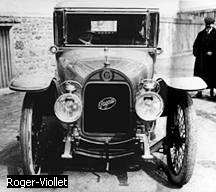
A combination
of higher per-capita income, efficient mass-production techniques, and dispersed
population saw the growth of the US vehicle market and vehicle industry outpace
that in the rest of the world, which in 1914 meant predominantly Europe. By 1914
there was 1 vehicle for every 77 people in the United States, for 165 in
Britain, for 318 in France, and for 950 in Germany. This also meant that Britain
was the largest market in Europe, to which the French were the largest
exporters.
Mass Production
Vehicle
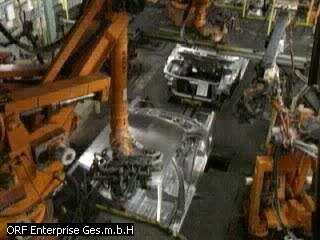
production survived outside the United States partly because General Motors,
Ford, and Chrysler established operations abroad, but, more importantly, because
European governments protected their motor industries from American competition
with tariffs and quotas. In 1932 the United Kingdom tariff was 33.3 per cent, in
Germany 25 per cent, in France 45 to 70 per cent, and in Italy 18 to 23 per
cent. In 1929 North America made 4.8 million vehicles and Western Europe 554,000.
New Products