
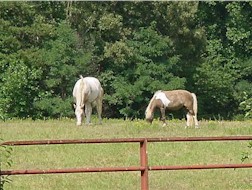
Conformation in the equine can be defined as the interest in the formation of the skeletal frame and its accompanying muscle structures, in terms of the symmetrical proportion of the individual parts to each other and the whole. In the well-made horse, no one feature disturbs the overall symmetry.
Conformation varies according to the purpose for which the horse is required. At one extreme are the short, thick proportions and heavy musculature of the draft horse, which indicate strength and power. At the other extreme is the sleek Thoroughbred, based on a light frame and the length of proportions and muscles - conformation conducive to speed. Between, are horses that incline more or less to one than to the other.
The key to assessing conformation is in the proportions. A most significant proportion to observe is the depth of the girth. The length from the top of the withers to below the elbow should equal or exceed the measurement from that point to the ground if there is to be sufficient room for the lungs to expand without restriction. The depth of girth should give the horse the appearance of being short in the leg. For speed, the neck needs to be reasonably long. Its length should equal one and a half times the measurement from the poll, down the front of the face, to the lower lip; a shorter, thicker neck is associated with strength and power, but not speed. The back, from the rear of the withers to the croup, should be short in comparison with the measurement from the point of shoulder to the last of the "false" ribs. These "false" ribs lie over, and protect, the kidneys and other vital organs.
A correctly proportioned horse will be naturally well balanced, moving freely. Its performance level should exceed that of less well-made animals. Because it is more mechanically efficient, it will be less prone to unsoundness and strain, and will have a longer working life. Physical limitations, imposed by poor conformation, may have an adverse effect upon the temperment when the horse is compelled to carry out movements that cause him discomfort as a result of faults that are not of his making.
The head reveals the horse's nature. Large, generous eyes are desirable and nostrils should be big and wide, to permit the maximum inhalation of air. In the well-bred horse, the head is both lean and chiseled, with no signs of fleshiness, and the ears are fine and mobile. The size of the head in relation to the body is important. If the head is too heavy for the neck, it will overweigh the forehand and upset the balance; too small a head also disturbs the balance. Necks should be curved and graceful; ewe necks are a serious fault. A fleshy throat prohibits flexion of the bit.
The ideal riding shoulder is well sloped: long in the scapula, short in the humerus, and positioned well forward. The ideal slope, which produces a long, low stride, is about 43 degrees from the highest point of the withers to the point of the shoulder. Withers need to be well laid back and prominent if the shoulder is to be sufficiently oblique. Upright shoulders produces a shortened action.
The chest is neither too broad nor too narrow. If the chest is too broad, the horse rolls in movement; if too narrow, the legs are so close that they brush against each other.
The back rises slightly to the croup and is well muscled on either side of the spine. If too long, it weakens the structure. If too short or broad, it restricts the action. Between the saddle and the croup lie the loins on which the power of the quarters depend. They must be short, thick and powerful. If the horse is in balance, the croup in the mature horse is in alignment with the withers. A pronouncedly sloping croup with a low-set tail indicates weak quarters.
The quarters of a horse must give the impression of great strength. If the hock is placed correctly, it is in line with the chestnut on the foreleg. Viewed from the side, a line dropped from the point of the buttock to the ground should touch the hock and continue down the vertical line formed by the rear of the cannon bone.
The straightness of the forelegs is judged from the front. In addition, the elbow must be free from the body and not lie hard up against the ribs. Forearms should be long and muscular, knees large and flat, cannons short for strength and the measurement around the bone should be constant down its length. There must be no puffiness in fetlock joints, and the pasterns, which are known as the "shock absorbers", should be of medium length.
