
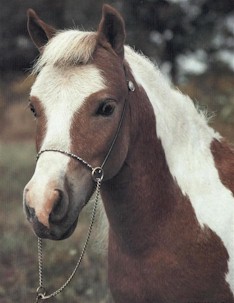
It is advisable to take certain precautions when contemplating horse ownership. Before you set out to buy a horse, you should first make an honest assessment of your riding ability, examine the facilities you have for keeping a horse and think about the purpose for which the animal is to be used.
Buying a horse is not much different from the purchase of any other commodity. So far as the law is concerned, the principle in most countries is "let the buy beware! However, the law is designed to give buyers some protection. Sellers must tell the truth when a specific question is asked, it is unethical to sell a horse that is not suitable for the purpose for which it was offered for sale. It may be that a horse, which performs perfectly well with one person, will not do so with another. Very good horsemen and women can manage most horses and so have a wider choice when seeking a purchase. Novice riders are more limited because of their inexperience.
For most people, cost is an important consideration when buying a horse. There are several factors that affect price: 1. Conformation and appearance; 2. Performance ability and/or record; 3. Weight-carrying capacity, if that is a matter of concern; 4. Age and manners. The soundness of the horse is not an issue, since no one in his right mind knowingly buys an unsound horse. As far as age is concerned, in general terms, an unbroken 2 or 3 year old will be cheaper than a 4 or 5 year old who has been schooled. From that age, all else being equal, the horse increases in value up to the age of 10. Thereafter, the price levels off until around 12-15 years, when the value of the animal begins to drop, the speed of the decline increasing as the years pass. Manners may be stretched to include temperament and whether the animal meets the demands made on a horse of today. For instance, is it safe in traffic under ordinary conditions and is it easy to box, shoe and clip?
If you aspire to purchase a well-bred horse of handsome appearance and impeccable conformation, who has won eventing, dressage, and show jumping and is furthermore just 7 years old, perfectly mannered and able to carry 200lb easily during a day's hunting, expect a correspondingly hefty price tag.
Many horses are bought at public sales, and at those conducted by reputable auctioneers; buyers are protected by the "conditions of sale," which should be studied carefully. Whether such sales are the best places for the novice to buy is unlikely. It may not be possible to examine the horse and ride it as thoroughly as might be desirable.
As another option, you can buy from a dealer. He will certainly allow you to ride the horse and to watch while it is ridden, with ample time to observe the animal being handled and to ask questions. A well-established dealer is a businessman and will want to satisfy the customer, so it is unlikely that he would attempt to sell a horse that he knows is unsuitable.
Finally, you can buy privately. It should not be taken for granted that buying privately is the most satisfactory way of acquiring a horse, however, many horses are bought and sold in this manner.
Having made an appointment to see a horse for sale, it is important that you should arrange to go with a friend. If your friend is knowledgeable about horses, so much the better, but his prime function is to be a witness to the sale, in the event that any dispute concerning the sale arises.
At the start, tell the seller the purpose for which the horse is required. It is not unreasonable to ask him to provide a form of guarantee, either verbally or in writing, that the horse, to the best of his knowledge, is sound, quiet to ride in all respects, free from stable vices and suitable for your stated requirements. Although the seller does not have to give such an assurance, if he declines you might put your own interpretation on the refusal and look for another horse.
Ask specific questions about the horse's performance, travelling, shoeing and so on. The blanket question, "Does the horse have any vices or problems I should know about?" is certainly the final one to ask.
If you are still interested, the horse should be trotted-out so that the action can be observed and you can gain an overall impression. When the horse is tacked-up, take note of the bitting ararngements. Before you mount, the horse should be ridden by the seller to see how it performs with someone it knows.
If you are keen to buy after riding the horse yourself, do so "subject to a veterinary certificate" and have your own veterinarian carry out the inspection. It should be noted that the veterinarian's certificate is not a guarantee of soundness - it is simply an opinion expressed by a suitably qualified person.
Still want more? Click here for even more information.
