         |
Pics
from linkinparkweb.com
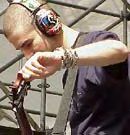

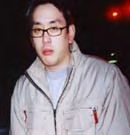
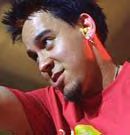
Brad Delson-Guitar Chester
Bennington-Vocals Josheph
Hahn-DJ Mike Shinoda-Vocals
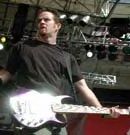

Pheonix-Bass
Rob
Bourdon-Drums
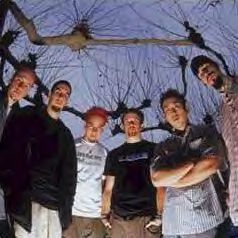


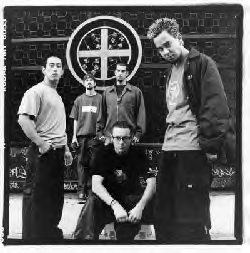

The Following from Linkinpark.com:
THE BAND
"The biggest misconception about us is that we're just a
rock band," describes Linkin Park's guitarist Brad Delson. "We think our music
is a cross-section of many genres; a hybrid of what the six of us have grown up
on." The title of the band's debut album and its original band name, Hybrid
Theory, describes both the six-piece's artistic goals and its approach to making
music. Linkin Park's sound, a melting pot of heavy alternative rock, hip-hop,
and electronic flourishes, is utterly their own, an accomplishment strengthened
by the band's remarkably powerful, organic songwriting. But almost everything
about Linkin Park has been unforced, including their Southern California
origins.
ORIGINS
The band saw its beginnings in
emcee/vocalist Mike Shinoda's small bedroom studio, where he and Delson recorded
the band's first material in 1996. The two had attended high school together,
where they met the band's drummer, Rob Bourdon. Shinoda hooked up with DJ Joseph
Hahn while studying illustration at Art Center College in Pasadena. Meanwhile,
attending UCLA, Delson shared an apartment with bassist Phoenix, who left the
band after college and returned a year later. The final piece of the puzzle was
singer Chester Bennington, a transplanted Arizona native who started making
records when he was 16. "When I was two, I used to run around singing Foreigner
songs--there's tapes of me doing that...Since I learned how to talk I've been
telling everybody I was gonna grow up to be a singer." laughs Bennington.
THE ALBUM
The combination of Bennington's rich, mammoth vocal
style with Shinoda's rapid-fire emceeing helps to define Linkin Park's sound. "I
think one of Chester and Mike's goals is to be as integrated as possible,"
offers Phoenix. "Although the styles we're mixing can be very different, we want
the combination to feel natural--that is a big part of our band's identity."
Weaving influences as diverse as Deftones, Nine Inch Nails, Aphex Twin, and The
Roots into a unified whole, Linkin Park "want everything to come together
without feeling forced," explains Shinoda. "As part of the writing process, I
record everyone directly into a computer to best integrate our digital and live
elements. We spend countless hours mixing and matching parts until we get the
right combinations and composition."
The band immersed itself in the
writing process until the spring of 2000, when they inked with Warner Bros.
Records and immediately went into the studio. To help record their work, they
enlisted producer Don Gilmore (Pearl Jam, Apex Theory, Sugar Ray). "We met with
a lot of people and had a very difficult time choosing a producer," says
Bennington. "But Don, aside from making things sound good, stood out as someone
who could really push us to work harder as songwriters." The end result is an
album that is as well-crafted and melodic as it is confrontational, with a
strong lyrical message. "Chester and I write about universal emotions, whether
it's feeling insignificant, optimistic, or frustrated," Shinoda describes. "We
write about everyday life, because sometimes it's good to know there are other
people going through the same things that you are." These lyrics, along with the
diverse instrumentation in which they are embedded, result in a powerful musical
statement: Linkin Park's debut album, Hybrid Theory.
TOURING
Following the completion of Hybrid Theory and the return of Phoenix, the
band has played incessantly, introducing crowds worldwide to their explosive
live performance. "I've always wanted our show to be energetic," says Hahn. "We
use drum pads, samplers, and turntables with original vinyl to perform all the
sample parts live on stage, which I think brings an exciting uniqueness to the
songs." The energy and tightness of the band's performance, on tours with
Deftones, P.O.D., and Papa Roach, and as a headliner itself, has secured Linkin
Park a strong foundation of dedicated fans worldwide, and helped propel the
band's record sales into the millions.
When asked about the secret
behind the Linkin Park's rapid success, Bourdon responds, "Ever since the
beginning, we've always tried to maintain a strong relationship with our fans.
From our close-knit street team family, to our videos, to designing quality
merchandise, to our hands-on website activity with www.linkinpark.com, we stay
involved in order to put our fans first." Linkin Park's reputation for being
fan-oriented is best exemplified in their dedication to interacting with
listeners at shows: the band obsessively sign hundreds of autographs at every
concert. When asked about this phenomenon, Shinoda explains, "It's just a way of
giving back. Our fans have helped us to realize a dream we didn't know was
possible." It's taken Linkin Park five years to become an overnight success, and
in the process, they've proven that a fresh combination of talent, unwavering
dedication to craft, and pure artistic vision can, as Bennington describes, "get
you through anything and help you realize your dreams."
|



