| To
Swim or Not to Swim?
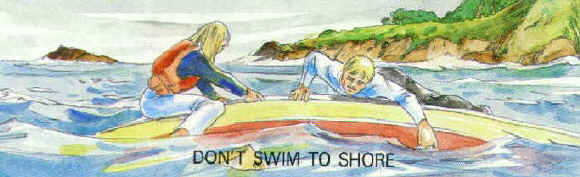
Swimming is
an option but this leads to faster heat loss and exhaustion, even a
strong swimmer would not be able to swim more than one kilometre in
calm water. Cramp and hypothermia develop more quickly, usually a
victim becomes semiconscious and is likely to drown.
Swimming
increases heat loss (increase by 35-50%) and is not recommended if
you are more than one kilometer away from shore, adopt a heat
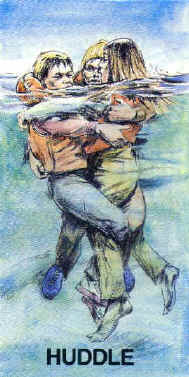
conserving strategy (help or huddle) instead. Consider your
circumstances carefully before deciding to swim, is there a
favorable current to assist you etc..
Drown
proofing and treading water also lead to rapid heat loss, avoid if
possible, wear a PFD! Do not remove clothing or shoes, they provide
insulation (a jacket can trap air and assists floating).
Special
Note for Divers
Scuba
divers who get cold may run out of air faster as shivering
increases demand for air. Don't panic or you will use up even more air.
If a
diver assents too quickly two major problems may arise:
Air embolism and decompression sickness (bends).
Transport
such a victim rapidly to a decompression chamber. If transporting by air maintain a low altitude!
Hypothermia
in these cases protects against both air embolism and
decompression sickness; re-warm during transportation
to a decompression chamber.
|