
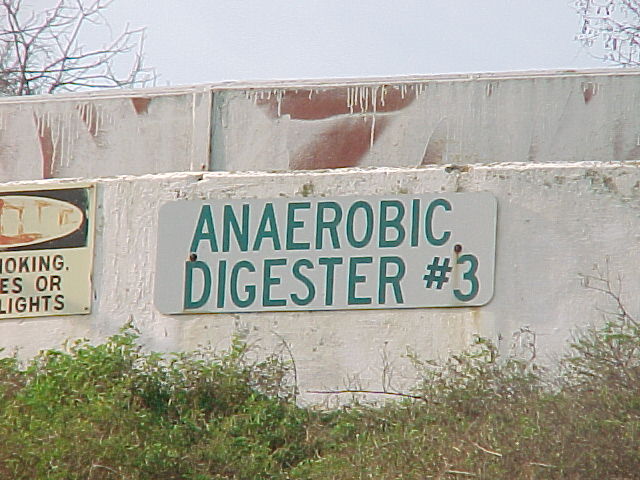
One of the anaerobic
digesters
The
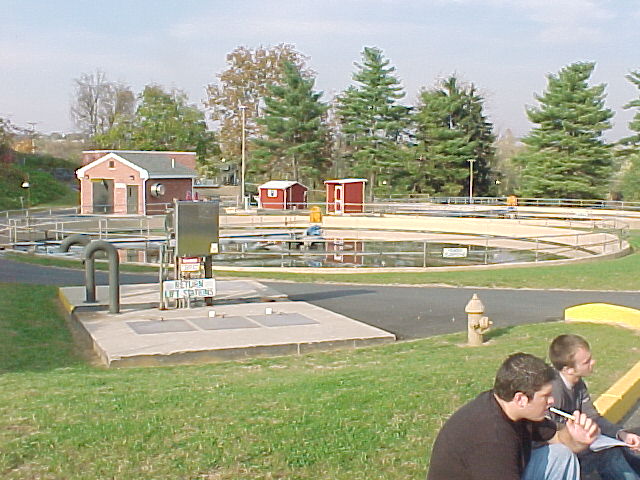
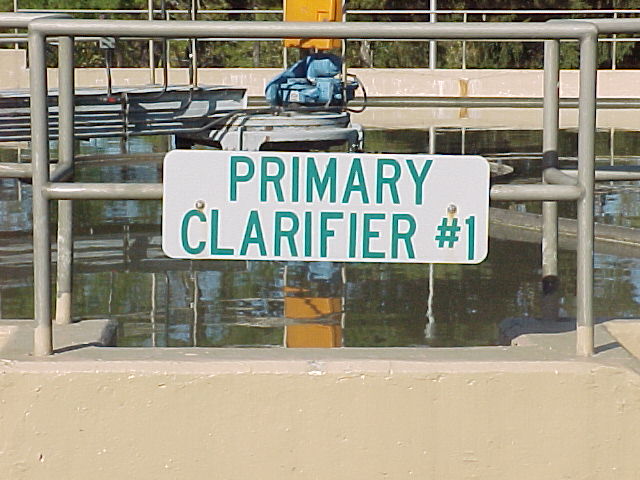
next step for the wastewater is primary settling in clarifiers, where organics
settle out. The organics that settle out are pumped to the digesters,
where anaerobic bacteria consume the organic material. The rest of
the water will continue onto the oxidation ditches.

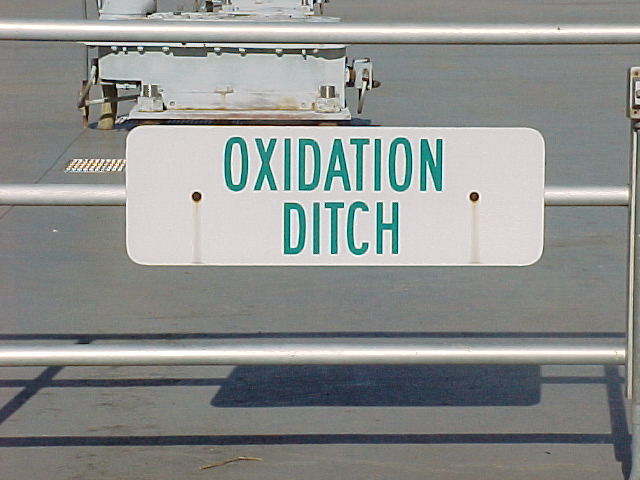
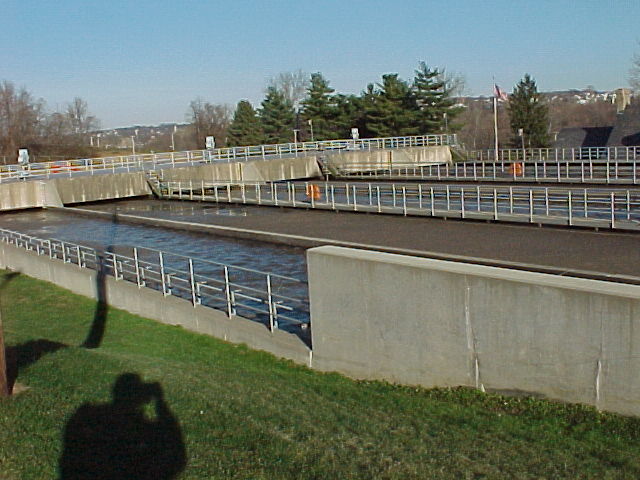
The oxidation
ditches -- bacteria central!
The oxidation ditches are incredibly important to the wastewater treatment process. In fact, this step is called "the heart of the biological process." The water passes through the oxidation ditches in a “carousel” fashion, that is, it enters on one side and flows around the ditch. Bacteria are also a key part of this section of the plant, but these bacteria are aerobic rather than anaerobic. The ratio between the amount of bacteria present and the “food” available for them to consume is key, therefore daily tests are performed to monitor this ratio. If something were to occur that killed all of the bacteria, it would be a catastrophe -- the plant would be rendered useless.
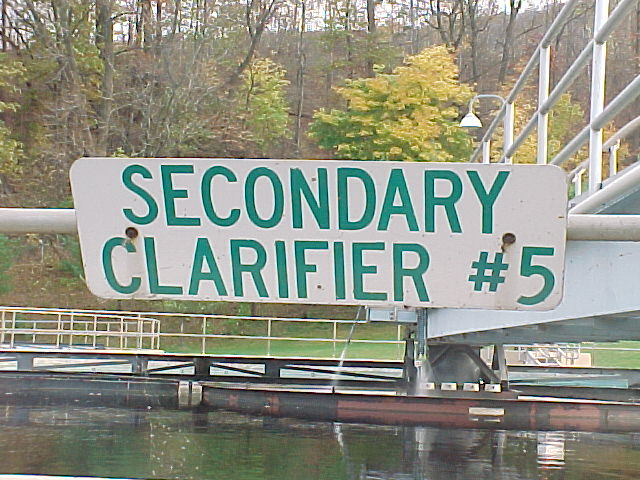
Next, the water enters the second set of clarifiers, where, through an inverted siphon process, the sludge is sucked off of the floor of the clarifier. At this point, 95 to 99 percent of the BOD (Biochemical Oxygen Demand) has been removed.
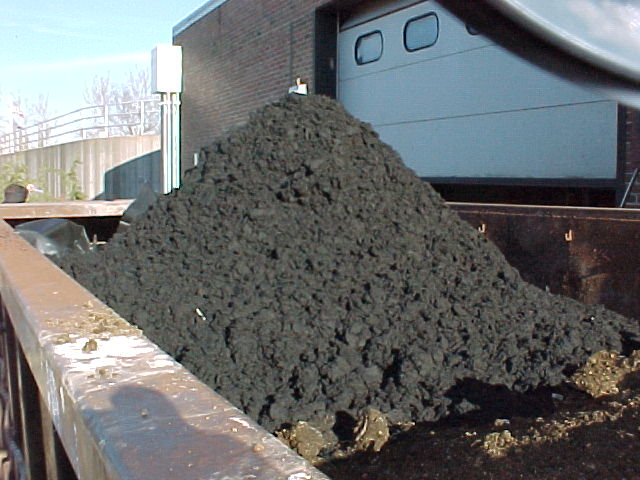
Sludge at its
best -- minus the water
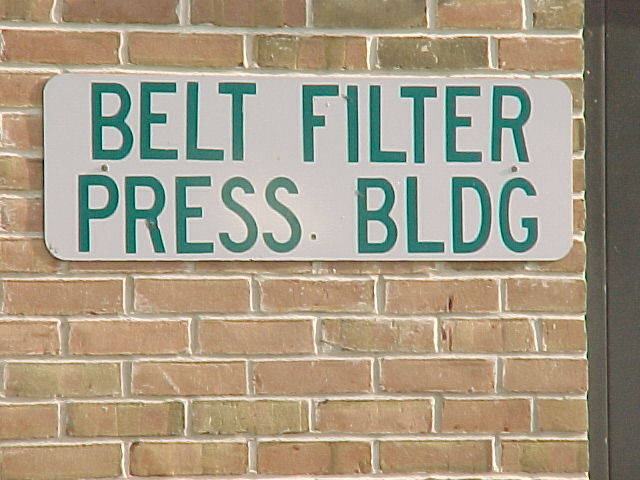
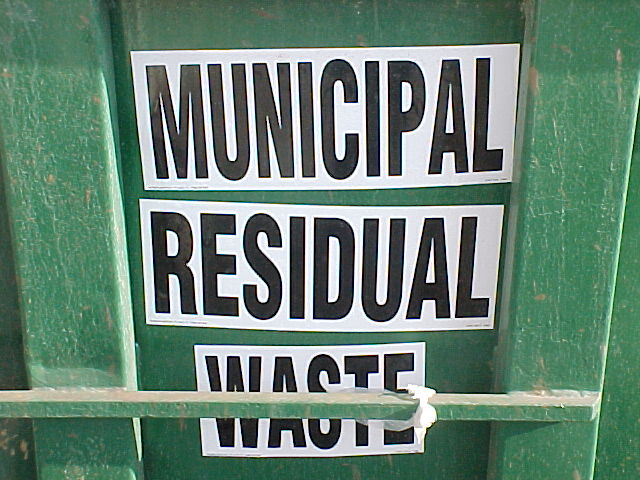
The sludge that is sucked off of the floor of the secondary clarifiers is sent to the belt filter press building, where as much water as possible is removed. The purpose for water removal is to minimize the cost of getting rid of the sludge. Once it is dewatered, the sludge is sent to a landfill, where the treatment plant pays more for waste that weighs more. Therefore, it is more economical to dry it out as much as possible.
Almost
to the end of this wastewater treatment process....

