MARS
The red Planet
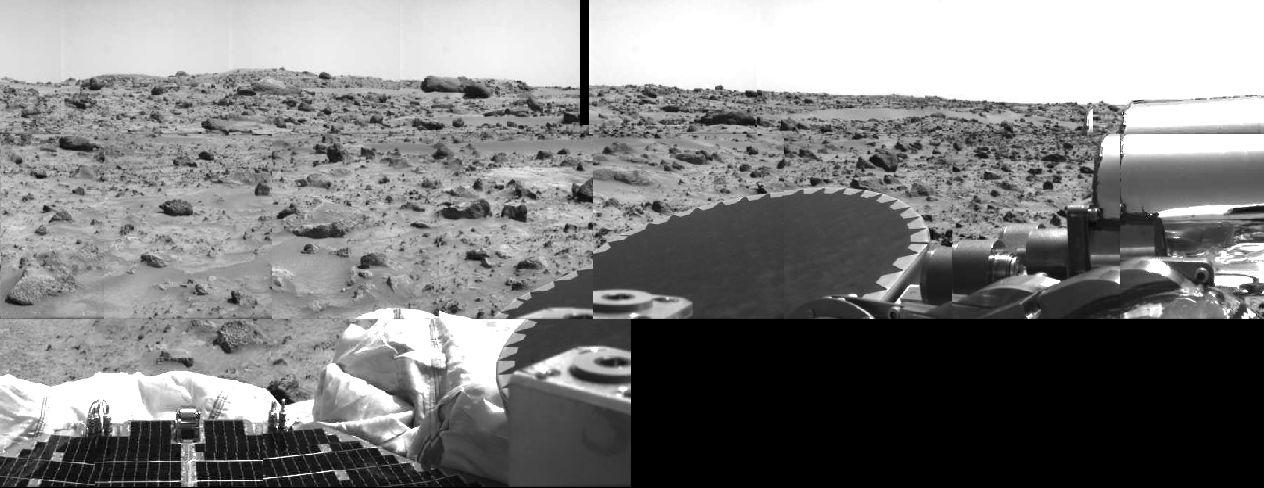
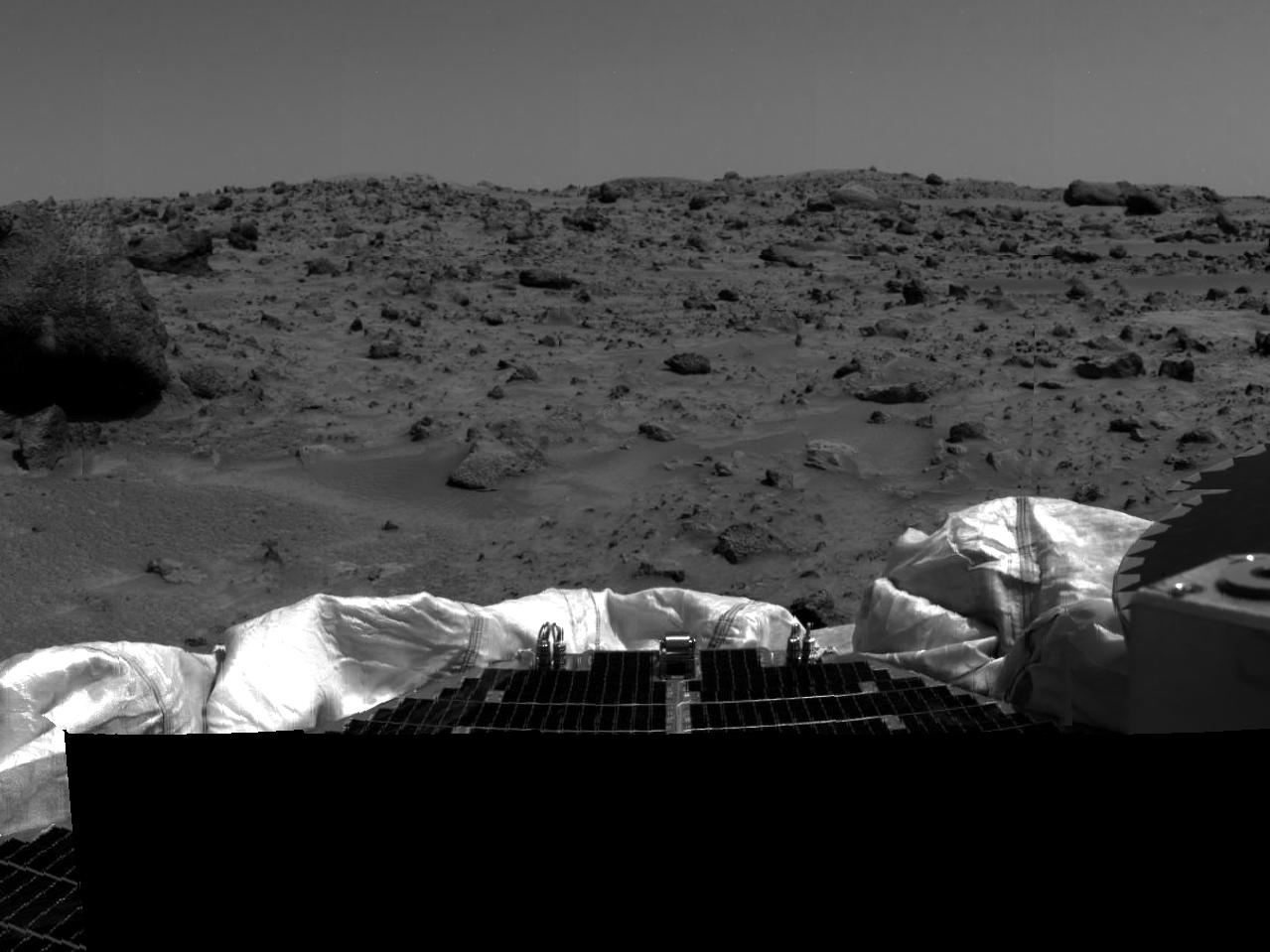
Pic 1: The high gain antenna, a petal, and the retracted airbags.
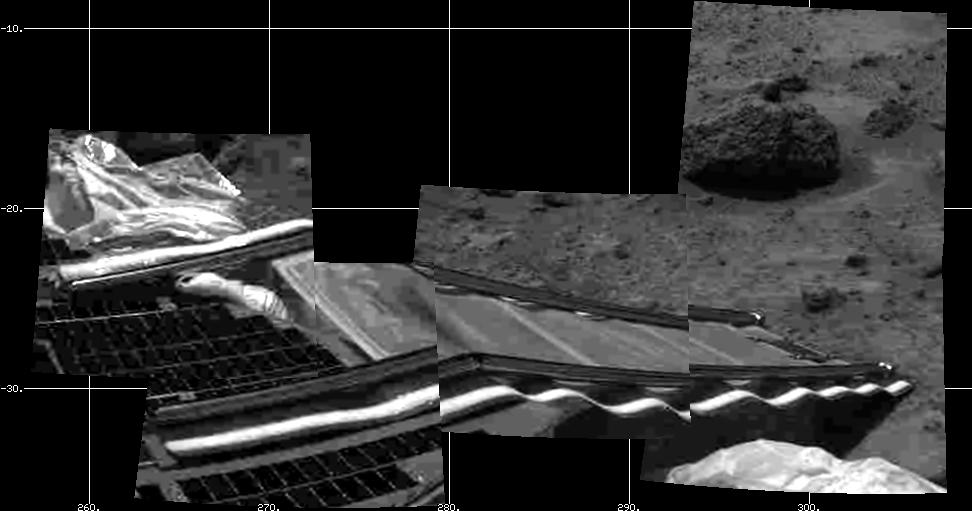
Pic 3:The ramp used to deploy the Sojourner rover.
Pic
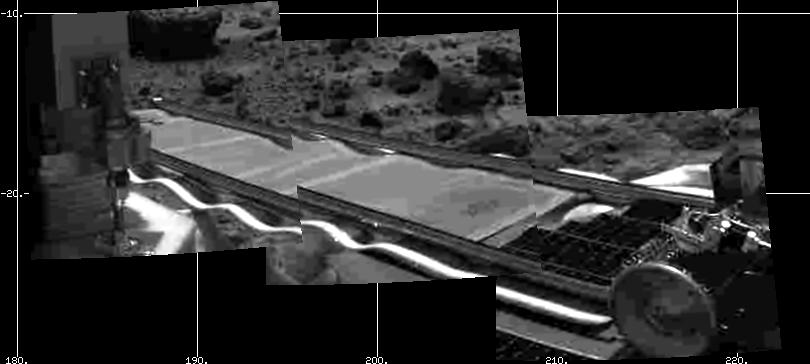
4:Both the front and rear rover deployment ramps have been deployed.
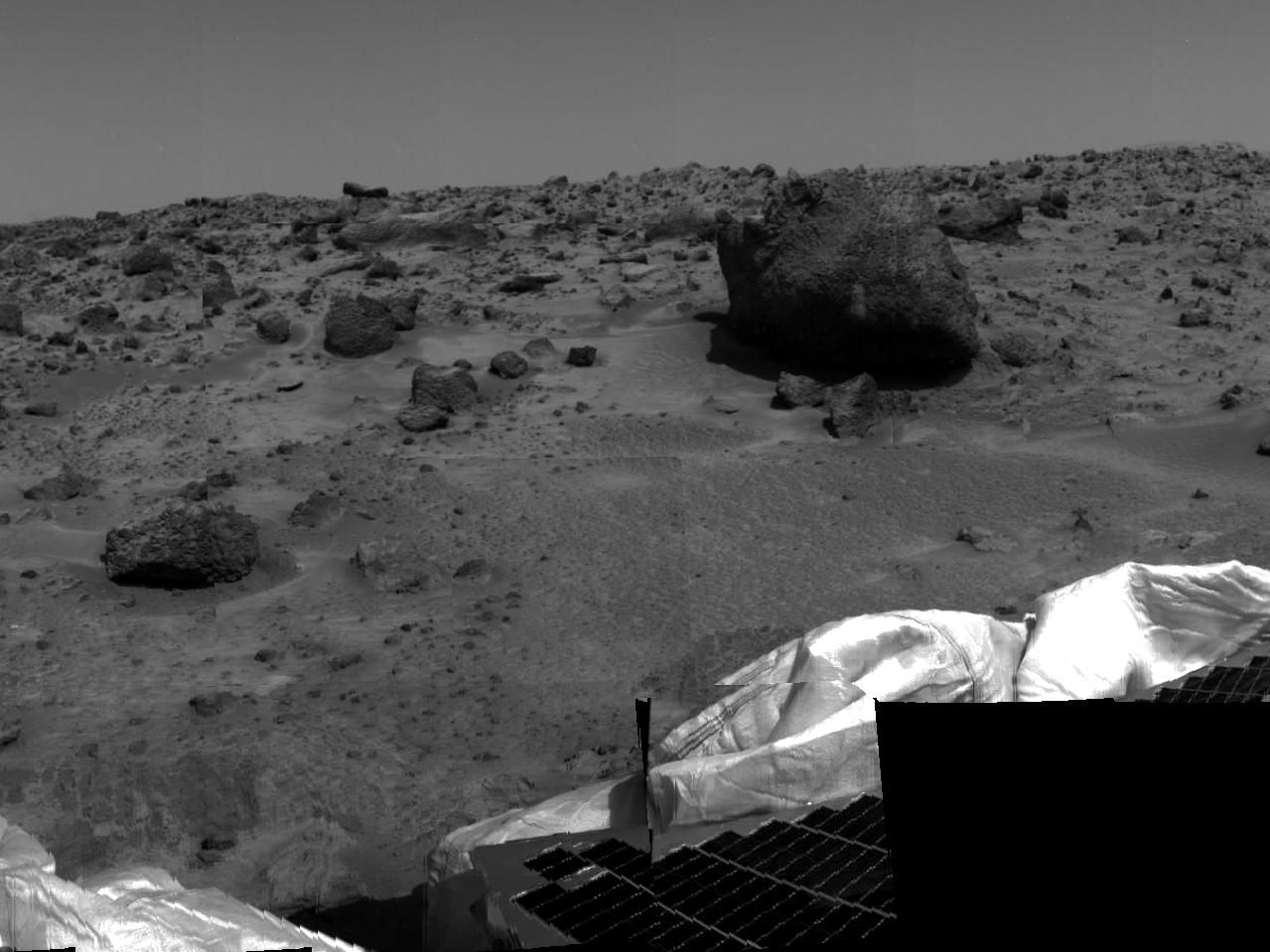
Pic 5:The smaller rock in the left portion of the image, named Barnacle
Bill, is the first rock examined by the rover's Alpha Proton X-Ray Spectrometer.
The fourth planet from the Sun in our solar system. A Martian day is 24 hours and 37 minutes Its rotation angle is at almost the same angle as Earth's, while its orbit is, on average, 1,5 times as far from the Sun as Earth's. Presently we believe it to be barren of life.
Known as the red
planet, Earth's rust color neighbor was long our best hope for life elsewhere
in the Galaxy. But with a thin atmosphere, low gravitiy, and extereme temperatures,no
life has been found on this planet. Mars' surface conditions could literally
make a human's blood boil ;
appropriate, it seems for a
planet named after THE GOD OF WAR
One day on Mars, called a SOL takes 24 hours 37 minutes. A martian year is nearly twice as long as Earth's, taking 687 day around the Sun.
The atmosphere on
Mars makes this planet one cool place. Composed mostly of carbondioxide
(%95) and with a little surface
pressure to hold it in, the thin atmosphere allows heat to escape with
relative ease. Temperatures on Mars can rise up to 80° F,during this summer,at
the equator.
Generally Martian temperatures
stay well below zero.
Pic
6:Site of the first measurements taken by the Alpha Proton X-Ray Spectrometer(APXS)is
in the left foreground.
Springtime
in the Martian hemisphere marks the beginning of the windy season in the
planet.
As the Mars approaches to the
Sun and the surface temperatures fluctuate, high winds occur, creating
massive dust stroms. The dust swirls with such force that it eventually
covers the whole planet.
DO
YOU REALLY WANT TO TAKE A TRİP ONMARS' SURFACE?