Nitrogen
How does Nitrogen get into the Shenandoah River?
There are three typical sources of Nitrogen. Most Nitrogen that is released into water-systems comes from fertilizers, human and animal wastes, and by-products of industrial manufacturing.
In the Shenandoah River Basin alone there are 16 sewage treatment plants that release 54 million gallons of water containing unregulated levels of nitrogen.
Ammonia, What is it and What does it do?
In order for plants and other organisms to use nitrogen, it must be converted or oxidized by bacteria. Once Nitrogen is converted, it becomes Ammonia.
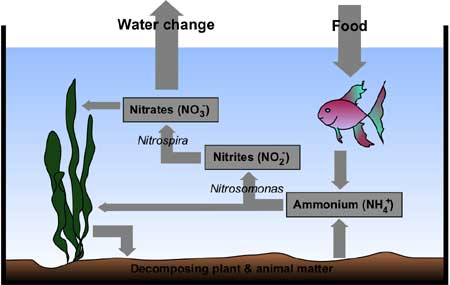
The maximum recommended concentrations for Ammonia are between 0-0.21/L. Once Ammonia levels reach between 0.53-22.8 mg/L, ammonia becomes toxic to fresh water organisms, but planets are more tolerant than animals to ammonia. Also, the toxicity is affected by PH level and water temperature.
Effects of Ammonia on Fish
At Elevated Ammonia Levels:
Loss of Equilibrium
Hyper excitability
Increased respiratory activity and Oxygen uptake
Increased heart rate
At Extreme Ammonia Levels:
Convulsions
Coma
Death, it is important to remember, however, that lethal concentrations vary according to species.
Pollution

