Mercury In The Shenandoah River
Where did Mercury Come From?
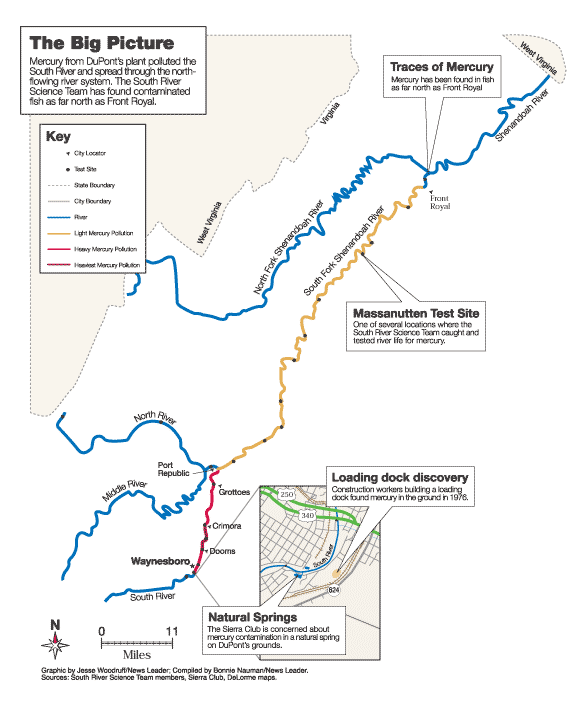
The Chemical Company, Du Pont, stationed in Waynesboro, VA, used mercury to help process fiber for many years. From 1929-1950. There were lacks regulations on Mercury during this time period. Due to these lacks laws on the management of mercury, the substance was allowed to seep into the South Fork of the Shenandoah River.
Currently, the south fork of the Shenandoah river, starting in south river, is contaminated. This Stretches for 125 miles to Front Royal, VA. At Front Royal, the South and North Forks of the Shenandoah River merge into the Main Stream of the river.
What Does This Mean for the Shenandoah River?
In 2005, the Virginia Department of Environmental Quality (DEQ). Took samples from species of fish who live in the affected area. The department concluded that Mercury levels in fish tissue are remaining the same where Du Pont is located.
The Majority of fish had small detection levels of mercury. Though a few had levels above the 0.5ppm “action level”. The action level is the amount that, if the majority of fish contain mercury above this level, the public must be notified by an “Consumption Warning”.
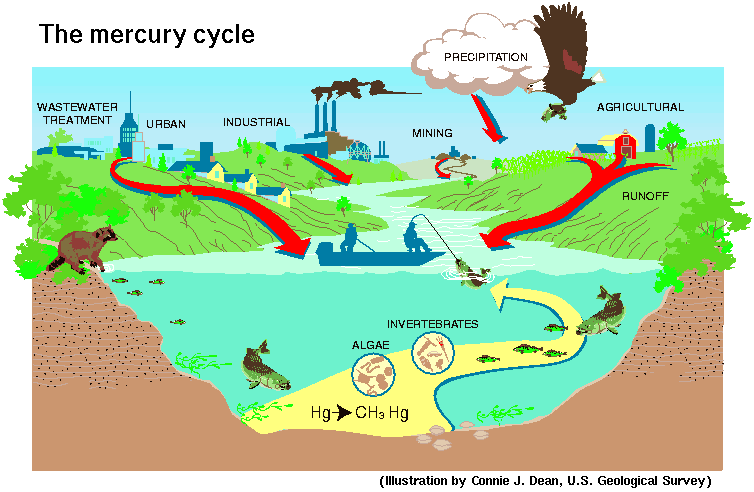
Mercury, unlike other substances, travels through the food chain. For example, if a local fisherman catches a bass in the Shenandoah River and that bass has some level of mercury in it, when the fisherman takes it home and cooks and eats it, that mercury then enters the fisherman’s system.
Mercury poisoning is possible, so it is recommended by the EPA that people do not eat a lot of fish that has been caught in the South Fork of the Shenandoah river. Though an occasional fish is not going to hurt you.
Pollution
