|
|
Modern dentistry
|
|
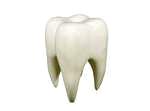
Throughout your life you end up having 2 completely different sets of teeth. The initial set is the baby teeth (deciduous teeth) that eventually fall out. They are whiter, softer, and less sturdy than adult teeth. Hence, they tend to wear out much faster than permanent teeth, but they also fall out to make room for them. Making sure that there's enough space in the vacancy caused by a lost baby tooth is important for healthy adult teeth. The permanent teeth are the second set of teeth that will last the rest of your life. They tend to be more yellow (and not just because of coffee) and are extremely hard. The final set of teeth is made up of 32 teeth, or 16 on each jaw. There are two central incisors for biting, two lateral incisors for biting, two canines for tearing and cutting, four premolars for chewing, and six molars for chewing. New developments include the implantation of artificial teeth or binding posts into the gums or jawbone; antibiotic fiber for periodontal disease; root canal surgery, a procedure that ameliorates pain while permitting teeth to remain in place; and nearly painless lasers to repair dental cavities, usually making local anesthesia unnecessary. Grinding your teeth, an improper bite, age, fillings and tooth decay can all be contributing factors in the wearing down, cracking or breakage of your teeth. Dental crowns cover the entire visible surface of your affected tooth and add strength, durability and tooth stability. Your cosmetic dentist will usually be able to spot problem areas in your mouth that might lead to tooth damage and a need for crowns. Chewing patterns play a big role as well. By selectively grinding the tips of your middle and back teeth (called cusps) will alter your bite to reduce the stress on at-risk teeth. Be sure to discuss with your cosmetic dentist that the cement color used for your permanent crown will be the same as used for your temporary crown. A try in paste is used for this purpose. The color of the cement does affect the overall color of a porcelain crown, so this needs to be discussed long before your temporary crown is placed. There are basically three types of crowns, those made of gold, ceramic crowns and ceramic-veneered gold crowns. Gold and metal-ceramic crowns are extremely durable and are normally used in molars, where the forces from chewing and grinding are most prevalent. Ceramic crowns are used primarily for front teeth, since they can best resemble the natural tooth color. Teeth straightening is accomplished with a number of different procedures and is usually done on children and adolescents when their permanent teeth begin growing in. Crooked teeth, crowded teeth, and even overbites and underbites can be treated with various teeth straightening techniques. While considered a cosmetic procedure, some people require teeth straightening in order for their teeth to be aligned in such a way that chewing is possible. Severe overbites and underbites can result in serious consequences over time, and even overly crowded teeth can mean health problems for the mouth. Invisalign is one of the newest methods of teeth straightening and is extremely popular with adults. Consisting of a clear mold that is nearly invisible when worn, Invisalign uses a series of molds that gradually push the teeth into the desired shape. Invisalign does not cost significantly more than standard orthodontic braces, but cannot correct an overbite or underbite and is only a good choice for minor straightening. Invisalign is not as effective on major problems, which may require standard braces. The most common method of teeth straightening remains standard orthodontic braces. Archwires, springs, and rubberbands apply pressure to the individual teeth by means of brackets that are glued onto their surface. Regular visits are required to the orthodontist in order to tighten wires as needed and make other adjustments. At each visit, the wires will be tightened slightly to renew pressure and push them toward their intended position. Additional wires, rubberbands, and headgear may be prescribed to help move the teeth into their ideal position as quickly as possible. When the teeth have all been repositioned, the brackets will be removed and a retainer must be worn to prevent relapse for some period of time. In areas of your mouth that are under less stress, such as your front teeth, a cantilever bridge may be used. Cantilever bridges are used when there are teeth on only one side of the open space. Bridges can reduce your risk of gum disease, help correct some bite issues and even improve your speech. Bridges require your commitment to serious oral hygiene, but will last as many ten years or more. If you a space from a missing tooth, a bridge will be custom made to fill in the space with a false tooth. The false tooth is attached by the bridge to the two other teeth around the space - bridging them together. Your cosmetic dentist will prepare your teeth on either side of the space for the false tooth. You will be given a mild anesthetic to numb the area, and the cosmetic dentist will remove the an area of each abutment (teeth on either side of the space) to accommodate for the thickness of the crown. When these teeth already have fillings, part of the filling may be left in place to help as a foundation for the crown. You maybe candidate for tooth contouring and reshaping, if you want your teeth to appear less crowded, lack chips and fractures, have decreased overlaps or to be without pits or grooves in the enamel, this procedure should be discussed with your cosmetic dentist. Tooth reshaping, or tooth sculpting, is a safe and conservative way to improve your smile. Teeth may become weaker if large amounts of enamel are removed, tooth reshaping should be limited to minor changes or combined with veneers or bonding for the best smile. Dental reshaping and contouring is a procedure to correct crooked teeth, chipped teeth, cracked teeth or even overlapping teeth in just one session. This procedure is even a substitute for braces under certain circumstances. This is also a procedure of subtle changes. A few millimeters of reduction and a few millimeters of tooth-colored can create a beautiful smile when performed by a cosmetic dentist, with no discomfort to you. Tooth reshaping, or dental contouring, is commonly used to alter the length, shape or position of your teeth. Composite resin dental fillings were created as an alternative to traditional metal dental fillings. Tooth fillings colored to look like a natural tooth are known as Composite Resin Dental Fillings,are made of a plastic dental resin. Composite Resin Dental Fillings are strong, durable, and make for a very natural looking smile. Many dental insurance plans cover their use. Composite resins may also be used to enhance the appearance of any tooth, which is a tooth bonding procedure. The composite resin will strengthen and enhance the natural tooth structure as it does with use as a dental filling. A special dental material is then used to open up the pores of your tooth's dentin and roughens up the surface of the exposed enamel. This achieves better and stronger bond. The bond resin is applied to stick the composite to your tooth. This material is made of the same dental resin as the composite however it is much more fluid. This layer is then hardened and cured with a very bright light. Dentures, also known as false teeth, are the primary topic in this section of our site. Here, you can learn how the procedure is performed, what dentures cost and the advantages and disadvantages of having them. If you've lost, or are losing, all of your teeth a Complete Denture is something to discuss with your cosmetic dentist. If some of your teeth remain and are healthy, a partial denture may be your way to a great smile. The setting up dentures procedure begins with a wax bite impression of your mouth that will give your dentist exacting measurements. A try-on appointment will fine tunes color, shape, and custom-fit. After your final dentures are fabricated, they will be placed and informed of their required care. Tooth loss is something no one looks forward to. If you lose one or more teeth, you have a number of options, one of which is dental implants. You owe it to yourself to be informed as possible about these options. With this in mind, we've created this section on dental implants. Begin learning more about dental implants for tooth replacement exacltly now! The implant procedure is a surgical placement of the implant or implants in your jaw bone which requires a three to six month healing period before the implant restoration to replace the missing tooth or teeth. During this healing time, the bone grows in and around the titanium implant creating a very strong support. Dental implants can be rejected. Usually they are replaced with another implant of a slightly larger size. The rejection or "failure" rate is minimal, only 1 to 2% of all implant procedures. You must go without wearing your dentures for one day to two weeks after an implant placement. After the implant has "taken" and you have sufficiently healed, a very natural crown is placed on the implant. When missing one tooth, your cosmetic dentist may use a Flipper to fill the space. A Flipper is a false tooth to temporarily take the place of a missing tooth before the permanent crown is placed on the implant. A Flipper can be attached via either a wire or a plastic piece that fits in the roof of your mouth. Flippers are meant to be a temporary solution while awaiting the permanent crown to be placed on your implant(s). If you're missing one tooth or all of your teeth, implants may well be for you. So long as you have enough bone in the area of the missing tooth to facilitate the anchorage of the implants, this procedure can yield terrific results. If you don't have enough bone for this purpose, a bone graft may be necessary. A procedure of building up the bone is known as Bone Grafting. Bone grafting is common with dental implants. The bone that is used is one of three types. The preferred bone to use is taken from other areas of your mouth or collected in a suction device as the drilling of the sites for dental implants occurs. Sometimes bone is taken from areas such as a hip (this requires an orthopedic surgeon and an operating room). The third source for needed bone is a synthetic type. This is the least preferred type of bone to be used for this procedure. While there is no medical need to whiten teeth, it is a procedure that can have a big impact on a person's self-esteem. Severely yellowed or discolored teeth can make a person self-conscious and reluctant to smile. The simplest type of teeth whitening is the use of products that can be picked up from the drugstore. These products, which use a very mild bleaching solution, usually require extended use over a period of several weeks. They may be brushed on, squeezed into one-size-fits-all trays, applied as strips, or used in conjunction with normal toothpaste and mouthwash. While these products are very popular, their mildness makes them less effective. Dentists are able to provide much more dramatic teeth whitening. Some patients opt for a take-home kit that provides results in a few days, while others choose a one-hour procedure that uses advanced technologies to immediately bleach teeth several shades lighter. Take-home kits usually involve custom-fit trays with a whitening gel of carbamide peroxide, to be worn for several hours at a time over some number of weeks as determined by the dentist. These kits are usually less expensive than the one-visit whitening procedures. For individuals who are looking for a fast way to achieve dramatic teeth whitening results, in-office whitening is the way to go. Protective gel is applied to the gums, lips and other tissue around the teeth, and then a bleaching solution is applied to the tooth enamel. A high intensity laser or other type of light catalyzes the bleach, and the teeth are treated for one to two hours. The dental bonding procedure utilizes a composite resin and is used for a variety of structural as well as cosmetic purposes. One can draw a parallel between dental bonding materials and a sculptor's clay. By using dental composite resin bonding your dentist can restore chipped or broken teeth, fill in gaps and reshape or recolor your smile. The resin comes in many shades so that we can match it to your natural teeth. Due to the layers involved, this procedure will take slightly longer than traditional silver fillings because multiple layers of the bonding material are applied. Typically bonding takes an hour to two hours depending on your particular case. There are several corrections that you can make to the color of your teeth as well as the shape of your teeth! Some of the causes of tooth discoloration are staining, aging, chemical damage, disease, medication, and genetics. Dental Veneers (Tooth Veneers) are used to correct both the color and the shape of teeth. Dental veneers can be made from porcelain or from resin composite materials. Porcelain veneers resist stains better than resin veneers and better mimic the light reflecting properties of natural teeth. Resin veneers are thinner and require removal of less of the tooth surface before placement. You will need to discuss the best choice of veneer material for you with your dentist. Teeth enamel discoloration can be caused by staining, aging, or chemical damage to teeth. Some of the more common causes of teeth discoloration are medications, coffee, tea or cigarettes. People who drink significant amounts of cola soft drinks can experience similar staining.
Terms used on this pageStomatology Tooth bleaching Plastic surgery information
|
|
Information in this document about Dental care named Modern dentistry is for End User's use only and may not be sold, redistributed or otherwise used for commercial purposes. The information is an educational aid only. It is not intended as medical advice for individual conditions or treatments of Dental care. Additionally, the manufacture and distribution of herbal substances are not regulated now in the United States, and no quality standards currently exist like brand name medicine and generic medicine. Talk about Dental care to your doctor, nurse or pharmacist before following any medical regimen to see if it is safe and effective for you. © Copyright 2007 Beauty Organization of Brazilia, Dental care area. |