The Australian Republic,made in the USA and Japan? Australia, a part of Asia? The Idea harkens back to the Japan's WWII Ideology of The Greater East Asia Co-Prosperity Sphere which includes a single currency. After all, Australia is part of Oceania, bad geography from Paul Keating eh? Well, that was the Asia-Australia Institute that seeks to create a Asian Bloc for Japan.
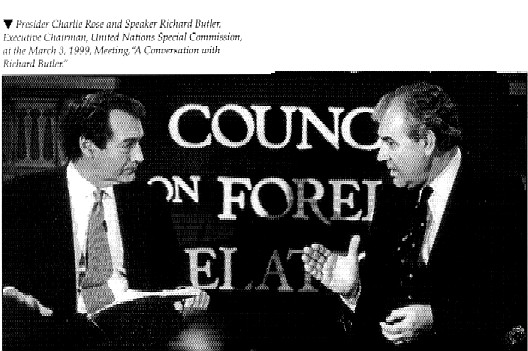
Back to Pagealpha AUSTRALIAN REPUBLIC:Turning Australia's national independence over to the Regional BlocThe Australian Republic or the democracy you have when you don't have one. A few thoughts from Keating,Malcolm 'B' Turnbull , Richard Butler and other Republicans. "A
Republican Malcontent"
King for a day, fool for a life time, I have many secrets and lots of dodgy excuses, so says King Malcolm Turnbull, so how's my Trilateral Commissioners at Goldman Sachs, proudly chaired by Zbig B and Henry Kissinger anyway?
Here is the source document link http://webu6102.ntx.net/intern/forum398d.html and the comment :
CSIS Intern Summer 1998
Australia's Choice for the Future
Australia has to decide on what its future is going to look like. How can it reconcile with its aboriginal population? How does it interact with Asia? Should it sever its symbolic links to the United Kingdom by becoming a republic? How the Australian people and the government deal with these identity problems will determine Australia's future: either as a forward-looking country prepared to engage with the outside world or a country that once again retreats into isolationism. Recently, many identity issues have emerged in Australia. One of the issues is the question of how to deal with the aborigines. For a long time, the aborigines were deprived of most basic rights, including citizenship, in Australia. Attempts have been made to reach a reconciliation but the present government of John Howard has waffled on the issue and hurt recent progress. In 1993, the landmark Mabo case held that native land not explicitly transferred to private individuals could be claimed by the natives, overturning the idea that Australia was a terra nullus (unclaimed land) before the Europeans came. After the judgment, many aboriginal groups filed claims to land.1 The previous government of Paul Keating had also passed a Native Title Act which allowed the aborigines to assert land claims and receive land or, if the claims were valid and the land already in use, receive compensation from the government.2 Even though they were taken as steps to address past misdeeds, these actions frighten many Australians, especially rural farmers. Whites worry that the Native Title Act would allow aborigines to claim their farms and land that is rich in uranium and other minerals. As a result of this fear, the present government of John Howard has successfully forced the Upper House to accept an amendment to the act that would weaken its provision on allowing aboriginals to claim land titles by threatening to dissolve both houses and call an election if his amendment was not passed. In addition, in 1995, after aborigines repeatedly urged the government to come clean on the "lost generation" ?mixed-race aboriginal children who were taken from their families by the government from the turn of the century to the 1970s and given to white families for adoption ?the government decided to launch an inquiry into the issue. The April 1997 report on the situation recommended that the government acknowledge and apologize for what had been done, guarantee against a repetition, and provide for a restitution of land, culture, and language, as well as monetary compensation. So far these recommendations have not been acted upon.3 The Howard government's attempts to weaken the Native Title Act and failure to follow up on the lost-generation issue has increased aboriginal resentment. Howard's failure to redress Australia's past mistreatment of the aborigines has hurt the progress of reconciliation. Australia needs to reconcile with its aboriginal population so that the aborigines will feel that they are actually part of Australia and so that Australia can become a country for all Australians. Another identity issue for Australia
has been how to deal with Asia. Australia has recently begun to realize that its future id
directly connected to Asia. Although many Australians had seen Australia as a last outpost
of the British Empire, this viewpoint does not have a basis in reality. Because of its
geographical location, Australia must tie itself to its neighbors in Asia in order to
further economic growth. Australia's largest regional trading partner is already East Asia
and, because of geographical proximity, trade should only increase over time. Its
traditional trading partners, the United Kingdom and United States, have joined free trade
zones that do not include Australia. Australia has gradually increased defense links with
Asia and many Asian tourists, students, and immigrants visit Australia, improving
Australia's economy. Australia has a Western culture but cannot isolate itself from its
neighbors. The Australian government, however, has some difficulty in developing closer
ties with its neighboring Asian states. Many Australians are understandably wary of
becoming too close to Asia. For some time, China and then Indonesia were considered to be
the main threats to Australia. A defense paper in 1960 that outlined actions that
Australia could take should Indonesia decide to invade. Such a legacy of mistrust cannot
be erased in a day. Australia's ambivalence towards Asia is reflected in John Howard's
attempts to cancel an aid program to Asia while stating that he wants to strengthen
already strong ties with the United States in his first act as prime minister. After an
outcry from Asian countries, the Howard government had to go back on its plans to cut the
aid program but the Asian countries were left with the feeling that Australia did not want
to be part of Asia. Another issue that Australia has to face is the republican debate. Many monarchists still want to maintain ties to the British royal family and to keep up Australia's historical ties to the United Kingdom. Gradually, however, more and more Australians are realizing that these ties are only part of history. Australia's hosting of the Sydney Olympics in 2000 has given impetus to the republican movement as many Australians have argued that the Olympics should be opened by an Australian president. Recently, the Constitutional Convention voted for Australia to become a republic. As a result, Prime Minister Howard will hold a referendum on the subject.5 Australia should become a republic to demonstrate that it no longer sees itself solely as a European country. Establishing itself as a republic is a symbolic gesture to prove that Australia has moved away from its British legacy and can become more closely connected with Asia. Australia must begin to take on a truly multicultural identity to deal with the Asian and the aboriginal problems. Identity issues inevitably lead to a sense of disorientation. Many Australians are understandably afraid of Australia's attempts to create a new identity. The present administration has not come up with a coherent vision. In the absence of a vision from the government, fringe politicians like Pauline Hanson, leader of the One Nation Party, have managed to gain votes by presenting voters with a vision of the future for Australia. She has successfully capitalized on the Australian sense of unease (with its search for a new identity) to gain votes while Howard dawdles on what to do. Pauline Hanson has created a platform that would turn back attempts at reconciliation and limit Asian immigration while isolating Australia from the world. She advocates granting Australian farmers cheap loans, making Australia protectionist, and repealing the Native Title and the Racial Discrimination Acts. Such a message is appealing to many Australians who are worried about the direction that Australia is heading in and want a return to the Australia of the 1960s where aboriginals were second-class citizens and Asian immigration was not allowed. While her vision is a negative one, at least she does have a vision. Unfortunately, Prime Minister Howard has yet to firmly and unequivocally repudiate her views and set forth an alternate vision of his own. Instead, he has waffled on whether he can cooperate with her One Nation Party or not, at one point saying that he would "probably find the One Nation senators easier to work with in the Senate (the upper house) than the minor parties and independents who currently hold the balance of power."6 Because she is one of the few politicians to offer a vision, Pauline Hanson and her One Nation Party won 11 seats in Queensland and received nearly a quarter of the votes. While her results may have been better than expected in Queensland because of the large rural population there, opinion polls show her with over 12 percent support nation-wide, her best result yet.7 To combat Pauline Hanson's appeal and to bring Australia into the twenty-first century, the Australian government must create a coherent platform. Australia should commit itself to redressing past misdeeds toward the aborigines so that all citizens of Australia will start on an equal basis. Australia must also face the fact that it will have to develop closer ties with Asia and should not attempt to restrict Asian immigration. Australia should also become a republic. Should it undergo these changes, Australia would become a nation that has resolved its domestic problem and increased ties with its neighbors, positioning it to enjoy economic growth. Australia cannot afford to retreat into isolationism. In order to move into the twenty-first century, Australia badly needs a leadership that can articulate a positive vision. Australia's challenge now is to articulate a new identity that reflects these challenges. The anti-racist Project Community Harmony and the founding of the Unity party are hopeful signs but more must be done. Developing a new identity is a stressful process that can alienate many people who feel that Australia should remain tied to its past. Australia must move beyond its image of being the last outpost of the West to become a truly multicultural country, with closer ties to its Asian neighbors. Finally, with regard to Hanson, the liberal-national coalition government should unequivocally repudiate her message and articulate its own vision for Australia.
1. Kevin Bacon, "Eddie Mabo's legacy of fear for Australian miners: A judgment named after an obscure aborigine is threatening the industry," Financial Times, March 3, 1993, p. 30. 2. Nikki Tait, "Aborigines turn to land fund for redress: The ink had barely dried on the Native Title act when problems started surfacing," Financial Times, October 7, 1994, p. 4. 3. Colm Regan, "Aborigines to lose hard-won rights," Irish Times, December 20, 1997, p.14. 4. "Ethnic groups denounce tougher Australian immigration laws," Agence France Presse, December 15, 1996. 5. "Voters Opt for a Republic," The National Law Journal, March 2, 1998, p.A12. 6. "Australia's anti-Asia One Nation wants repeal of race hate laws." Agence France Presse, June 28, 1998. 7. Denis Warner. "Australians Need to Halt This Party's Racist Bandwagon," International Herald Tribune, July 3, 1997, p.7.
What did Keating really mean by the Republic
and Australia being a part of The Saga continues in the GST Story A PROSPECT OF EUROPE SYDNEY, 9/04/97 http://www.arts.unsw.edu.au/ces/europe.htm
It was an honour for me to be invited by Professor Milfull to
give this Robert Schuman lecture on Australia and Europe. It was also unexpected. Since I
left political office I had been asked many times to give speeches about Australia and
Asia, but John was the first to ask me to talk about Europe. I wanted to accept for a number of reasons, some of which I
will come back to later. But the main reason was because what is happening in Europe at
present is so important to the future of the world, and because there is so much that is
relevant to Australians now about the approach Robert Schuman and his colleagues took to
the situation they faced half a century ago. I called this speech A Prospect of Europe, but in fact I want
to talk about prospects for Europe in the plural. Prospects in almost all the different
meanings the Macquarie dictionary gives us: a contemplation of something future or
expected; a view over a region or in a particular direction; even something in view as a
source of profit. Let me begin by paying tribute to Robert Schuman, in whose
honour the lecture is being given. Not, as some people might have assumed given my
personal interests, the great German romantic composer - though I am happy to pay tribute
to him as well - but the French Foreign Minister who proposed the establishment of the
European Iron and Steel Community, the progenitor of the Union. After the Second World War, as if to make up for the tragic
miscalculations of earlier generations of European leaders, Europe seemed to burst with
pent-up intellectual energy and commitment to public service. Thinkers like Monnet, and
politicians like Spaak, De Gasperi and Adenauer came forward. On the other side of the Atlantic they were mirrored by an
outstanding group of American public servants like Dean Acheson, George Marshall and John
McCloy, the group responsible for the Marshall Plan, which Churchill called 'the most
unsordid act in history'. It's a much-noted fact that a disproportionate number of the
European leaders who remoulded the continent came from the frontiers of their societies
and cultures. Robert Schuman was the best example. His family had
originally come from Alsace. He studied law in Germany and spoke German fluently. Although
imprisoned by the Nazis during the war, he had been unshakeably convinced since the end of
the First World War that Franco-German reconciliation was vital for peace. He was a deeply
religious Catholic, personally quiet and introverted, politically shrewd. (He is also said to have collected pieces of string. I have
to say that given the alternatives available in Europe, it's a passion I can't even begin
to identify with.) But as Jean Monnet said about Schuman, what he had above all
was a 'lucid vision of Europe's future'. In May 1950, Schuman was due to visit London as French
Foreign Minister, to discuss with Dean Acheson and Ernest Bevin the future of Germany.
Germany wanted to increase its steel production, which was still limited by Allied decree.
It was already clear that the Americans would support them in this. Schuman was worried
about the long-term implications for France of such an agreement. It was at this point that Jean Monnet suggested to Schuman's
office - and Schuman seized on - the ideas which became the Schuman Plan - the starting
point for the uniting of Europe. Monnet proposed to use Germany's desire to increase steel
production as a lever to place all Franco-German coal and steel production under an
international authority, with the participation of the other countries of Europe. This new
community would be supervised by a High Authority, able to make binding decisions. Monnet
saw this binding Authority as laying the foundations for the European Federation which he
believed was indispensable to the maintenance of peace. Schuman put the proposal first to Adenaeur, who was
immediately enthusiastic, then to the French Cabinet. Within three weeks, Germany, Italy,
Belgium, the Netherlands and Luxembourg all accepted the invitation to negotiate. Britain
declined, however. It still did not see its future in Europe. Dean Acheson called this
decision Britain's 'great mistake of the postwar period'. The Schuman Plan conference met in Paris in July 1950, and
despite the difficult and complex negotiations, the Treaty of Paris, establishing the
European Coal and Steel Community, was signed in April 1951. It was the basis for one of the greatest and perhaps
unlikeliest developments of this century - the transformation of the greater part of
Europe into a single market. In a sense the work of Schuman and his colleagues in the
1950s was about constraint. Constraint - in which Germany willingly acquiesced - of
Germany's capacity to threaten the security of its neighbours again; constraint, more
broadly of nationalism in favour of a pan-European consciousness; constraint of Soviet
power through collective defence. That search for constraint, and the development of the
institutions which would preserve it - the European Union and NATO - guided Europe's
development through the second half of this century. The search for binding ties
culminated in the development of a single market among all the member countries of the EU. It has been a remarkable achievement. But nearly half a century after Schuman's work, the world is
going through a period of change even more radical than the one he confronted. The Cold
War has ended. The information revolution and economic globalisation are transforming the
way the international system operates. Asia is emerging again as a global centre of power. The European institutions which developed during the first
historic phase of European unity face fundamental changes. Constraint is no longer the answer to the strategic dilemma
facing Europe. Growth is the issue - how to broaden the EU's membership, how to enlarge
the definitions of European security, how to expand the European economies. In a political sense the last of these is the most immediate
problem. And the need has emerged from another aspect of European constraint. Constraint
of growth and structural change in favour of the protection of existing jobs, low
inflation and the economic status quo. The result, compared with the United States, has been - in
continental Europe anyway - insufficient economic growth and persistent unemployment. As
Lester Thurow records in his book The Future of Capitalism, not one net new job was
created in Western Europe from 1973 to 1994. Europe's unemployment rates, which had been
about half those of the United States through the 1950s and '60s, had risen by the
mid-1990s to be more than double the American rates. German unemployment, for example, is
at its highest levels since the 1930s. It was partly in response to this problem of growth that
Chancellor Kohl and President Mitterrand, representing the two countries at the core of
the EU, gave the mandate to Jacques Delors to move Europe towards tighter economic
integration. First, through the Single European Act of 1987, which provided for the
removal of all barriers to trade and established the framework for foreign policy
cooperation, and then through the 1993 Maastricht Treaty, which set out the arrangements
for economic and monetary union. They recognised that the central question for Europe was how
flexible its economies were going to be in the new global environment. In this context,
the single market had an important political dimension. Not just in deepening European
integration, and especially the nexus between France and Germany, but in making the task
of domestic reform easier for national governments by allowing them to appeal to, or
blame, externally-imposed pressure for needed economic reform. Despite much talk about whether the Maastricht convergence
criteria will be met in time for monetary union to go ahead in 1999, I am sure it will
happen. This will be for political reasons as much as economic. In particular, Germany's
credibility is so heavily tied up in it. But when it happens, the economic impact will be every bit as
significant as its proponents argue. When there is one price for the currency and a freer
flow of investment, there will be an equilibration of labour markets and productivity
throughout Europe. That can only mean structural change of a kind America is continuing to
go through, and that Australia is going through. By removing from the economic system one
lever of flexibility - the exchange rate - flexibility will be forced into other important
areas. And with the structural changes will come an improved
capacity to employ people. As Germany and France move, as I believe they must, to become
much more service-oriented economies with a higher component of information in their
economies, unemployment will be relieved, income will be lifted and Europe's economic
paradigm will be changed. The alternative to economic and monetary union would, I am
sure, be a disaster. The integration process will stall and the always potent sentiments
for protectionism and economic nationalism will reappear. We are seeing them reemerging now in the results of the
French elections and in the public mood in Germany. A drift back towards caution and
protecting jobs with state intervention and a resistance to structural change. If these sentiments prevail, Europe has no hope of dealing
decisively with its unemployment problem. The single currency is in many respects the
major hope. But success depends on the new European central bank keeping
two objectives clearly in mind: not simply price stability, the staple responsibility of
central banks, but also growth and activity. For it will only be by growth that sufficient
aggregate employment will be created. It is important that effective monetary management is not
compromised. Price stability should remain important. But the leaders and governments
should understand that the growth imperative can only be dealt with positively by taking
the policy changes that will make their economies more supple and more dynamic. It won't be easy. Members will soon run into the problems of
dealing with a centralised monetary policy in the variable context of broadly unrestrained
national fiscal policies. It will quickly become clear that it is not just the
technicalities of monetary policy which will be affected, but virtually every aspect of
Europe's economic, fiscal and social policy. But it is the only way the Union can move to greater
integration. It is not just Europe which will be changed by Monetary
Union, however. The euro will alter global capital markets as well. It will become an
increasingly competitive reserve currency with the US dollar. Present candidates for the
single currency have bond markets worth over $500 billion, compared with $680 billion for
the US dollar and $260 billion for the yen. Another effect of EMU will be to underline the reality of a
two-speed Europe. Indeed the EMU itself will, I believe, become a two speed issue. So much
has been said and written about the Maastricht criteria; as if meeting a budget deficit of
3 per cent of GDP matters completely, but a deficit of 3.2 per cent represents a dismal
failure. Or, worse, that reference principally to budget deficit criteria is the best way
of assessing the worthiness of potential entrants. The criteria should be much broader and with a touch of
realpolitik about them. I believe the single currency should be based around the
principal economies of Western Europe, those with a durable economic performance. They pick themselves out: Germany, France, the Netherlands
And I believe the United Kingdom should be there, and from the start. A group like this with a substantial monetary and economic
base can provide the foundation the currency will need if it is to become the powerful
instrument of integration it should be. After some period of operation and a time for proper
observation of the currency's impact on Europe's economic performance, other countries
could then be considered. I do believe the whole issue might be delayed and compromised
if other countries beyond this group are brought into the fold in the first instance. More broadly, the two-speed approach will be essential if
Europe is to handle effectively the related issue of how to take in to the Union the new
democracies now knocking on its door. In fact, it is possible that a two-speed Europe will bring
about full union much faster than a process of waiting until a confluence of criteria is
met by all. The emergence of a group of former communist countries in
central and eastern Europe determined to establish their place as Europeans raises the
prospect of a Union of twenty five members by early next century. Already Hungary, Poland,
the Czech Republic, Estonia, Slovenia and Cyprus have been offered entry. This widening of the Union will bring changes to almost every
aspect of the EU. Many of the issues are canvassed in the Commission's recent Agenda 2000
document. For one thing, it will be a much more diverse Union. The
average GDP per head of the new applicants is just 13 per cent of the EU average. Many questions will arise. How can the constitutional arrangements drawn up for a group
of twelve serve the interests of a much larger and more diverse group? Voting by qualified
majority seems certain to be extended, but what will the implications be? How will Europe
accommodate a very different political and security agenda? Which of the rush of new
applicants will be accepted? How will Europe deal with Turkey, the gateway to the Islamic
world? It has been politically difficult for the present EU members
to accede to the demands of those who are knocking at the door, and the response has been
cautious. The public reaction in Western Europe to the subsidies which
will flow to the poorer EU members, both present and potential has been increasingly loud.
It has already forced the Commission to propose that there should be no shift in its
expenditure of 1.27 per cent of Union GNP. But although these are difficult matters, they are by no
means insurmountable. And it is essential for Europe and the world that the prospect of
widening the European Union continues with all speed. Partly as a result of the reluctance of current members to
move faster in expanding EU membership, I believe a great security mistake is being made
in Europe with the decision to expand NATO. There is no doubt this was seen by some in
Europe as a softer option than EU expansion. NATO and the Atlantic alliance served the cause of western
security well. They helped ensure that the Cold War finally ended in ways which serve
open, democratic interests. But NATO is the wrong institution to perform the job it is now
being asked to perform. The decision to expand NATO by inviting Poland, Hungary and
the Czech Republic to participate and to hold out the prospect to others - in other words
to move Europe's military demarcation point to the very borders of the former Soviet Union
- is, I believe, an error which may rank in the end with the strategic miscalculations
which prevented Germany from taking its full place in the international system at the
beginning of this century. The great question for Europe is no longer how to embed
Germany in Europe - that has been achieved - but how to involve Russia in a way which
secures the continent during the next century. And there was a very obvious absence of statecraft here. The
Russians, under Mikhail Gorbachev, conceded that East Germany could remain in NATO as part
of a united Germany. But now just half a dozen years later NATO has climbed up to the
western border of the Ukraine. This message can be read in only one way: that although
Russia has become a democracy, in the consciousness of western Europe it remains the state
to be watched, the potential enemy. NATO's declaration at the Copenhagen summit of 1991 was
admirable. It said 'We do not wish to isolate any country, nor to see a new division of
the Continent. Our objective is to create a Europe whole and free.' But that sentiment
sits impossibly with the expansion of the institution. The fundamental point of principle
that NATO enlargement should 'contribute to stability and security in the entire
Euro-Atlantic region and not pose a threat to any nation' is simply incompatible with
enlargement. The words used to explain NATO's expansion have been nuanced,
and the dangers have been acknowledged. But however careful the words are, whatever the
window dressing of the Permanent NATO-Russia Joint Council, everybody knows that Russia is
the reason for NATO's expansion. The decision is dangerous for several reasons. It will fuel
insecurity in Russia and strengthen those strains of Russian thought, including the
nationalists and former communists in the parliament, which are opposed to full engagement
with the West. It will make more likely the restoration of military links between Russia
and some of its former dependencies. It will make arms control, and especially nuclear
arms control, more difficult to achieve. President Yeltsin's offer to 'take the tips off
the warheads' might have been described as a misstatement, or even the unconscious
utterance of official briefing, but what are the chances of that happening now, with NATO
creeping towards Russia's western borders? And NATO expansion will do much less to strengthen the new
democracies of eastern Europe than would enlargement of the EU. New strains will be opened
up between the ins and the outs among those countries. It will also weaken NATO itself. The financial costs will be
high and NATO's effectiveness and credibility will be diminished. An American commitment
to defend the border of Poland and the Ukraine in all circumstances simply lacks political
credibility. The reasons Poland and the other countries of Eastern Europe
believe their security is served in this way are obvious, and historically understandable.
But I do not believe either European or global security will be helped by this decision. The better option, even now, would be to build on existing
institutions like the Organisation for Security and Cooperation in Europe (OSCE), or new
mechanisms like President Clinton's January 1994 Partnership for Peace proposals, to
intensify military and political co-operation and improve transparency throughout Europe. The world needs Europe now because the world we are moving
into is not one we have any experience dealing with. It will require the highest levels of
statesmanship and leadership, including from Europe, if we are to take advantage of the
opportunities while avoiding the traps. And perhaps we might reflect upon what sort of world it will
be. One idea which has received a good deal of attention has been
the suggestion that it will be one in which the ideological divisions of the Cold War are
replaced by divisions along the fault lines of civilisations. The best known proponent of this view is an American
political scientist, Professor Samuel Huntington from Harvard University. Over the course of a long political career, you get accused
of many unflattering things. But I have to say that the most spectacular of all the
charges against me came from the same Professor Huntington, who accused me of
precipitating the fall of a civilisation. The central idea in his book, The Clash of Civilisations and
the Remaking of World Order, is that the ideological divisions of the Cold War will be
succeeded by a world divided along the fault lines of civilisations. It is a much more
elaborate and footnoted version of the words of that grand old imperialist Rudyard
Kipling: 'East is East and West is West and never the twain shall meet'. In a section about Australia and the changes my colleagues
and I were trying to bring to Australia's relationship with the region, Professor
Huntington writes that 'At the beginning of the twenty-second century historians might
look back on the Keating-Evans choice [of engagement with Asia] as a major marker in the
decline of the West'. In a way, it's a flattering accusation, I suppose. It's
certainly a reminder that there is nothing much about hyperbole that a politician can
teach an academic in full flight. But I can confidently reassure the Professor that future
historians will be doing no such thing. The choice I was said to have made in the early 1990s was
that Australia should 'defect from the West, redefine itself as an Asian society, and
cultivate close ties with its geographical neighbours'. The last claim is right; the first
two are rubbish. Though perhaps it can be said in the book's defence that the then
Opposition was making the same claims in those days. The evidence Professor Huntington gathers to support his
charges reveals ignorance about Australian politics and economics, not much comprehension
of the complexity of political and economic relationships in Asia over the past decade,
and no knowledge at all of what I have actually said about Australia's foreign policy. Paul Keating 'liked to say,' Professor Huntington asserts
confidently, that I was going to change Australia from being 'the odd man out (in Asia) to
the odd man in.' Despite Professor Huntington's authoritative quotation marks, I liked to
say no such thing, and I never did. What I did say, and many times, was that Australia was not
Asian or European or American or anything except Australian. This is what history and
geography have delivered us. It is the only option we have and one which we have every
reason to celebrate. The problem the Professor has with Australia is that we are
untidy. We shouldn't be where we are. We ruin the neatness of it all. Like an obsessive
housekeeper, he wants to sweep us back where he assumes we belong. But we're too large to be swept and our interests do not
impel us to go voluntarily. We belong somewhere very different from where the Professor
wants to put us. So when John Milfull invited me to give this lecture I also
thought it might be a good forum to defend myself against the charge of bringing
civilisation as we know it to an end. For this reason, the second of the prospects of Europe I want
to talk about is the view of the continent from Australia. I certainly believe that in a way which has never been true
in the past, all Australia's principal interests now come together in Asia. As Prime
Minister I wanted to sharpen the focus on the region around us. This is the part of the
world we live in. This is where we can have the most influence and where we can make a
difference. It is where our future predominantly lies. It remains in my view the foreign
policy area where investment of time by Australian political leaders is most needed and
can have the greatest impact. And because the stakes for Australia were and are so high,
and because there were powerful cultural and historical forces resisting this transition,
I wanted to make our intention abundantly clear. The issues facing Europe - enlarging and deepening the EU,
managing the transition from communism in Eastern Europe, constructing new security
mechanisms - are very important globally, but they are areas in which Australia can do
little more than express opinions. The obvious truth - obvious to me and my colleagues anyway -
is that the more Australia is integrated into this part of the world and the closer our
relations are with our Asian neighbours, the greater will be our relevance to Europe and
our influence there on the things that matter to us. Nothing in my view of Australia's role in the world can be
taken as suggesting that Europe is not important to Australia's future. The economic
relationship is vital and growing, our cultural and scientific links are vigorous. Global
issues important to Australia, ranging from trade liberalisation to greenhouse gases,
won't be solved without Europe's participation. And much more fundamentally than these issues, Australia's
relationship with Europe is an ineradicable part of what makes us Australian. No matter
how we shape our future in this part of the world, the legacy of our links with Europe is
entrenched in the structure of our society, the forms of our institutions, and in the way
we think about the world. No matter how Australia changes in the future, that will
remain. More than 2.3 million Australians were born in Europe and a
further 2.6 million had one or both parents born there. My children are among them. For many Australians, as for me, Europe is important beyond
the facts of our history and the vigour of our economic relationships. I love visiting
Paris and - dare I mention? - Berlin. I love the civilised architecture and human scale of
the best European cities. I respond to the place from which has come the music I love
most. Few things have moved me more on my overseas trips as Prime Minister than the civic
reception in the village of Tynagh in Ireland from which my great grandparents had set off
all those years ago. We have heard often since the last election the mantra that
Australia doesn't have to choose between our history and our geography. It appears again
in the government's recently-released White Paper on foreign policy. But just think about that assertion for a minute. What could
it possibly mean? No choice we can make as a nation lies between our history and our
geography. We can hardly change either of them. They are immutable. The only choice we can make as a nation is the choice about
our future. And as Robert Schuman and the other great European reformers
in the middle of the century understood so profoundly, you sometimes have to break away
from the past to get the future right. It seems to me that we have never got the prospect of Europe
from Australia right. Too often, the perspective has been distorted. We have managed
simultaneously to hold two different views of the place. On the one hand Europe has been a
distant, too easily romanticised place; on the other an overwhelming presence. Australia's modern origins involved us in no great act of
differentiation from Europe. Unlike the United States, we had no puritan sense of moral
separateness, no New Jerusalem to build, no shining city on a hill. We did not need to
redefine ourselves in revolutionary ways against the place most of us had come from. We were exiles from a 'home' - and that word was being used
about Britain without irony by some Australians well into my adult life - long after this
country should have been home. We looked to Europe for our psychological as well as
physical security in a world where we did not feel we belonged. We did not seize our independence, but were set adrift, some
of us still complaining about it. Australia took until 1943 even to ratify the 1931
Statute of Westminster, which conferred dominion status on the whiter parts of the British
Empire. A full five years earlier, Sir Robert Menzies had explained the delay to
Parliament by saying that 'quite a number of responsible people are troubled about the
proposal to adopt the Statute of Westminster for the reason that they feel it may give
some support to the idea of separatism from Great Britain'. Australia's struggle has not been to avoid the 'foreign
entanglements' the early American revolutionaries feared. On the contrary, we set about
searching them out, roping them in, dragging them down and clutching them tight. This isn't an argument for revolution. The absence of blood
in the streets is not something we should regret. One of Australia's achievements has been
to have built a society like this without great strains or great violence. That is
something to be proud of. And it isn't an argument for isolationism either. We have to
be part of the world and to help shape it. But we still have unfinished business in our relationship
with Europe - and I don't mean just Britain, but Europe as a whole - which we must address
before the relationship can flower fully. It revolves around the constitutional reform
agenda and the creation of a Republic. It is of the utmost importance that the decision by
Australians to become a Republic is not something which emerges simply as a reaction to
external events or external perceptions. It must be something we do for ourselves, and for
our own reasons, something with a bit of verve and expectancy about it - not something
which is wrung out of the political system, which we slump into because there seems no
good alternative, or because time has run out, or as a reaction to developments in
Britain, whether a change in the person of the monarch or even constitutional change
there. It is sometimes suggested that the best thing for us to do
would be to wait for the end of this Queen's reign before introducing changes. But that
would be the worst reason to act. It would suggest that the move to a Republic was not a
decision which Australians wanted to make for our own reasons and in our own interests,
but was somehow connected with judgments about the person of the monarch. And it would be the worst time to act - a time of sorrow, and
a moment decided by chance rather than as an independent act of will by Australians. And
in any case, her successor will immediately assume the throne. The choice by Australians to become a Republic must be taken
with courage and grace. And I say 'taken', because it is the act of taking which will give
our sovereignty its strength. I believe this constitutional change will strengthen, not
weaken, our relationship with Britain. As I said in Australia House in London, 'it is not
because our affections for Great Britain are reduced, or the friendship between us
frailer, or our respect and admiration for the culture and institutions Britain has
bequeathed us in any way diminished, that now, in this last decade of our first century as
a nation, we are considering the option of becoming a republic. It is not because the
machinery is broken that we wish to change it. It is because a great many Australians (in
all likelihood, a majority of Australians) believe the machinery is no longer the most
appropriate.' Britain will remain one of Europe's major powers and a very
important partner for Australia in the new Europe. But the image of Australia as a branch office of Britain is
tenacious, as recent British public opinion polling has demonstrated. Both governments
want to change that perception. The New Images program which is running at present in
Australia was something John Major and I endorsed as part of the effort to place the
relationship on a more modern footing. But the only action which will seriously achieve that will be
the first state visit to London by the President of Australia. The act of becoming a republic will also make it easier for
us to look at Europe from a perspective other than London's. And easier for the other
countries of Europe to look at us with fresh eyes. We have to get beyond the perception that 'Europe' is best
understood when filtered through British sensibilities. The prospect of Europe from
Westminster Bridge can be very distorting. We can't afford not to understand the rest of
the continent on its own terms. Our businesses and our media suffer particularly from this
affliction. Far too little of the news we receive about Europe comes from correspondents
who are based outside London. We do not give ourselves the chance we should have in Europe
while we still have the monarch of Great Britain as our Head of State. The Republic must come because we are convinced it is right
for us, not because of what it says to others. But the idea that the identity of our head
of state has no effect on the way others perceive Australia - and through this on some
very hard-headed economic and political interests - is nonsense, just as the proposition
that the offensive nostrums of the Member for Oxley would have no effect was nonsense. In this very fundamental sense, the measure of how far
Australia has come has to terms with itself and its position in the world will be measured
more by the nature of our relationship with Europe than with Asia. But assuming we make these changes in perception, the outlook
for Australia's relationship with Europe is very bright. So let me turn finally to another prospect of Europe, the
prospect defined by the Macquarie Dictionary as 'something in view as a source of profit'.
Because there are remarkably good opportunities opened up in both directions, especially
by the changes now under way in the global economy. In a globalised world we cannot ignore one of the one three
great economic groupings. The 15 current members of the European Union, with their
population of 370 million, now form the world's largest trader. Australia's two-way trade with the EU is now 18 per cent of
our total. But in a globalised world the investment figures are
particularly important. The EU is Australia's largest source of foreign investment,
including foreign direct investment, and our major host for overseas investment. Thirty per cent of foreign investment in Australia comes from
Europe. Hundreds of large European companies are based here and many of them have found
that Australia is an excellent base for their Asian operations. Over 80 have regional
operating centres here. Australian investment in the other direction is also strong -
nearly $40 billion. Almost half this investment is in Britain. There is absolutely nothing
wrong with this, and much to commend it - provided that investment is going there because
it offers the best opportunities not just because of fear by Australian companies of
crossing the channel. I'm not sure that is always the case. The value of sales generated by Australian direct investment
in the EU significantly exceeds Australia's annual exports of both goods and services to
Europe. Our exports to Europe are still dominated by traditional
commodities like wool, coal and iron ore. But even though we are seeing strong growth in
elaborately transformed manufactures, our overall export figures have slipped in relative
importance. Transport costs, lower economic growth in Europe compared with Asia, and the
complexity, cost and unpredictability of the EU regulatory regime all play a part. But
there is no doubt that Australia also has to perform much better in getting our goods into
European markets. Happily, things are looking better than for some time on the
agriculture front. Reality is catching up with the Common Agricultural Policy, one of the
enduring items of dispute between us. It was less the fact that Europe wanted to support
its farmers that we objected to than the way they did it - especially the export subsidies
which distorted the international markets for our efficient primary producers. For a
variety of reasons - only partly Australian persuasiveness, I think - the EU has not
engaged in predatory subsidies of exports recently. And at a more fundamental level the sort of reforms to the
CAP which were first introduced in 1992 will have to continue. Aid to farmers already
absorbs half the EU's budget. And the Union's enlargement to the east will increase arable
land by 55 per cent. One quarter of Poland's work force is in agriculture. Australia and other agricultural exporters will have to watch
carefully that the EU's expansion does not result in a series of new deals which harm our
interests. Under the Uruguay Round outcome further multilateral
negotiations on agriculture need to begin by 1999. If we move to a new Millennium
Multilateral Trade Round, Europe will be integral to it and we will have to ensure that
agriculture is a key part of the negotiations. Our opportunities for cooperation with Europe go much further
than trade and investment of course. Our science and technology agreement signed in
February 1994 was the first for the EU with a non-EU member. We are negotiating a mutual
recognition agreement. Our cultural exchanges, official and unofficial, are important in
both directions. The importance of new structures to underpin these avenues
for cooperation is the reason why as Prime Minister I proposed to Jacques Delors that
Australia and the EU negotiate a Treaty-level agreement to provide a framework for our
future relations. Unfortunately that high-level agreement fell before the
present Australian government's problems over the human rights clauses. So although I am
pleased we have got a Joint Declaration, I am sorry it is of less status and value than it
might have been. Australia and Asia have important lessons to learn from the
experience of Europe this century. Above all, the importance of institution building and
ways of facilitating easy contact between political leaders. Europe is the best example we
have of how closer economic integration can restrain conflict. As Jean Monnet once said 'Nothing is lasting without
institutions'. Our institutions in this part of the world will be very different from
Europe's, reflecting not just different cultural and political experiences but different
times. But they need architects - and stonemasons and carpenters - with the same sort of
vision these Europeans had. We're staggering to the end of the twentieth century, and
there won't be nearly as much to lament about its passing as there should have been. This may have been the American century, but it was Europe
which set the tone. The strategic blunders which marked European statesmanship around the
end of the last century did more than anything else to generate the carnage of
totalitarianism and two world wars. But Europe at the end of this century is a source of great
hope. It has shown, thanks to Schuman and Monnet and all their successors a capacity to
remake itself and to overcome deep-seated rivalries. And even where the rivalries still
erupt, as in the Balkans, Europe has developed mechanisms and institutions for dealing
with human rights and encouraging democracy which have a global impact. For the rest of us, the new Europe will be more promising
than the old, I think. Less inward looking, perhaps less self satisfied at times, more
likely to play a larger role in the world because its agenda will be broader. European diplomats will respond to this that they already
take such interest, and it is true. But interest is different from leadership - and that
is what we need more of from Europe. An ability to put itself into the minds of others. We often hear talk of the next century being the century of
Asia or the century of the Pacific. But I don't think the world will be like that any more. Regionalism will be important, and it has much further to go,
especially in the Asia Pacific, than we have yet seen. The pressures generated by the new
economy and multilateral problems like the environment will make sure of that. But those same pressures will also ensure that, while Asia
will be more influential in the world, no one area will be able to dominate the global
agenda in the way Europe and North America did in this century. Robert Schuman was born in Luxembourg, a state whose national
motto is 'We want to stay as we are.' It's a cry from the heart that most people can
understand. We all want that in some way, or at some level. But, as Robert Schuman knew, Europe could not stay as it had been. And in Australia we must know that we cannot either.
[Paul Keating A PROSPECT OF EUROPE- SYDNEY, 9/04/97] Keating's wants to create A European Union out of APEC-are ya gonna stop him? read more, it is very important.
Paul Keating A PROSPECT OF EUROPE SYDNEY, 9/04/97 It was an honour for me to be
invited by Professor Milfull to give this Robert Schuman lecture on Australia and Europe.
It was also unexpected. Since I left political office I had been asked many times to give
speeches about Australia and Asia, but John was the first to ask me to talk about Europe. I wanted to accept for a number of
reasons, some of which I will come back to later. But the main reason was because what is
happening in Europe at present is so important to the future of the world, and because
there is so much that is relevant to Australians now about the approach Robert Schuman and
his colleagues took to the situation they faced half a century ago. I called this speech A Prospect of
Europe, but in fact I want to talk about prospects for Europe in the plural. Prospects in
almost all the different meanings the Macquarie dictionary gives us: a contemplation of
something future or expected; a view over a region or in a particular direction; even
something in view as a source of profit. Let me begin by paying tribute to
Robert Schuman, in whose honour the lecture is being given. Not, as some people might have
assumed given my personal interests, the great German romantic composer - though I am
happy to pay tribute to him as well - but the French Foreign Minister who proposed the
establishment of the European Iron and Steel Community, the progenitor of the Union. After the Second World War, as if to
make up for the tragic miscalculations of earlier generations of European leaders, Europe
seemed to burst with pent-up intellectual energy and commitment to public service.
Thinkers like Monnet, and politicians like Spaak, De Gasperi and Adenauer came forward. On the other side of the Atlantic
they were mirrored by an outstanding group of American public servants like Dean Acheson,
George Marshall and John McCloy, the group responsible for the Marshall Plan, which
Churchill called 'the most unsordid act in history'. It's a much-noted fact that a
disproportionate number of the European leaders who remoulded the continent came from the
frontiers of their societies and cultures. Robert Schuman was the best example.
His family had originally come from Alsace. He studied law in Germany and spoke German
fluently. Although imprisoned by the Nazis during the war, he had been unshakeably
convinced since the end of the First World War that Franco-German reconciliation was vital
for peace. He was a deeply religious Catholic, personally quiet and introverted,
politically shrewd. (He is also said to have collected
pieces of string. I have to say that given the alternatives available in Europe, it's a
passion I can't even begin to identify with.) But as Jean Monnet said about
Schuman, what he had above all was a 'lucid vision of Europe's future'. In May 1950, Schuman was due to
visit London as French Foreign Minister, to discuss with Dean Acheson and Ernest Bevin the
future of Germany. Germany wanted to increase its steel production, which was still
limited by Allied decree. It was already clear that the Americans would support them in
this. Schuman was worried about the long-term implications for France of such an
agreement. It was at this point that Jean
Monnet suggested to Schuman's office - and Schuman seized on - the ideas which became the
Schuman Plan - the starting point for the uniting of Europe. Monnet proposed to use Germany's
desire to increase steel production as a lever to place all Franco-German coal and steel
production under an international authority, with the participation of the other countries
of Europe. This new community would be supervised by a High Authority, able to make
binding decisions. Monnet saw this binding Authority as laying the foundations for the
European Federation which he believed was indispensable to the maintenance of peace. Schuman put the proposal first to
Adenaeur, who was immediately enthusiastic, then to the French Cabinet. Within three
weeks, Germany, Italy, Belgium, the Netherlands and Luxembourg all accepted the invitation
to negotiate. Britain declined, however. It still did not see its future in Europe. Dean
Acheson called this decision Britain's 'great mistake of the postwar period'. The Schuman Plan conference met in
Paris in July 1950, and despite the difficult and complex negotiations, the Treaty of
Paris, establishing the European Coal and Steel Community, was signed in April 1951. It was the basis for one of the
greatest and perhaps unlikeliest developments of this century - the transformation of the
greater part of Europe into a single market. In a sense the work of Schuman and
his colleagues in the 1950s was about constraint. Constraint - in which Germany willingly
acquiesced - of Germany's capacity to threaten the security of its neighbours again;
constraint, more broadly of nationalism in favour of a pan-European consciousness;
constraint of Soviet power through collective defence. That search for constraint, and the
development of the institutions which would preserve it - the European Union and NATO -
guided Europe's development through the second half of this century. The search for
binding ties culminated in the development of a single market among all the member
countries of the EU. It has been a remarkable
achievement. But nearly half a century after
Schuman's work, the world is going through a period of change even more radical than the
one he confronted. The Cold War has ended. The information revolution and economic
globalisation are transforming the way the international system operates. Asia is emerging
again as a global centre of power. The European institutions which
developed during the first historic phase of European unity face fundamental changes. Constraint is no longer the answer
to the strategic dilemma facing Europe. Growth is the issue - how to broaden the EU's
membership, how to enlarge the definitions of European security, how to expand the
European economies. In a political sense the last of
these is the most immediate problem. And the need has emerged from another aspect of
European constraint. Constraint of growth and structural change in favour of the
protection of existing jobs, low inflation and the economic status quo. The result, compared with the United
States, has been - in continental Europe anyway - insufficient economic growth and
persistent unemployment. As Lester Thurow records in his book The Future of Capitalism,
not one net new job was created in Western Europe from 1973 to 1994. Europe's unemployment
rates, which had been about half those of the United States through the 1950s and '60s,
had risen by the mid-1990s to be more than double the American rates. German unemployment,
for example, is at its highest levels since the 1930s. It was partly in response to this
problem of growth that Chancellor Kohl and President Mitterrand, representing the two
countries at the core of the EU, gave the mandate to Jacques Delors to move Europe towards
tighter economic integration. First, through the Single European Act of 1987, which
provided for the removal of all barriers to trade and established the framework for
foreign policy cooperation, and then through the 1993 Maastricht Treaty, which set out the
arrangements for economic and monetary union. They recognised that the central
question for Europe was how flexible its economies were going to be in the new global
environment. In this context, the single market had an important political dimension. Not
just in deepening European integration, and especially the nexus between France and
Germany, but in making the task of domestic reform easier for national governments by
allowing them to appeal to, or blame, externally-imposed pressure for needed economic
reform. Despite much talk about whether the
Maastricht convergence criteria will be met in time for monetary union to go ahead in
1999, I am sure it will happen. This will be for political reasons as much as economic. In
particular, Germany's credibility is so heavily tied up in it. But when it happens, the economic
impact will be every bit as significant as its proponents argue. When there is one price
for the currency and a freer flow of investment, there will be an equilibration of labour
markets and productivity throughout Europe. That can only mean structural change of a kind
America is continuing to go through, and that Australia is going through. By removing from
the economic system one lever of flexibility - the exchange rate - flexibility will be
forced into other important areas. And with the structural changes will
come an improved capacity to employ people. As Germany and France move, as I believe they
must, to become much more service-oriented economies with a higher component of
information in their economies, unemployment will be relieved, income will be lifted and
Europe's economic paradigm will be changed. The alternative to economic and
monetary union would, I am sure, be a disaster. The integration process will stall and the
always potent sentiments for protectionism and economic nationalism will reappear. We are seeing them reemerging now in
the results of the French elections and in the public mood in Germany. A drift back
towards caution and protecting jobs with state intervention and a resistance to structural
change. If these sentiments prevail, Europe
has no hope of dealing decisively with its unemployment problem. The single currency is in
many respects the major hope. But success depends on the new
European central bank keeping two objectives clearly in mind: not simply price stability,
the staple responsibility of central banks, but also growth and activity. For it will only
be by growth that sufficient aggregate employment will be created. It is important that effective
monetary management is not compromised. Price stability should remain important. But the
leaders and governments should understand that the growth imperative can only be dealt
with positively by taking the policy changes that will make their economies more supple
and more dynamic. It won't be easy. Members will soon
run into the problems of dealing with a centralised monetary policy in the variable
context of broadly unrestrained national fiscal policies. It will quickly become clear
that it is not just the technicalities of monetary policy which will be affected, but
virtually every aspect of Europe's economic, fiscal and social policy. But it is the only way the Union can
move to greater integration. It is not just Europe which will be
changed by Monetary Union, however. The euro will alter global capital markets as well. It
will become an increasingly competitive reserve currency with the US dollar. Present
candidates for the single currency have bond markets worth over $500 billion, compared
with $680 billion for the US dollar and $260 billion for the yen. Another effect of EMU will be to
underline the reality of a two-speed Europe. Indeed the EMU itself will, I believe, become
a two speed issue. So much has been said and written about the Maastricht criteria; as if
meeting a budget deficit of 3 per cent of GDP matters completely, but a deficit of 3.2 per
cent represents a dismal failure. Or, worse, that reference principally to budget deficit
criteria is the best way of assessing the worthiness of potential entrants. The criteria should be much broader
and with a touch of realpolitik about them. I believe the single currency should
be based around the principal economies of Western Europe, those with a durable economic
performance. They pick themselves out: Germany,
France, the Netherlands And I believe the United Kingdom should be there, and from the
start. A group like this with a substantial
monetary and economic base can provide the foundation the currency will need if it is to
become the powerful instrument of integration it should be. After some period of operation and a
time for proper observation of the currency's impact on Europe's economic performance,
other countries could then be considered. I do believe the whole issue might
be delayed and compromised if other countries beyond this group are brought into the fold
in the first instance. More broadly, the two-speed approach
will be essential if Europe is to handle effectively the related issue of how to take in
to the Union the new democracies now knocking on its door. In fact, it is possible that a
two-speed Europe will bring about full union much faster than a process of waiting until a
confluence of criteria is met by all. The emergence of a group of former
communist countries in central and eastern Europe determined to establish their place as
Europeans raises the prospect of a Union of twenty five members by early next century.
Already Hungary, Poland, the Czech Republic, Estonia, Slovenia and Cyprus have been
offered entry. This widening of the Union will
bring changes to almost every aspect of the EU. Many of the issues are canvassed in the
Commission's recent Agenda 2000 document. For one thing, it will be a much
more diverse Union. The average GDP per head of the new applicants is just 13 per cent of
the EU average. Many questions will arise. How can the constitutional
arrangements drawn up for a group of twelve serve the interests of a much larger and more
diverse group? Voting by qualified majority seems certain to be extended, but what will
the implications be? How will Europe accommodate a very different political and security
agenda? Which of the rush of new applicants will be accepted? How will Europe deal with
Turkey, the gateway to the Islamic world? It has been politically difficult
for the present EU members to accede to the demands of those who are knocking at the door,
and the response has been cautious. The public reaction in Western
Europe to the subsidies which will flow to the poorer EU members, both present and
potential has been increasingly loud. It has already forced the Commission to propose that
there should be no shift in its expenditure of 1.27 per cent of Union GNP. But although these are difficult
matters, they are by no means insurmountable. And it is essential for Europe and the world
that the prospect of widening the European Union continues with all speed. Partly as a result of the reluctance
of current members to move faster in expanding EU membership, I believe a great security
mistake is being made in Europe with the decision to expand NATO. There is no doubt this
was seen by some in Europe as a softer option than EU expansion. NATO and the Atlantic alliance
served the cause of western security well. They helped ensure that the Cold War finally
ended in ways which serve open, democratic interests. But NATO is the wrong institution to
perform the job it is now being asked to perform. The decision to expand NATO by
inviting Poland, Hungary and the Czech Republic to participate and to hold out the
prospect to others - in other words to move Europe's military demarcation point to the
very borders of the former Soviet Union - is, I believe, an error which may rank in the
end with the strategic miscalculations which prevented Germany from taking its full place
in the international system at the beginning of this century. The great question for Europe is no
longer how to embed Germany in Europe - that has been achieved - but how to involve Russia
in a way which secures the continent during the next century. And there was a very obvious absence
of statecraft here. The Russians, under Mikhail Gorbachev, conceded that East Germany
could remain in NATO as part of a united Germany. But now just half a dozen years later
NATO has climbed up to the western border of the Ukraine. This message can be read in only
one way: that although Russia has become a democracy, in the consciousness of western
Europe it remains the state to be watched, the potential enemy. NATO's declaration at the Copenhagen
summit of 1991 was admirable. It said 'We do not wish to isolate any country, nor to see a
new division of the Continent. Our objective is to create a Europe whole and free.' But
that sentiment sits impossibly with the expansion of the institution. The fundamental
point of principle that NATO enlargement should 'contribute to stability and security in
the entire Euro-Atlantic region and not pose a threat to any nation' is simply
incompatible with enlargement. The words used to explain NATO's
expansion have been nuanced, and the dangers have been acknowledged. But however careful
the words are, whatever the window dressing of the Permanent NATO-Russia Joint Council,
everybody knows that Russia is the reason for NATO's expansion. The decision is dangerous for
several reasons. It will fuel insecurity in Russia and strengthen those strains of Russian
thought, including the nationalists and former communists in the parliament, which are
opposed to full engagement with the West. It will make more likely the restoration of
military links between Russia and some of its former dependencies. It will make arms
control, and especially nuclear arms control, more difficult to achieve. President
Yeltsin's offer to 'take the tips off the warheads' might have been described as a
misstatement, or even the unconscious utterance of official briefing, but what are the
chances of that happening now, with NATO creeping towards Russia's western borders? And NATO expansion will do much less
to strengthen the new democracies of eastern Europe than would enlargement of the EU. New
strains will be opened up between the ins and the outs among those countries. It will also weaken NATO itself. The
financial costs will be high and NATO's effectiveness and credibility will be diminished.
An American commitment to defend the border of Poland and the Ukraine in all circumstances
simply lacks political credibility. The reasons Poland and the other
countries of Eastern Europe believe their security is served in this way are obvious, and
historically understandable. But I do not believe either European or global security will
be helped by this decision. The better option, even now, would
be to build on existing institutions like the Organisation for Security and Cooperation in
Europe (OSCE), or new mechanisms like President Clinton's January 1994 Partnership for
Peace proposals, to intensify military and political co-operation and improve transparency
throughout Europe. The world needs Europe now because
the world we are moving into is not one we have any experience dealing with. It will
require the highest levels of statesmanship and leadership, including from Europe, if we
are to take advantage of the opportunities while avoiding the traps. And perhaps we might reflect upon
what sort of world it will be. One idea which has received a good
deal of attention has been the suggestion that it will be one in which the ideological
divisions of the Cold War are replaced by divisions along the fault lines of
civilisations. The best known proponent of this
view is an American political scientist, Professor Samuel Huntington from Harvard
University. Over the course of a long political
career, you get accused of many unflattering things. But I have to say that the most
spectacular of all the charges against me came from the same Professor Huntington, who
accused me of precipitating the fall of a civilisation. The central idea in his book, The
Clash of Civilisations and the Remaking of World Order, is that the ideological divisions
of the Cold War will be succeeded by a world divided along the fault lines of
civilisations. It is a much more elaborate and footnoted version of the words of that
grand old imperialist Rudyard Kipling: 'East is East and West is West and never the twain
shall meet'. In a section about Australia and the
changes my colleagues and I were trying to bring to Australia's relationship with the
region, Professor Huntington writes that 'At the beginning of the twenty-second century
historians might look back on the Keating-Evans choice [of engagement with Asia] as a
major marker in the decline of the West'. In a way, it's a flattering
accusation, I suppose. It's certainly a reminder that there is nothing much about
hyperbole that a politician can teach an academic in full flight. But I can confidently
reassure the Professor that future historians will be doing no such thing. The choice I was said to have made
in the early 1990s was that Australia should 'defect from the West, redefine itself as an
Asian society, and cultivate close ties with its geographical neighbours'. The last claim
is right; the first two are rubbish. Though perhaps it can be said in the book's defence
that the then Opposition was making the same claims in those days. The evidence Professor Huntington
gathers to support his charges reveals ignorance about Australian politics and economics,
not much comprehension of the complexity of political and economic relationships in Asia
over the past decade, and no knowledge at all of what I have actually said about
Australia's foreign policy. Paul Keating 'liked to say,'
Professor Huntington asserts confidently, that I was going to change Australia from being
'the odd man out (in Asia) to the odd man in.' Despite Professor Huntington's
authoritative quotation marks, I liked to say no such thing, and I never did. What I did say, and many times, was
that Australia was not Asian or European or American or anything except Australian. This
is what history and geography have delivered us. It is the only option we have and one
which we have every reason to celebrate. The problem the Professor has with
Australia is that we are untidy. We shouldn't be where we are. We ruin the neatness of it
all. Like an obsessive housekeeper, he wants to sweep us back where he assumes we belong. But we're too large to be swept and
our interests do not impel us to go voluntarily. We belong somewhere very different from
where the Professor wants to put us. So when John Milfull invited me to
give this lecture I also thought it might be a good forum to defend myself against the
charge of bringing civilisation as we know it to an end. For this reason, the second of the
prospects of Europe I want to talk about is the view of the continent from Australia. I certainly believe that in a way
which has never been true in the past, all Australia's principal interests now come
together in Asia. As Prime Minister I wanted to sharpen the focus on the region around us.
This is the part of the world we live in. This is where we can have the most influence and
where we can make a difference. It is where our future predominantly lies. It remains in
my view the foreign policy area where investment of time by Australian political leaders
is most needed and can have the greatest impact. And because the stakes for Australia
were and are so high, and because there were powerful cultural and historical forces
resisting this transition, I wanted to make our intention abundantly clear. The issues facing Europe - enlarging
and deepening the EU, managing the transition from communism in Eastern Europe,
constructing new security mechanisms - are very important globally, but they are areas in
which Australia can do little more than express opinions. The obvious truth - obvious to me
and my colleagues anyway - is that the more Australia is integrated into this part of the
world and the closer our relations are with our Asian neighbours, the greater will be our
relevance to Europe and our influence there on the things that matter to us. Nothing in my view of Australia's
role in the world can be taken as suggesting that Europe is not important to Australia's
future. The economic relationship is vital and growing, our cultural and scientific links
are vigorous. Global issues important to Australia, ranging from trade liberalisation to
greenhouse gases, won't be solved without Europe's participation. And much more fundamentally than
these issues, Australia's relationship with Europe is an ineradicable part of what makes
us Australian. No matter how we shape our future in this part of the world, the legacy of
our links with Europe is entrenched in the structure of our society, the forms of our
institutions, and in the way we think about the world. No matter how Australia changes in
the future, that will remain. More than 2.3 million Australians
were born in Europe and a further 2.6 million had one or both parents born there. My
children are among them. For many Australians, as for me,
Europe is important beyond the facts of our history and the vigour of our economic
relationships. I love visiting Paris and - dare I mention? - Berlin. I love the civilised
architecture and human scale of the best European cities. I respond to the place from
which has come the music I love most. Few things have moved me more on my overseas trips
as Prime Minister than the civic reception in the village of Tynagh in Ireland from which
my great grandparents had set off all those years ago. We have heard often since the last
election the mantra that Australia doesn't have to choose between our history and our
geography. It appears again in the government's recently-released White Paper on foreign
policy. But just think about that assertion
for a minute. What could it possibly mean? No choice we can make as a nation lies between
our history and our geography. We can hardly change either of them. They are immutable. The only choice we can make as a
nation is the choice about our future. And as Robert Schuman and the other
great European reformers in the middle of the century understood so profoundly, you
sometimes have to break away from the past to get the future right. It seems to me that we have never
got the prospect of Europe from Australia right. Too often, the perspective has been
distorted. We have managed simultaneously to hold two different views of the place. On the
one hand Europe has been a distant, too easily romanticised place; on the other an
overwhelming presence. Australia's modern origins involved
us in no great act of differentiation from Europe. Unlike the United States, we had no
puritan sense of moral separateness, no New Jerusalem to build, no shining city on a hill.
We did not need to redefine ourselves in revolutionary ways against the place most of us
had come from. We were exiles from a 'home' - and
that word was being used about Britain without irony by some Australians well into my
adult life - long after this country should have been home. We looked to Europe for our
psychological as well as physical security in a world where we did not feel we belonged. We did not seize our independence,
but were set adrift, some of us still complaining about it. Australia took until 1943 even
to ratify the 1931 Statute of Westminster, which conferred dominion status on the whiter
parts of the British Empire. A full five years earlier, Sir Robert Menzies had explained
the delay to Parliament by saying that 'quite a number of responsible people are troubled
about the proposal to adopt the Statute of Westminster for the reason that they feel it
may give some support to the idea of separatism from Great Britain'. Australia's struggle has not been to
avoid the 'foreign entanglements' the early American revolutionaries feared. On the
contrary, we set about searching them out, roping them in, dragging them down and
clutching them tight. This isn't an argument for
revolution. The absence of blood in the streets is not something we should regret. One of
Australia's achievements has been to have built a society like this without great strains
or great violence. That is something to be proud of. And it isn't an argument for
isolationism either. We have to be part of the world and to help shape it. But we still have unfinished
business in our relationship with Europe - and I don't mean just Britain, but Europe as a
whole - which we must address before the relationship can flower fully. It revolves around
the constitutional reform agenda and the creation of a Republic. It is of the utmost importance that
the decision by Australians to become a Republic is not something which emerges simply as
a reaction to external events or external perceptions. It must be something we do for
ourselves, and for our own reasons, something with a bit of verve and expectancy about it
- not something which is wrung out of the political system, which we slump into because
there seems no good alternative, or because time has run out, or as a reaction to
developments in Britain, whether a change in the person of the monarch or even
constitutional change there. It is sometimes suggested that the
best thing for us to do would be to wait for the end of this Queen's reign before
introducing changes. But that would be the worst reason to act. It would suggest that the
move to a Republic was not a decision which Australians wanted to make for our own reasons
and in our own interests, but was somehow connected with judgments about the person of the
monarch. And it would be the worst time to
act - a time of sorrow, and a moment decided by chance rather than as an independent act
of will by Australians. And in any case, her successor will immediately assume the throne. The choice by Australians to become
a Republic must be taken with courage and grace. And I say 'taken', because it is the act
of taking which will give our sovereignty its strength. I believe this constitutional change
will strengthen, not weaken, our relationship with Britain. As I said in Australia House
in London, 'it is not because our affections for Great Britain are reduced, or the
friendship between us frailer, or our respect and admiration for the culture and
institutions Britain has bequeathed us in any way diminished, that now, in this last
decade of our first century as a nation, we are considering the option of becoming a
republic. It is not because the machinery is broken that we wish to change it. It is
because a great many Australians (in all likelihood, a majority of Australians) believe
the machinery is no longer the most appropriate.' Britain will remain one of Europe's
major powers and a very important partner for Australia in the new Europe. But the image of Australia as a
branch office of Britain is tenacious, as recent British public opinion polling has
demonstrated. Both governments want to change that perception. The New Images program
which is running at present in Australia was something John Major and I endorsed as part
of the effort to place the relationship on a more modern footing. But the only action which will
seriously achieve that will be the first state visit to London by the President of
Australia. The act of becoming a republic will
also make it easier for us to look at Europe from a perspective other than London's. And
easier for the other countries of Europe to look at us with fresh eyes. We have to get beyond the perception
that 'Europe' is best understood when filtered through British sensibilities. The prospect
of Europe from Westminster Bridge can be very distorting. We can't afford not to
understand the rest of the continent on its own terms. Our businesses and our media suffer
particularly from this affliction. Far too little of the news we receive about Europe
comes from correspondents who are based outside London. We do not give ourselves the chance
we should have in Europe while we still have the monarch of Great Britain as our Head of
State. The Republic must come because we
are convinced it is right for us, not because of what it says to others. But the idea that
the identity of our head of state has no effect on the way others perceive Australia - and
through this on some very hard-headed economic and political interests - is nonsense, just
as the proposition that the offensive nostrums of the Member for Oxley would have no
effect was nonsense. In this very fundamental sense, the
measure of how far Australia has come has to terms with itself and its position in the
world will be measured more by the nature of our relationship with Europe than with Asia. But assuming we make these changes
in perception, the outlook for Australia's relationship with Europe is very bright. So let me turn finally to another
prospect of Europe, the prospect defined by the Macquarie Dictionary as 'something in view
as a source of profit'. Because there are remarkably good opportunities opened up in both
directions, especially by the changes now under way in the global economy. In a globalised world we cannot
ignore one of the one three great economic groupings. The 15 current members of the
European Union, with their population of 370 million, now form the world's largest trader. Australia's two-way trade with the
EU is now 18 per cent of our total. But in a globalised world the
investment figures are particularly important. The EU is Australia's largest source of
foreign investment, including foreign direct investment, and our major host for overseas
investment. Thirty per cent of foreign
investment in Australia comes from Europe. Hundreds of large European companies are based
here and many of them have found that Australia is an excellent base for their Asian
operations. Over 80 have regional operating centres here. Australian investment in the other
direction is also strong - nearly $40 billion. Almost half this investment is in Britain.
There is absolutely nothing wrong with this, and much to commend it - provided that
investment is going there because it offers the best opportunities not just because of
fear by Australian companies of crossing the channel. I'm not sure that is always the
case. The value of sales generated by
Australian direct investment in the EU significantly exceeds Australia's annual exports of
both goods and services to Europe. Our exports to Europe are still
dominated by traditional commodities like wool, coal and iron ore. But even though we are
seeing strong growth in elaborately transformed manufactures, our overall export figures
have slipped in relative importance. Transport costs, lower economic growth in Europe
compared with Asia, and the complexity, cost and unpredictability of the EU regulatory
regime all play a part. But there is no doubt that Australia also has to perform much
better in getting our goods into European markets. Happily, things are looking better
than for some time on the agriculture front. Reality is catching up with the Common
Agricultural Policy, one of the enduring items of dispute between us. It was less the fact
that Europe wanted to support its farmers that we objected to than the way they did it -
especially the export subsidies which distorted the international markets for our
efficient primary producers. For a variety of reasons - only partly Australian
persuasiveness, I think - the EU has not engaged in predatory subsidies of exports
recently. And at a more fundamental level the
sort of reforms to the CAP which were first introduced in 1992 will have to continue. Aid
to farmers already absorbs half the EU's budget. And the Union's enlargement to the east
will increase arable land by 55 per cent. One quarter of Poland's work force is in
agriculture. Australia and other agricultural
exporters will have to watch carefully that the EU's expansion does not result in a series
of new deals which harm our interests. Under the Uruguay Round outcome
further multilateral negotiations on agriculture need to begin by 1999. If we move to a
new Millennium Multilateral Trade Round, Europe will be integral to it and we will have to
ensure that agriculture is a key part of the negotiations. Our opportunities for cooperation
with Europe go much further than trade and investment of course. Our science and
technology agreement signed in February 1994 was the first for the EU with a non-EU
member. We are negotiating a mutual recognition agreement. Our cultural exchanges,
official and unofficial, are important in both directions. The importance of new structures to
underpin these avenues for cooperation is the reason why as Prime Minister I proposed to
Jacques Delors that Australia and the EU negotiate a Treaty-level agreement to provide a
framework for our future relations. Unfortunately that high-level
agreement fell before the present Australian government's problems over the human rights
clauses. So although I am pleased we have got a Joint Declaration, I am sorry it is of
less status and value than it might have been. Australia and Asia have important
lessons to learn from the experience of Europe this century. Above all, the importance of
institution building and ways of facilitating easy contact between political leaders.
Europe is the best example we have of how closer economic integration can restrain
conflict. As Jean Monnet once said 'Nothing is
lasting without institutions'. Our institutions in this part of the world will be very
different from Europe's, reflecting not just different cultural and political experiences
but different times. But they need architects - and stonemasons and carpenters - with the
same sort of vision these Europeans had. We're staggering to the end of the
twentieth century, and there won't be nearly as much to lament about its passing as there
should have been. This may have been the American
century, but it was Europe which set the tone. The strategic blunders which marked
European statesmanship around the end of the last century did more than anything else to
generate the carnage of totalitarianism and two world wars. But Europe at the end of this
century is a source of great hope. It has shown, thanks to Schuman and Monnet and all
their successors a capacity to remake itself and to overcome deep-seated rivalries. And
even where the rivalries still erupt, as in the Balkans, Europe has developed mechanisms
and institutions for dealing with human rights and encouraging democracy which have a
global impact. For the rest of us, the new Europe
will be more promising than the old, I think. Less inward looking, perhaps less self
satisfied at times, more likely to play a larger role in the world because its agenda will
be broader. European diplomats will respond to
this that they already take such interest, and it is true. But interest is different from
leadership - and that is what we need more of from Europe. An ability to put itself into
the minds of others. We often hear talk of the next
century being the century of Asia or the century of the Pacific. But I don't think the world will be
like that any more. Regionalism will be important, and
it has much further to go, especially in the Asia Pacific, than we have yet seen. The
pressures generated by the new economy and multilateral problems like the environment will
make sure of that. But those same pressures will also
ensure that, while Asia will be more influential in the world, no one area will be able to
dominate the global agenda in the way Europe and North America did in this century. Robert Schuman was born in
Luxembourg, a state whose national motto is 'We want to stay as we are.' It's a cry from
the heart that most people can understand. We all want that in some way, or at some level. But, as Robert Schuman knew, Europe could not stay as it had been. And in Australia we must know that we cannot either. See more at the Center for Strategic and International Studies: Making the US foreign policy......no moral men need apply...
New: Some thoughts on the phoney republic of Oz from the Australian Monarchist League " Reflections of a Constitutional Convention Delegate An Address by Sir David Smith AO KCVO toThe Cook Society at the Australian
Club, Melbourne New:Malcom Turnbull hangs with the World Economic Forum T-Rexes from the Melbourne AGE http://www.theage.com.au/daily/980317/news/news22.html "How Bill Gates came to Melbourne and made $10.5 million ...By SHANE GREEN and CAROLINE OVERINGTON The invitation to journalists came in a little black case that opened like a flower. Come and meet the world's wealthiest businessman, Mr Bill Gates. The invitation to last night's black-tie dinner at the Hyatt Hotel for the world's best-known nerd was something else. It helped to be very powerful, very rich, very famous or all of the above. The $60 billion Microsoft man was top billing at the World Economic Forum dinner, although one got the impression Mr Gates could have read out the menu (salmon, pan-fried beef, mushroom risotto) and they still would have been impressed. Mr Gates, renowned for his well-worn clothes as well as his bank balance, entered 13 minutes late to applause, a Prime Ministerial escort and a snazzy dance beat. He sat at the head table, next to Australia's richest man, Mr Kerry Packer. Around him, in a packed Savoy ballroom, were many of the best-known and most powerful faces of Australia - Jeff Kennett, Peter Costello, Alan Stockdale, Richard Pratt, Michael Kroger, Bob Mansfield, Ross Wilson, Ron Walker, Malcolm Turnbull, Peter Reith, James Strong, Alexander Downer and many more. Mr Gates did not disappoint. In his simple, straightforward style, he drew laughs when he said that if the race for cost-reduction in the aircraft industry had been the same as computers over the past 20 years, a 747 would now cost less than a pizza. Earlier yesterday in Sydney, you had to wonder what sort of man Bill Gates was. The invitation to meet him
stipulated these rules: Turn off all your telephones, pagers and watches that beep. Photographers: don't step over that white tape on the floor (i.e. don't get too close). Speak only when you have the microphone, introduce yourself, and flash photography for 60 seconds only, thank you. Which was odd, because Mr Gates - the man estimated to earn $10.5 million in a typical day, or $200 a second - was a most obliging interviewee. He arrived on time, wearing an immaculate suit, a glossy gold tie and a wedding band, and introduced himself by saying "Hi". He answered every question and laughed a lot. People came late and he let them in. The point of the exercise was to allow Mr Gates to outline his "vision of the future" - involving access to the Internet for all. For a man with a large staff, Mr Gates seemed to have a terrific grasp of how the "average" person sees the world: that they do not like standing in queues, nor being put on hold, listening to awful, endless canned music, just to find out how to, say, register the car. The answer, he thinks, is the Internet (which he pronounces "Innernet"). "It's just a better way of doing things," Mr Gates said. In the future, if you have access to the Internet, you won't be put on hold. If you want to buy a house, for example, a newspaper's home page will be able to show you all of the houses available in a certain area, the views from and of those houses, the services in the surrounding streets, and much more. It will calculate the land tax, the stamp duty, the interest on a loan over 25 years - the kinds of things that currently take many telephone calls and valuable time. "It'll be cool," he said. Also, for a man with an almost incalculable fortune, Mr Gates seemed to understand that, for many people, computers and Internet connections are still expensive and, in many schools and libraries, the cost is prohibitive. His biggest concern, he said, was that the cost of the Internet would create an unfair divide between people who have it and people who don't. He was worried about poor children, and people in rural areas where the telecommunications are not sophisticated. The answer, he thinks, is "kiosk", or public Internet machines, located in supermarkets and malls. If, for example, you changed your address, you could go to one of these machines, type in your new address, and the Internet would sent it to VicRoads, Medicare, the tax department, even your friends. In total, Mr Gates answered more than 20 questions in 40 minutes. A lot of it was very technical and, if you know about computers, you might think Mr Gates is the world's most boring man. But then he talked about his passion for an unlikely, old-fashioned method of information dissemination (books) and the pleasure he gets from playing bridge. And there was lots of evidence that despite wealth and power, you can keep your sense of humor. When a sheepish employee offered him a cream pie, much like the one he wore on his face in Brussels, he replied: "No thanks. I've already had one." Just two of the Republican Supporters, hmmm dogdy stuff... read in status quo www.status-quo.org why the Republicans want to change the constitution and grant more powers to the PM in order to legitimise political and legislative integration. More over, the push for the Republic of Oz is also an agenda issue for the Washington-based Center for International and Strategic Studies http://www.csis.org/ (don't confuse it with Indonesian think-tank of the same name, which was involved in the take-over of East Timor and whose head Jusuf Wanandi Chairman, Supervisory Board at weforum.org http://www.csis.org/pacfor/board.html , attended WEF on September the 11th in Melbourne) and who chair it? none other than technocrats to the plutocrats and members of the power elite Zbigniew Brzezinski and Henry Kissinger http://www.csis.org/html/csislead.html and funded by hefty donations from the private sector assuming that corporations are not charities.....
politcally correct I wonder or is it something else...here below is what he said...
Trilateral Commission influence on the regional bloc APEC, don't tell them it is the japanese mate. [JAPAN's Minoru Murofushi] They've got it sawn up. From the japan branch of the Trilateral Commission Minoru Murofushi, member of the APEC's Business Advisory Council. Yes the TC's got it rigged folks. [THE GREAT REGIONALISTS DELUSION]APEC: myths and delusions on the trade liberalisation road or free trade means becoming the province of the new japanese empire. The Japanese call it the Greater East Asia Co-Prosperity Sphere, I beg to differ, Germany has the same thoughts with greater Germany nee European Unioin, first they create a myth of commonality then impose a foreign government. From DFAT. [Regional Govt down-under:PBEC 2000]
the latest from the corp heads plans for the 2001 and beyond in pdf format read or suffer
the consequences of ignorance. Free Trade Area whether you like it or not. The IMF's policies come
to town in the guise of economic rationalism (australian lingo). For everyone else in the
world Structural Adjustment; when the IMF asks to comply to get a loan
|