 The British luxury passenger liner Titanic sank on April 14-15, 1912, en route to New York City
from Southampton, Eng., during its maiden voyage. The vessel sank with a loss of about 1,500 lives
at a point about 400 miles (640 km) south of Newfoundland.
The great ship, at that time the largest and most luxurious
afloat, was designed and built by William Pirrie's Belfast firm Harland and Wolff to service the highly
competitive Atlantic Ferry route. It had a double-bottomed hull that was divided into 16 presumably
watertight compartments. Because four of these could be flooded without endangering the liner's
buoyancy, it was considered unsinkable. Shortly before midnight on April 14, the ship collided with
an iceberg; five of its watertight compartments were ruptured, causing the ship to sink at 2:20 AM
April 15. Inquiries held in the United States and Great Britain alleged that the Leyland liner
Californian, which was less than 20 miles (32 km) away all night, could have aided the stricken
vessel had its radio operator been on duty and thereby received the Titanic's distress signals. Only
the arrival of the Cunard liner Carpathia 1 hour and 20 minutes after the Titanic went down
prevented further loss of life in the icy waters.
The British luxury passenger liner Titanic sank on April 14-15, 1912, en route to New York City
from Southampton, Eng., during its maiden voyage. The vessel sank with a loss of about 1,500 lives
at a point about 400 miles (640 km) south of Newfoundland.
The great ship, at that time the largest and most luxurious
afloat, was designed and built by William Pirrie's Belfast firm Harland and Wolff to service the highly
competitive Atlantic Ferry route. It had a double-bottomed hull that was divided into 16 presumably
watertight compartments. Because four of these could be flooded without endangering the liner's
buoyancy, it was considered unsinkable. Shortly before midnight on April 14, the ship collided with
an iceberg; five of its watertight compartments were ruptured, causing the ship to sink at 2:20 AM
April 15. Inquiries held in the United States and Great Britain alleged that the Leyland liner
Californian, which was less than 20 miles (32 km) away all night, could have aided the stricken
vessel had its radio operator been on duty and thereby received the Titanic's distress signals. Only
the arrival of the Cunard liner Carpathia 1 hour and 20 minutes after the Titanic went down
prevented further loss of life in the icy waters.
 Many of those who perished on the ship came from prominent
American, British, and European families. Among the dead were the noted British journalist William
Thomas Stead and heirs to the Straus and Astor fortunes. The glamour associated with the ship, its
maiden voyage, and its notable passengers magnified the tragedy of its sinking in the popular mind.
Legends arose almost immediately around the night's events, those who had died, and those who
had survived. Heroes and heroines, such as American Molly Brown, were identified and celebrated
by the press.
Many of those who perished on the ship came from prominent
American, British, and European families. Among the dead were the noted British journalist William
Thomas Stead and heirs to the Straus and Astor fortunes. The glamour associated with the ship, its
maiden voyage, and its notable passengers magnified the tragedy of its sinking in the popular mind.
Legends arose almost immediately around the night's events, those who had died, and those who
had survived. Heroes and heroines, such as American Molly Brown, were identified and celebrated
by the press.
As a result of the disaster, the first International Convention for Safety of Life at Sea was called in London in 1913. The convention drew embarked the Titanic had only 1,178 boat spaces for the 2,224 persons aboard); that lifeboat drills be held during each voyage; and, because the Californian had not heard the distress signals of the Titanic, that ships maintain a 24-hour radio watch. The International Ice Patrol also was established to warn ships of icebergs in the North Atlantic shipping lanes.
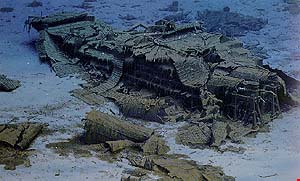
 On Sept. 1, 1985, the wreck of the Titanic was found lying
upright in two pieces on the ocean floor at a depth of about 4,000 m (about 13,000 feet). The ship,
located at about 41° 46' N 50° 14' W, was subsequently explored several times by manned and
unmanned submersibles under the direction of American and French scientists. The expeditions
found no sign of the long gash previously thought to have been ripped in the ship's hull by the
iceberg. The scientists posited instead that the collision's impact had produced a series of thin gashes
as well as brittle fracturing and separation of seams in the adjacent hull plates, thus allowing water to
flood in and sink the ship. In subsequent years marine salvagers raised small artifacts from the
wreckage and even attempted to lift a large piece of the hull.
On Sept. 1, 1985, the wreck of the Titanic was found lying
upright in two pieces on the ocean floor at a depth of about 4,000 m (about 13,000 feet). The ship,
located at about 41° 46' N 50° 14' W, was subsequently explored several times by manned and
unmanned submersibles under the direction of American and French scientists. The expeditions
found no sign of the long gash previously thought to have been ripped in the ship's hull by the
iceberg. The scientists posited instead that the collision's impact had produced a series of thin gashes
as well as brittle fracturing and separation of seams in the adjacent hull plates, thus allowing water to
flood in and sink the ship. In subsequent years marine salvagers raised small artifacts from the
wreckage and even attempted to lift a large piece of the hull.
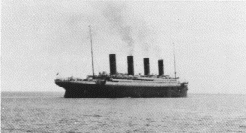 Titanic was 883 feet long (1/6 of a mile), 92 feet wide and weighed 46,328
tons. She was 104 feet tall from keel to bridge, almost 35 feet of which were
below the waterline... even so, she stood taller above the water than most
urban buildings of the time. There were three real smoke-stacks; a fourth,
dummy stack was added largely to increase the impression of her gargantuan
size and power and to vent smoke from her numerous kitchens and galleys. She
was the largest movable object ever made by man. The ship's immense size and
complexity is illustrated by an incident recalled by Second Officer Lightoller.
There was a gangway door on the starboard side aft "large enough to drive a
horse and cart through." Yet three officers who joined the ship during her
preparations spent a whole day simply trying to find their way to it.
Titanic was 883 feet long (1/6 of a mile), 92 feet wide and weighed 46,328
tons. She was 104 feet tall from keel to bridge, almost 35 feet of which were
below the waterline... even so, she stood taller above the water than most
urban buildings of the time. There were three real smoke-stacks; a fourth,
dummy stack was added largely to increase the impression of her gargantuan
size and power and to vent smoke from her numerous kitchens and galleys. She
was the largest movable object ever made by man. The ship's immense size and
complexity is illustrated by an incident recalled by Second Officer Lightoller.
There was a gangway door on the starboard side aft "large enough to drive a
horse and cart through." Yet three officers who joined the ship during her
preparations spent a whole day simply trying to find their way to it.
Moreover, she was designed to be a marvel of modern safety technology. She had a double-hull of 1-inch thick steel plates and a (heavily publicized) system of 16 water-tight compartments, sealed by massive doors which could be instantly triggered by a single electric switch on the bridge, or even automatically by electric water-sensors. The press began to call her "unsinkable."
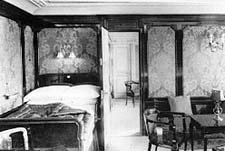 Her accommodations were the most modern and luxurious on any ocean, and
included electric light and heat in every room, electric elevators, a swimming
pool, a squash court (considered terribly modern), a Turkish Bath, a
gymnasium with a mechanical horse and mechanical camel to keep riders fit,
and staterooms and first class facilities to rival the best hotels on the Continent.
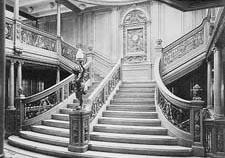
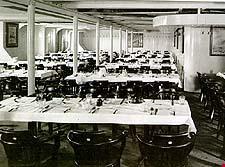
First class passengers would glide down a six-story, glass-domed grand
staircase to enjoy haute cuisine in the sumptuous first class dining saloon that
filled the width of the ship on D Deck. For those who desired a more intimate
atmosphere, Titanic also offered a stately à la carte restaurant, the chic Palm
Court and Verandah restaurant, and the festive Cafe Parisian. She offered two
musical ensembles (rather than the standard one) of the best musicians on the
Atlantic, many of them lured from rival liners. There were two libraries, first-
and second-class. Even the third class (steerage) cabins were more luxurious
than the first class cabins on some lesser steamships, and boasted amenities
(like indoor toilet facilities) that some of Titanic's emigrant passengers had not
enjoyed in their own homes.
Her accommodations were the most modern and luxurious on any ocean, and
included electric light and heat in every room, electric elevators, a swimming
pool, a squash court (considered terribly modern), a Turkish Bath, a
gymnasium with a mechanical horse and mechanical camel to keep riders fit,
and staterooms and first class facilities to rival the best hotels on the Continent.
First class passengers would glide down a six-story, glass-domed grand
staircase to enjoy haute cuisine in the sumptuous first class dining saloon that
filled the width of the ship on D Deck. For those who desired a more intimate
atmosphere, Titanic also offered a stately à la carte restaurant, the chic Palm
Court and Verandah restaurant, and the festive Cafe Parisian. She offered two
musical ensembles (rather than the standard one) of the best musicians on the
Atlantic, many of them lured from rival liners. There were two libraries, first-
and second-class. Even the third class (steerage) cabins were more luxurious
than the first class cabins on some lesser steamships, and boasted amenities
(like indoor toilet facilities) that some of Titanic's emigrant passengers had not
enjoyed in their own homes.
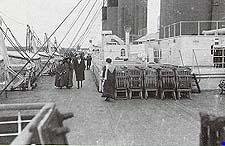
 The original design called for 32 lifeboats. However, White Star management
felt that the boat-deck would look cluttered, and reduced the number to 20, for
a total life-boat capacity of 1178. This actually exceeded the regulations of the
time, even though Titanic was capable of carrying over 3500 people
(passengers and crew).
The original design called for 32 lifeboats. However, White Star management
felt that the boat-deck would look cluttered, and reduced the number to 20, for
a total life-boat capacity of 1178. This actually exceeded the regulations of the
time, even though Titanic was capable of carrying over 3500 people
(passengers and crew).
She also had one of the very first swimming pools ever seen on an ocean liner.
 Today the Titanic lies in the North Atlantic off the coast of Newfoundland.
Split in two and separated by nearly a mile, the two parts (bow and stern) are
half stuck in the mud on the bottom of the ocean, 2.5 miles below the surface.
Unfortunately, it is slowly being eaten by micro-organisms and bacteria. During
the dives down to the Titanic several items have been brought up, such as
coal, glasses, the first class cherub, cups and china, jars, and other items. These
items have been spared decomposing in the Atlantic Waters.
Today the Titanic lies in the North Atlantic off the coast of Newfoundland.
Split in two and separated by nearly a mile, the two parts (bow and stern) are
half stuck in the mud on the bottom of the ocean, 2.5 miles below the surface.
Unfortunately, it is slowly being eaten by micro-organisms and bacteria. During
the dives down to the Titanic several items have been brought up, such as
coal, glasses, the first class cherub, cups and china, jars, and other items. These
items have been spared decomposing in the Atlantic Waters.