
Pike County Federation of Sportsmen's Clubs
The Red-Eft Newt
The Red-Eft Newt, Notophthalmus viridescens, is probably the most commonly observed salamander in Pike County. Also known as the Eastern Newt, this bright orange creature is commonly found on top of the leaves and along woodland trails after a summer rain.
While the Red-Eft is so very common, most people know so little about them. Unlike the typical amphibian that has three life stages. The Red-Eft Newt has four - the egg, the larval or tadpole stage, the adult or terrestrial stage, and a post-terrestrial stage where the newt returns to live out its life in the water.
Red-Eft eggs are laid in the early Spring. The jelly covered eggs stick to underwater vegetation where they incubate. The eggs soon hatch into little olive-green tadpoles ranging from 1/4 to 3/8 inches in size.
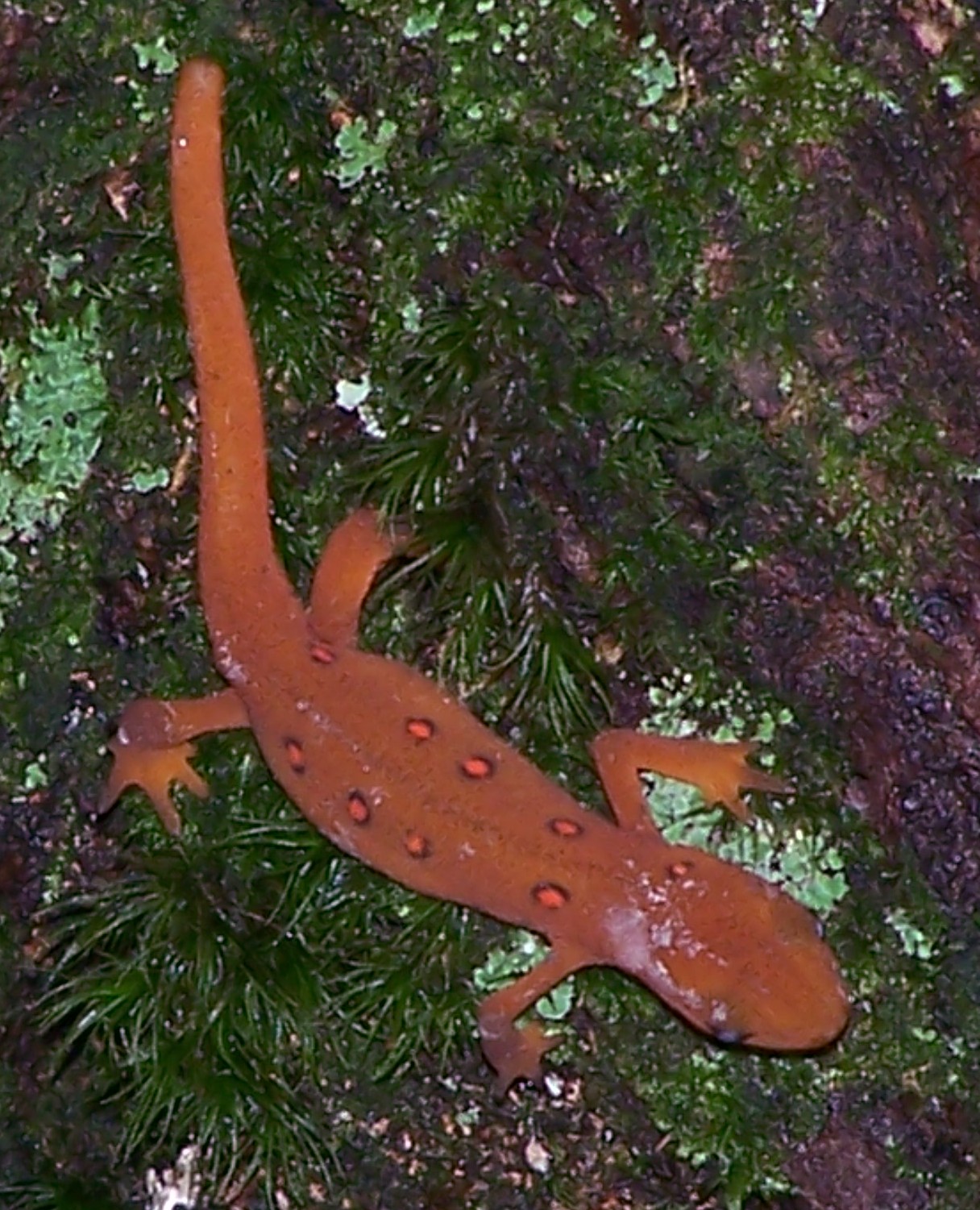
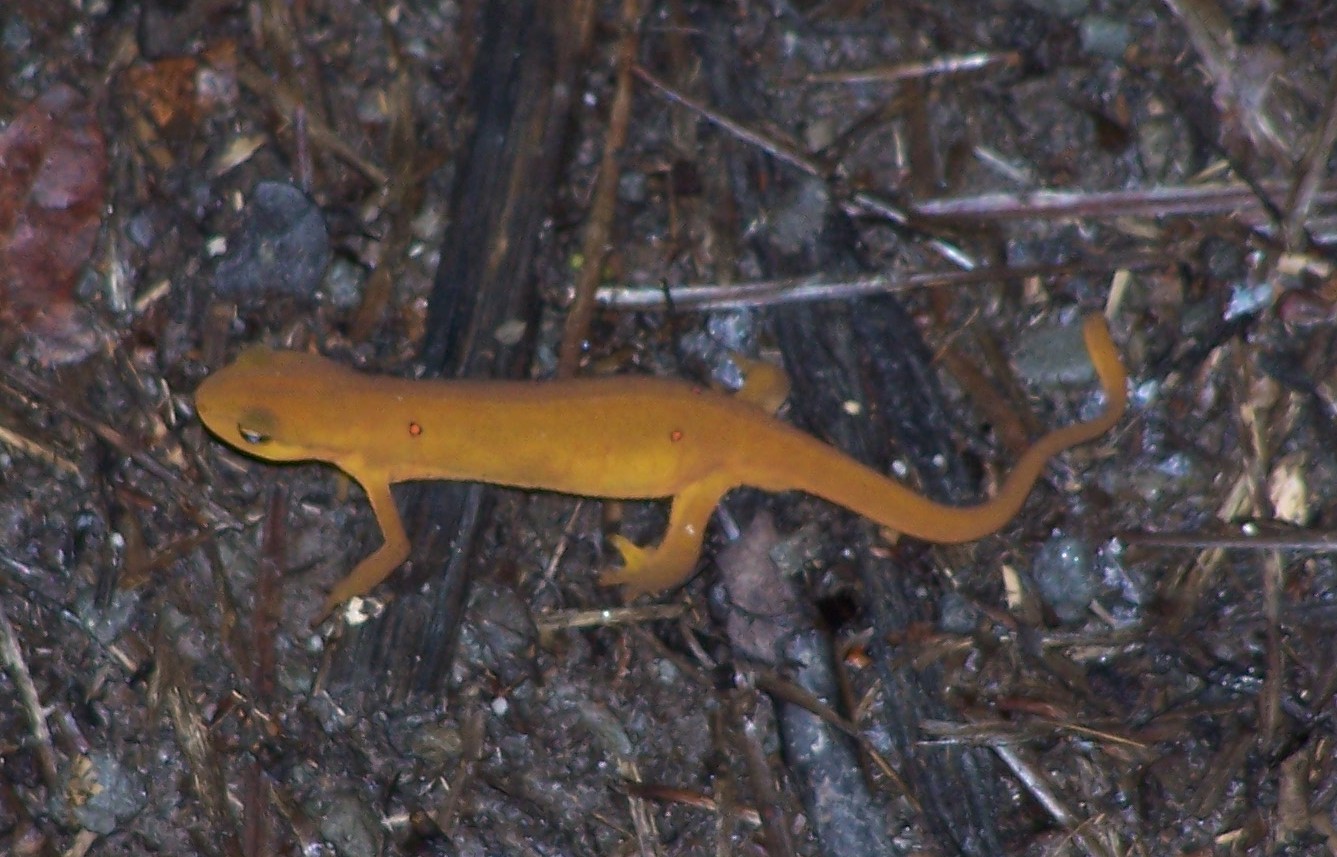
Red-Eft Adult Red-Eft with color fading before returning to the water.
After 2 to 5 months, the tadpoles metamorphose into the adult stage. The adult, at this time, is roughly an inch to an inch and a half long, bright orange in color, with two rows of red dots encircled in black.
As the adults leave the pond, they travel in all directions slowly dispersing throughout the countryside. They live in the leaf litter consuming small insects, worms, grubs and the like. Springtails, also known as snow fleas, are said to make up a large part of their diet. The newt has few enemies. Their orange coloration is nature's way of saying, "You don't want to eat me." Predators that decide to try one any way soon find the Red-Eft to range between very untasty and somewhat toxic!
After 2 to 3 years, the Red-Eft is about three to four inches long. It begins fading in color an indication that it is preparing for its final life stage. The newt begins working its way to the nearest pond or lake. When the newt is ready, it regrows its gills and once again turns olive- green. Its tail flattens and becomes tadpole-like. The newt retains its black encircled red spots and its bad taste / mild toxicity protecting it from fish and other predators.
In the final life stage, the newt preys on small aquatic insects while awaiting the urge to mate. It is believed that the Red-Eft can live for several years in this final life stage.

Final, aquatic stage.
