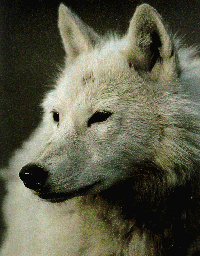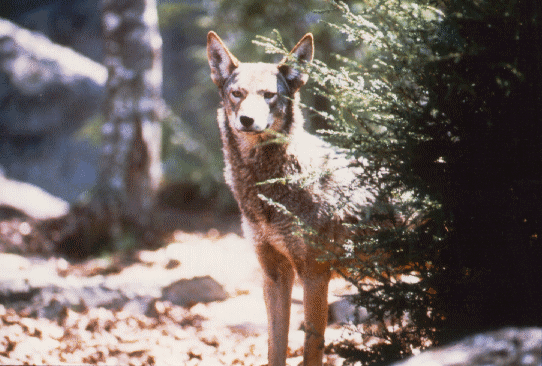
The red wolf has an identity problem. While controversies over the gray wolf (Canis lupus) have centered on the animal's effects on game animals and livestock, the smaller, more critically endangered red wolf (Canis rufus) carries this additional baggage: Scientists long have debated whether the red wolf is a distinct species. Red wolves once ranged throughout the southeastern United States. As with gray wolves, fear of conflict between red wolves and human activities resulted in eradication efforts. As red wolf numbers declined, the remaining animals in the wild were removed to zoos and other facilities to save the species. By 1980, the red wolf existed only in captivity, with a founder population of 14 animals.
Captive breeding efforts were successful, and red wolves have returned to the wild. The first reintroduction was made in 1987 at Alligator River National Wildlife Refuge in North Carolina. In 1991 and 1992, initial efforts were made to reestablish red wolves in the Southern Appalachians in Great Smoky Mountain National Park.
There are now approximately 300 red wolves in existence, about 80 of these animals in the wild. The remainder are part of captive breeding efforts at 36 facilities and three island propagation projects. Recovery goals for the red wolf call for a total 550 animals, including at least 220 in the wild.


Timber wolves are unique animals. Wolves today are dark gray to black, That is how they got their nickname gray wolves. The wolves' eyes can range from blue to dark brown to bright yellow. Timber wolves also have a long bushy tail. Timber wolves are two meters in length, and a large male is about 27 inches tall.The best place for timber wolves to live is the northern wilderness away from civilization. Timber wolves must have an environment to hide from their enemies, have a source of food, and also have running room.
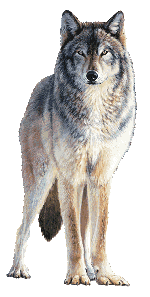
Gray wolves in the eastern part of the United States were virtually eliminated from the landscape, with the exception of animals in northern Minnesota. Protection under the Endangered Species Act has allowed this population to grow, and it is now estimated at 2,000 to 2,200 animals. In addition, wolves have returned to Michigan and Wisconsin, and these populations total about 284 animals. Gray wolves are listed as threatened in Minnesota and endangered elsewhere.
Because wolf populations are nearing recovery goals for the area around the Great Lakes, the U.S. Fish and Wildlife Service is examining options for changing the status of the wolf in that region. In Minnesota, numbers are increasing, and measures to assist livestock owners who suffer losses to wolves are being increasingly implemented. In Michigan and Wisconsin, wolf numbers are nearing the point that reclassification to the less-serious threatened may be possible soon.
Outside the Great Lakes area, gray wolves are almost non-existent. Two animals which may have been wolves were killed recently in Maine; state managers continue to monitor for evidence of wolves in the northeast.
Gray wolves in the Lower 48 states now number about 2,600, with more than 2,000 of them estimated in Minnesota. Currently all wolves in the Lower 48 states, with the exception of gray wolves in Minnesota, are listed as endangered under the Endangered Species Act. Minnesota wolves are listed as threatened.