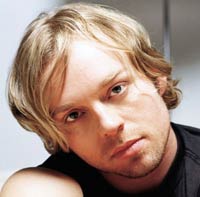  
Darren Hayes has been
toting the Celebrity Game long enough to be serious about his promotional commitments. So
when he had to reschedule this interview at the last minute to 24 hours later, one could
only assume he was struck by a killer bug and lying gasping for breath in bed, or been
kidnapped by terrorists.
"I managed to get
tickets for a very hard-to-get Broadway show called The Producers," he recounts the
next day between giggles. "I couldn't turn 'em down!"
The former Savage
Garden singer was in New York checking out Broadway shows and reading books about art and
design to get inspiration for his concert tour later in the year. The show will be
theatrical, less Michael Jackson dance routines and more the visual explosions you'd get
from a David Bowie, Peter Gabriel or Madonna.
There are some today
who shake their heads that Hayes and partner in rhyme Daniel Jones would walk away from a
money earning band that sold 20 million albums and put them atop of the Business Review
Weekly Top 50 Earning Entertainer list.
One listen to Hayes'
new album Spin would tell you why Hayes and Jones had outgrown Savage Garden. Hayes' album
is more electro-R&B, with guests like experimental electronic artist Robert Conley of
Specificus. Apparently buzz phrases used during the sessions were "Burnin' up!"
and "Drop that ghettoblaster!"
"Spin" is a
strong set of songs that are romantic, dirty ("What You Like" drools about doing
whatever a lover wants to be turned on; the original version of "Insatiable" had
a line called "I fall asleep inside of you" which was snipped by the record
company)., erotic and gooey. Yes, the old Michael Jackson hero worship is still there on
"Heart Attack" and "Dirty". Hayes admits that he rang to ask if he
could perform "Human Nature" at Jackson's 30th anniversary shows in NY last
September but was told the bill was full up. Ask him what he thinks of Jacko's new album
"Invincible" and he insists, "It's 70% brilliant".
Five years ago, when
Savage Garden started to hit, Hayes' definition of great entertainment was a Michael
Jackson video, because it was free, creative and exciting. These days, his definition of
what is entertainment has changed.
"My terms of
reference have definitely changed, and my mind is opening up," he admits. "I
don't know if it's because I turn 30 in May, or because I move a lot with people from the
film industry, or if it's just a post-September 11 thing.
"My definition of
entertainment is less spectacle and impressing with trickery, and more about mystery. I'm
into the classical, the enduring. I'm going to Broadway plays, my friends are giving me
Sarah Vaughn and Ella Fitzgerald records. Nowadays, my idea of cool entertainment is a
black and white photograph of Marilyn Monroe in the '50s doing a bench press. Here was a
STAR. She knew what to do. Long before the world was into a fitness craze, she KNEW."
He adds, "I don't
want to apologise I make pop music, it's instant fun and relief from sadness. That's what
I've loved about pop music, you don't have to intellectualise if you don't wish to. I'm
looking forward to a double entrende, having two levels to what I do."
Jones on the other hand
was gloomily looking at the treadmill of screaming crowds and endless promotional
interviews, and thinking how groovy life would be if he could get back to Brisbane, stay
in his studio and produce records for others.
Clearly Savage Garden
had mentally split years ago. Hayes' admission to an Australian journalist about the split
and naively assuming it wouldn't make front page news, left Jones unprepared and
embarrassed. It's doubtful they talk now. There are lines in "Heart Attack"
which hisses, "We used to stick together, you and me/stay that way forever/But now to
my surprise/you've become what we despised/One thing keeps buffing me/Tell me how you
sleep at night/Bye bye now." It's a pointed reference to the record label Jones set
up in Brisbane. A few years ago, when it was mooted that Savage Garden start their own
record label, Hayes decided against it, saying he was an artist and not a corporate
person.
To prepare for the
album, Hayes listened to the great soul masters, and read obsessively about the celebrated
love affair between John Lennon and Yoko Ono.
His original choice as
producer was Maurius DeVries, whose work on Bjork's "Debut" and Madonna's
"Ray Of Light" Hayes adored. But when they worked together, he found DeVries'
approach too clinical. Another producer mooted was Dallas Austin, the man behind TLC.
Hayes finally returned to Walter Afanasieff, who had worked on the second Savage Garden
album. An impressive aspect about "Spin" is the very high notes he gets -partly
because of the yoga he practises five days a week. Last year he also learned the art of
hip-hop to expand his stage vocabulary.
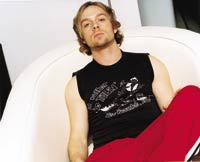
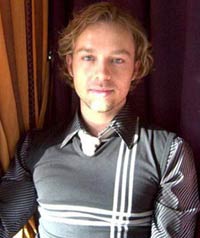
Hayes' image for this
album was an all-Australian boy, dying his hair back to his original blonde, and looking
more like a surfer with curls.
Newspaper reports
claimed his American label was not impressed with this image change, and insisted he
re-shoot it, this time looking more like the bloke from Savage Garden.
"Look, my hair is
blonde still. I shot the video in Sydney, it was beautifully shot but it seemed cold to
me, and I wanted something with more warmth. That's God's truth. They wanted to use the
footage of just me, and reshoot the other stuff. I said, Look, why spend money to reshoot,
just start again and get it exactly the way we want it. It wasn't a vanity thing. Savage
Garden shot three different videos for 'To The Moon' and three videos for 'Truly Deeply
Madly', Natalie Imbruglia did it with her new one. I'm a songwriter, not a film maker. If
I try something and it doesn't work, do it until you get it right."
"Good
Enough", about insecurities of an entertainer, is an autobiographical piece. Did his
mum see something in him, or did Hayes always see himself a star?
"I knew that more
than anyone else. When I was five I told everyone I was going to win an Easter
egg-painting competition. They tried to set me up in case I didn't win. But it didn't
occur to me I'd lose, and I didn't. That set the tone for the rest of my life. No one in
my family had been to university or had a technical trade or was in the performing arts. I
definitely felt the black sheep of my family. I thought my school friends were crazy for
not wanting to sing and dance and be in spotlight, and didn't believe in ET and Star
Wars."
Did he consider himself
an attractive child? "I did until I was six, and then I didn't. I took a long time to
feel attractive. Getting up onstage was just a way to try and convince everybody that I
was!"
|


