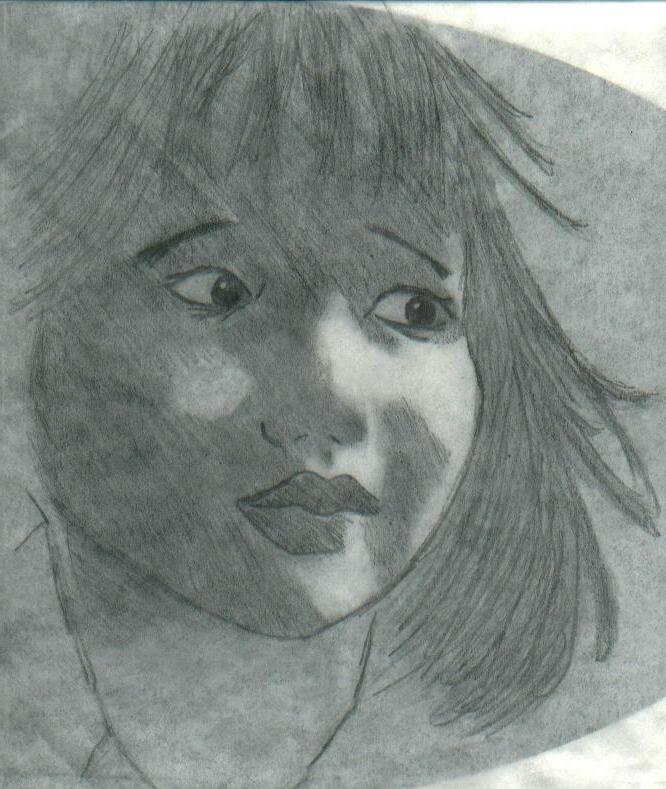
In the next year, Pocahontas gave birth to her first and only son, Thomas. I could tell right off he would be a great warrior to the tribe, that is, if they had decided to stay in Virginia.
In 1616, Pocahontas arranged to go to the New World, which John Rolfe called England. It took three moons until we finally reached the land. I must admit I gazed in wonder and pure astonishment to see this city called London. With the look of all these people looking back in wonder of us, I believe we both thought of the other as exotic creatures. Crowds gathered, all flocking like vultures to see us. Most of all, Pocahontas, whom was now called Lady Rebecca Rolfe to the white men, attracted the most attention everywhere she went. Those first days in London were amazing to the eyes of myself and the other Indians that accompanied.
Months went by, and Pocahontas turned into Lady Rebecca more each day. As did her son, Thomas Rolfe, he became a white English boy, fancy clothing and manners to match. He didn't know any better. She was ladylike, in a full-skirted gown, always speaking quietly in English, and arm in arm with her husband, now became a mere symbol of peaceful coexistence, twisted and turned by those of the English, the white men. She became caught up with the attention all too much, was now how I saw her in London, a Lady. At one point, she even had her portrait done. I remember seeing her sitting very still for quite a while in an English gown, hat, and holding a white plume fan, while the artist worked. To me, she looked more white each time she wore the clothes and with a personality that matched. I was too loyal to say anything to her. I understood that she was only trying to fit into the community and be able to give her people a good name to the untrusting English. It could have been that she was sidetracked as well.
One moment I will never forget. It was eight years back since the last meeting of John Smith and Pocahontas, and on a day like every other, she met him once again. I will never forget the look on her face when she first saw him again. I recall her putting flowers on his imaginary grave back home when the colonists told her he had died. Yet there he was, flesh and blood right in front of her. For the longest time she could not even speak. After a while, she regained her stature and talked with him about old times. She seemed to be her old self again, like a little girl having fun with an old playmate, and her face bright with expression. I couldn't help but smile at the two friends. At one point of the conversation she addressed him as father? He objected to the name, but I remember her saying, "were you not afraid to come into my father's country, and caused fear in him and all of his people and fear you here I should call you father: I tell you I will, and you shall call be child, and so I will be forever and ever your countryman." I knew she had changed when the word "countryman" came from her lips. I could tell that John Smith was surprised by her words, and I will never forget them either.
It was decided in 1617 to finally come home. I know I had missed my family and home, but I wondered about Pocahontas because I remember her choosing the colonists over our people after she had been kidnapped by them a long time ago. I never asked her about it, as she had her own family with her, her husband and her son. At the beginning of the voyage, it was apparent that that she was becoming ill. I knew it was some kind of English disease she carried. She became worse each day, and soon her son was showing signs of sickness as well. By the time the ship had reached Gravesend, England, she was unable to go any further. She tried to get well, as I was there to help her battle with the disease. Her husband was upset with grief. Her last words, were to him, "All may die. 'Tis enough that the child liveth." I believe he felt less guilt and pain from those words. I know I did, it was our princess Pocahontas saying those words, not Lady Rebecca. By mid March, she lost to the disease and her spirit left her body. John Rolfe decided to have her body buried there, at the church. I almost hoped he would of thought to take her back home, but it was too far of a journey to go. To me, I believe her dying was heartbreak from the meeting with John Smith that called the English disease to her body. Pocahontas did love John Rolfe, I know that for sure. Yet, she had another kind of love for John Smith, I had seen it in her eyes when she talked to him. Perhaps she just wanted too much.

