Lesson 10: Major Arpeggio Patterns
First of all, an arpeggio is simply the notes
of a chord played in succession rather than
simultaneously.
For example, a G major
arpeggio would use the notes G - B - D, the
same notes that are used to spell a G major
chord, only you would use the notes
melodically rather than harmonically.
Sometimes if you are soloing, and you want
to outline a particular chord with your
melody, you would use the notes from the
arpeggio of that chord.
The object is not to
always play the arpeggios from one end to
the other, but rather use the arpeggio as a
source of notes from which you can choose,
in any order, to construct your solo.
Because
of their intervalic relationship, arpeggios
can help provide your solo with a strong
melodic sense.
Main Points to Accomplish:
Learn each arpeggio form thoroughly, moving it to different roots.
Go through all of the forms and identify each note, whether or not it's the root, the 3rd or the 5th.
Connect all the forms together and practice with your metronome so you can move easily up and down the fretboard playing only arpeggios.
Whatever you do, don't blow off these arpeggios thinking "Hey, I already know my major scales and these arpeggios are covered in those scales - so why bother." I've talked with many players who have done this only to realize later that once they started working with arpeggios, their soloing really got better.
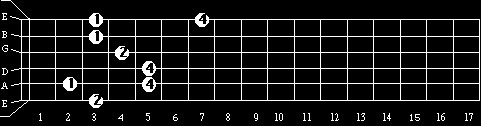
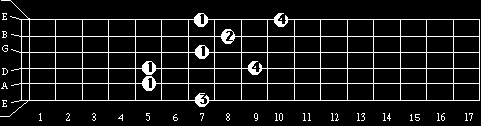
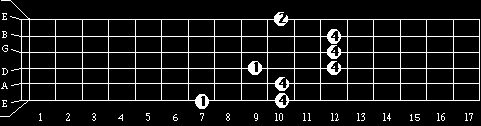
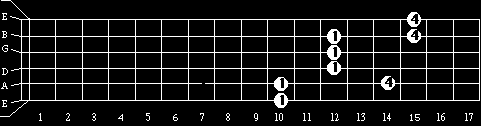
G Major Arpeggios
Form 1
Form 2
Form 3
Form 4
Please email me at TVieira@ix.netcom.com if
you have any questions regarding this lesson.
Back to Online Lessons
This site created and
maintained by
Unicorn Productions

