

Problem
Solving Strategies with Three-to-Five-year-olds:
Redirection
Consequences
Time Out
Offer Choices
Teach Problem Solving
Proactive Strategies
Problem
Solving Strategies with Three-to-Five-year-olds:
v Redirection -. If your child is
frustrated and unable to solve a problem, try a different activity.
For example, take a restless child outside for some
physical activity.
v
Consequences -. Let children experience the consequences of their action if it is safe
to do so.
For example, “If you can’t play with the block without throwing them, the block will be put away.” Then follow through and put the blocks away if the child continues to throw them.
v
Time Out -. “Time out” is when a parent removes a child from a situation for
refusing to follow the rules. It can be effective with children between the
ages of two and up.
1. Take your child to a safe, quiet place where
the child can calm down and regain control.
2. Briefly explain that you are having a time out
because of the child’s misbehavior. Do not argue or discuss at this point.
3. Bring the child back to play when the child
feels ready to try again. (generally,
the time out should be no more in minutes than the child’s age.)
4. Praise the child’s first acceptable behavior
after time out.
v
Offer Choices -.Choices help children learn how to make decisions. Offers simple
choices, but don’t threaten.
For example, “you can wash the dishes or dry them. You decide.”
v
Teach Problem Solving
1.
Help your child to define the problem. Ask questions,
such as “What would happen if you tried to do that.”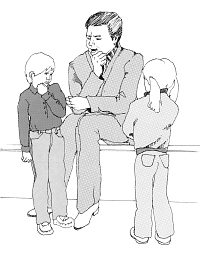
2. Together think of some solutions.
3. Choose the best one.
4. Try it.
5. Afterwards, talk about what worked and what you could try next time.
Child
misbehaviour is impossible to prevent completely. Children, usually curious and
endlessly creative, are likely to do things parents and other caregivers have
not expected. However, there are many positive steps adults can take to help
prevent misbehaviour.
v
Set clear, consistent rules.
v
Make certain the environment is safe and worry-free.
v
Show interest in the child's activities.
v
Provide appropriate and engaging playthings.
v
Encourage self-control by providing meaningful choices.
v
Focus on the desired behavior, rather than the one to be avoided.
v
Build children's images of themselves as trustworthy, responsible and
cooperative.
v
Expect the best from the child.
v
Give clear directions, one at a time.
v
Say "Yes" whenever possible.
v
Notice and pay attention to children when they do things right.
v
Take action before a situation gets out of control.
v
Encourage children often and generously.
v
Set a good example.
v
Help children see how their actions affect others.
<--- Back to main page
