Understanding Preschool Children
Ideas for Parents
Set up a Safe Environment
Establish a routine
Set a good example
Natural or Logical
Redirection
Negotiation
Ignoring the behavior
Affirmations
Take Care of Yourself
Preschoolers are delightful to have around, but at times can be quite a challenge! Learning how to get along with others and follow rules takes lots of practice for preschoolers; learning how to guide preschoolers takes lots of patience for parents. For that we decided to give you some suggestions and strategies on how to guide your preschoolers. And before we start we would like to tell you that you need to understand your preschooler before you start dealing with him/ her, to be able to learn more about his/ her developments and needs.
Understanding Preschool Children
Preschool children are busy learning about the world around them. They ask lots of questions and they love to imitate adults. They are learning to share and take turns (but don’t always want to). Sometimes they want to play with others and sometimes they want to be alone. Preschoolers also are quite independent. They like to try new things and often take risks. They may try to shock you at times by using “forbidden words.” Getting attention is fun, being ignored is not.
Preschoolers like to make decisions for themselves because it makes them feel important. They also are likely to get carried away and become rather bossy. Preschoolers have lots of energy—sometimes more energy than adults! They play hard, fast, and furious; then they tire suddenly and get cranky and irritable. Preschoolers spend a lot of time learning how to get along with others. “Best friends” are very important, but such friendships are brief and may last only a few minutes. Hurt feelings (and sometimes swift kicks) are part of the learning process too.
For more information visit:
http://www.nncc.org/Child.Dev/presch.dev.html
Ideas for Parents
We believe that different children respond in different ways to guiding methods. Successful parents often use a variety of approaches to deal with behavioral problems. We read many articles to know more about guiding children, from these articles we chose one, and we hope that you will find it useful and to help you in guiding your preschoolers.
In 16 Tools for Effective Parents by Molgaard, Virginia, she suggested to:
Set up a Safe Environment
One of the most important things a parent can do is to establish a safe environment. Preschoolers are delightful to have around, but at times can be quite a challenge! Learning how to get along with others and follow rules takes lots of practice for preschoolers; learning how to guide and discipline preschoolers takes lots of patience for parents.
Preschoolers move quickly and love to climb and explore. Take a close look at your home including the exterior, garage, and yard. You may be able to avoid some accidents. Fix, repair, toss, or lock up anything that might be a danger to your child. It also is important to be on the look out for dangerous situations while running errands or visiting others with your children. Having a safe place to play and appropriate toys to play with can save you from saying “NO,” making your job as a parent much easier.
Establish a Routine
Preschoolers need a consistent routine and reasonable bedtimes. Their small stomachs and high energy levels frequently need nutritious snacks and meals. Establishing consistent times for eating, napping, and playing helps children learn how to pace themselves. Balance the day with active times, quiet times, times to be alone, and times to be with others. Take care of basic needs to help prevent frustrating situations with a cranky and whiny child.
Set a Good Example
Preschoolers love to imitate adults. Watch your bad habits because your youngster will be sure to copy them! If you want your child to use good manners or pick up his or her room, be sure to demonstrate how to do it. Preschoolers are very interested in “why” we do things; it helps to explain what you are doing in very simple terms.
Natural and Logical Consequences
Natural and logical consequences help children understand the connection between their actions and the results of their misbehavior. Natural consequences are results that would naturally happen after a child’s behavior if the parent did not do anything. Would be dangerous for a child to experience the natural consequence of running into the street and getting hit by a car! Logical consequences happen when a parent helps the child correct the behavior.
A logical consequence of a child running into the street could be losing the privilege of playing outside. Dad might comment, “Looks like you will need to play inside. When you can stay out of the street then you can play outdoors.”
Redirection
Often, the problem is not what the child is doing, but the way he or she is doing it. In that case, redirecting or teaching the child a different way to do the same thing can be effective. If the child is drawing on books, remove the books and say, “Books are not for drawing on.” Offer a substitute at the same time and say, “If you want to draw on something, draw on this paper.” If your child is throwing blocks, you can remove the blocks and offer a ball to throw. If the child wants to dance on the coffee table, help him or her down and ask your child to perform for you on the front porch.
Negotiation
Win-win solutions are usually only possible when you can see the situation from your child’s point of view. When you know what’s really important to your child, you can negotiate a solution that she/he will be happy with. According to Eleanor Reynolds in her book Guiding Young Children she suggested that:
No one wins or loses; solution is acceptable to all concerned. All concerned have
equal input; all ideas are considered equally. Children decide on solution, stick to it, or renegotiate.
Steps of Negotiation:
- Help children identify the problem, focus on the problem.
- Encourage children to contribute ideas, talk to each other.
- Restate all ideas in a positive, understanding way.
- Help children decide on the idea they like best, or think of others.
- Help children figure out how to put their solution into action.
- Reinforce the process when they have solved the problem.
Tips:
- Avoid forced sharing, forced taking turns, and forced saying “I’m sorry”
- Asking “who had it first?” or blaming.
- Encourage using words, talking to each other.
Ignoring the Behavior
Undesirable behavior can sometimes be stopped by not paying attention to it. In some situations this can work effectively. Withhold all attention, praise, and support. Eventually, the child quits the unacceptable behavior because it does not bring the desired attention. This works particularly well when a child uses forbidden or swear words to get attention.
Principles of Effective Ignoring
Look away from your child.
Move away from your child (at least three feet).
Maintain a neutral facial expression.
Ignore your child's verbal pleading or insults.
Begin to ignore immediately after the misbehaviour.
Only use ignoring along with praising or another positive reinforcement plans.
Affirmations
Parents can instill and encourage good self-esteem in their children by meeting their needs and by setting realistic expectations for their behaviors. “Raise self- esteem, and help children feel important”, That what Eleanor Reynolds suggested in her book guiding young children through:
The most significant ways to build a preschooler's self-esteem are to support his need to explore, keep him safe, and talk with him about his experiences. These things add to his self-worth and encourage his sense of competence.
One of the most common parent complaints is that their child or children don't listen to them. They find that when they ask their child to do something, it doesn't get done. Their child may argue with them. Sometimes a parent asks their child to do something five or six times before the child complies. Typically, parents may struggle to get their child to go to bed, take out the trash, bathe, or complete homework. At times, parents also have trouble getting their children to stop certain behaviour. For instance, they may find themselves telling their child repeatedly to stop fighting with a brother or sister, stop arguing with a parent, or stop playing with food.
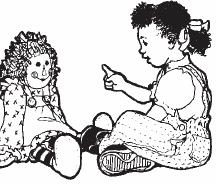
Principles of Effective Directing
· Look your child in the eye.
· State your expectations in a direct and firm manner.
· If you don't want to give your child a choice, don't ask tell him or her.
· Don't be sidetracked by excuses, whining, or arguing.
· Give your child two chances, and then use mild social disapproval, response cost, or time-out to enforce your authority.
Adults accidentally give children choices when they say:
· "Will you please go to bed?"
· "Cupcake, it isn't nice to pour your father's coffee on his lap."
· "When you grow up and look for a job, you will wish you did your homework."
An adult who was being effective and assertive would say:
· "I expect you to be in bed in five minutes."
· "Denise, you are never to do that again, apologize to your father, get a rag, clean up the coffee and then go to your room."
· "It is time to do your homework. Turn off the television, go to your desk and get started."
For more information visit:
http://fresno.networkofcare.org/kids/library/articleList.cfm?cat=63
When All Else Fails
Sometimes children have a behavioral problem that seems to happen over and over. When nothing seems to be working, try the who, what, when, where and how method. Ask yourself, “When does the troublesome behavior seem to happen? What happens just before and after? Where does it happen and with whom? How do I usually respond? How could I prevent the behavior? What other approaches could I use?”
The best method to find a more successful way to cope with behavioral problems is to take the time to think about options.
For more information please visit:
http://fresno.networkofcare.org/kids/library/articleList.cfm?cat=63
Take Care of Yourself
Parenting preschoolers is challenging and works better when you remember to take care of yourself. Remember to rest, eat well, and relax. Above all else, try to maintain a sense of humor. When you discover your child dumping flour on the floor or finger painting with the sour cream, remember that someday this will be a great story to tell your grandchildren. Grab a camera and take a picture! You will want to remember this. Honest.
<--- Back to main page