

Communication
Techniques
Tools
Tips to communicate with children to help guide them
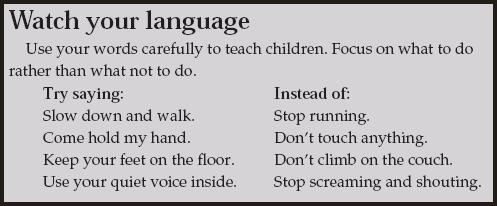
Watch your Language
Practice Active Listening
Validate your child's feelings
Ask questions
Modeling Good Listening Skills
Improving Communication with Children
Communication
The better your overall relationship with your child, the more influence you will have in his or her life and the easier it will be to teach new skills. Darla Ferris Miller said in her book Positive Child guidance that: the achievement of effective child guidance really hinges on the achievement of mutual communication. The most effective tools for children to learn communication skills are modeling and practicing the words and interactions they have observed. Therefore , adults who care for and teach children need well- developed communication skills. These skills help them to:
· Understand and interpret children’s need.
· Clearly express expectations to children.
· Teach effective communication to children by modeling.
Techniques:
· I-Messages. This communication technique helps parents correct their children without calling them names. For example, instead of saying, "You are so lazy!" a parent can say, "When you don't do your homework, I feel disappointed and disrespected." The child gets very specific information on what behavior is wrong instead of general criticism of his character.
· Consequences. Consequences promote learning and responsible behavior without threats. A threat intends to frighten a child into obedience and is usually critical or punishing. Consequences offer real experience and real choices.
Maintaining a positive relationship with your child is more than just feeling love--it's about expressing that love in various ways beneficial to the child. "Never take it for granted that your child knows how much you love him," advises parent educator Jan Faull and author of Mommy! I Have to Go Potty!, "You must demonstrate that love with words and actions every day."
Tools: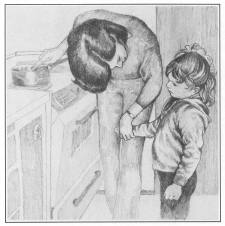
When your relationship with your child is healthy and thriving, he will accept your influence more readily and will respond more positively to new tasks and demands.
For more information visit:
http://www.essortment.com/in/Children.Parenting.Discipline/
How to communicate with your children to guide them in a better way
Deborah Chen stated in her article "Learning to Communicate", in Parenting Magazine, that good communication should take place every day. Set aside a few minutes a day to talk with your child. Talk about problems or challenges that might have come up during the day and discuss how you handled them. You can even ask your child for his ideas on simple matters to help him build problem-solving skills.
Here are a few tips to help you communicate with your child:
Practice active listening. When you show interest in what your child has to say, she will open up. One technique to show you're listening and understanding is to paraphrase what your child tells you. Try doing this the next time you have a conversation. For example, your child says, "I like playing soccer, but practice is the same time as my favourite show on TV." You might say, "Wow, that's a tough choice. On one hand, you really like playing soccer; on the other hand, you don't want to miss your favourite show."
Active Listening
We believe that we need before everything to listen to our children, to understand them, and to be able to help them, and that will help them feel valuable, loved and included. According to Eleanor Reynolds in her book Guiding Young Children, she says: “that active listening is part of the process that is problem solving. By itself, it fills a deep need held by all of us: to be heard, understood, and accepted.”
Active listening is a two-part process:
1. Listen to the content of what is being said.
2. Acknowledge the feelings of what is being said.
Why active listening is important?
· Helps children think and take responsibility for themselves.
· Encourages children to solve their own problems.
· Decodes messages that are "hidden."
· Teaches children how to listen to your thoughts and ideas.
· Helps children accept their negative feelings.
· Raises children's self-esteem.
· Promotes warmth in relationships.
Validate your child's feelings. Sometimes, children react to situations in ways we think are inappropriate, silly, or overdramatic. That's because children don't have the benefit of our adult experience.
Ask questions. Children have a lot to share when they think their opinions matter. Ask for your child's input about family decisions. These decisions may range from what to have for dinner to where to go for a family outing. Showing interest in her opinion will make your child feel more comfortable about opening up to you. If you are able to open the lines of communication with your child about day-to-day events, she will be more likely to seek your input on more serious issues as well.
How Can Parents Guide Their Children To Better Listening?
Parents can model good listening behavior for their children and advise them on ways to listen as an active learner, pick out highlights of a conversation, and ask relevant questions. Sometimes it helps to "show" children that an active listener is one who looks the speaker in the eye and is willing to turn the television off to make sure that the listener is not distracted by outside interference.
Guidelines for Modeling Good Listening Skills:
· Be interested and attentive
· Encourage talking
· Listen patiently.
· Hear children out
· Listen to nonverbal messages
Suggestions for Improving Communication with Children :
Be interested. Ask about children's ideas and opinions regularly. If you show your children that you are really interested in what they think, what they feel, and what their opinions are, they will become comfortable about expressing their thoughts to you.
Avoid dead-end questions. Ask children the kinds of questions that will extend interaction rather than cut it off. Questions that require a yes or no or right answer lead a conversation to a dead end. Questions that ask children to describe, explain, or share ideas extend the conversation.
Extend conversation. Try to pick up a piece of your child's conversation. Respond to his or her statements by asking a question that restates or uses some of the same words your child used. When you use children's own phrasing or terms, you strengthen their confidence in their conversational and verbal skills and reassure them that their ideas are being listened to and valued.
Share your thoughts. Share what you are thinking with your child. For instance, if you are puzzling over how to rearrange your furniture, get your child involved with questions such as, "I'm not sure where to put this shelf. Where do you think would be a good place?"
Observe signs. Watch the child for signs that it is time to end a conversation. When a child begins to stare into space, give silly responses, or ask you to repeat several of your comments, it is probably time to stop the exchange.
Reflect feelings. One of the most important skills good listeners have is the ability to put themselves in the shoes of others or sympathize with the speaker by attempting to understand his or her thoughts and feelings. As a parent, try to mirror your children's feelings by repeating them. You might reflect a child's feelings by commenting. Restating or rephrasing what children have said is useful when they are experiencing powerful emotions that they may not be fully aware of.
Help clarify and relate experiences. As you listen, try to make your child's feelings clear by stating them in your own words. Your wider vocabulary can help children express themselves as correctly and clearly as possible and give them a deeper understanding of words and inner thoughts.
<--- Back to main page

