1. Dalila Meziane
(Algeria)
UNIVERSALIZATION
Globalization (or Globalisation) is an umbrella term which refers to increasing connectivity, integration and interdependence in the economic, social, technological, cultural, political and ecological spheres. It relates to advances of information technology, novel governance and geopolitical changes. Globalization is perhaps best understood as a unifying process that helps bind people and the biosphere into one cosmic system.
The Encyclopedia Britannica says that globalization is “the process by which the experience of everyday life …is becoming standardized around the world.” While some scholars and observers of globalization stress convergence of patterns of production and consumption, resulting in homogenization of culture, others stress that globalization has the potential to take many diverse forms.
Critiques of the current wave of socio-economic universalization typically look at both the damage to the planet, in terms of the perceived unsustainable harm done to the biosphere, as well as the perceived human costs, such as increased poverty, inequality, injustice and the erosion of traditional ways, ethical morals and family values.
Talented contemporary artists, writers, poets, journalists and scholars, each sharing their own unique perspectives and socio-cultural experiences, deeply impact our day to day existence by creating a positive energy impact in the diverse heritage humanitarian revolution.
2. Geoffrey Jackson
(Denmark)
IN MEMORIAM
From memories there’s no escape. I will always remember vividly my stepfather’s father’s knife, shaped in a form to be both a knife and a fork, so he could eat his food with one hand. The other hand had been lost in Flanders’ Fields long ago. However did he manage to be a masterful cobbler with one hand all his adult life? He liked to tell a funny story about how he once hailed a double-decker by sticking out his artificial hand. The bus hit it and knocked it off. When the plastic arm came off, nearly to the elbow, a woman fainted. There was no blood – that time.
What of today’s wars and today’s vets? The biggest wars of our New Millennium have been in Iraq and Afghanistan. I regret to say that I do not consider them to be a Victory for Democracy. With a sinking feeling of loss and despair in the pit of my stomach extending deep within the bowels of my soul, I rue what should have– could have – been won.
All the maimed amputees and the needless deaths, their ultimate sacrifice seemingly a vainglorious waste of young lives for a mishandled Cause that was Just, but which was not carried out effectively. We shall never forget the brave young men and women committed to noble service for their beloved countries. Now, all of US must keep going, coping and living with defeat, unblinking weary and wary eyes wide open to the smoldering ruins of our tarnished ethical standards and bruised ego ideals.
I’m no longer sure if I still believe in God. Then again, my doubts take comfort from the wise-guy who said: “If there was no God, we would have to invent one.” God represents our sense of purpose, whether he (or she) exists or not. On Remembrance Day in England and Veteran’s Day in America, we pay tribute to Yahweh, God of Battles, who has lent strength to our right arm and enabled us to strike a blow for Liberty and Justice.

3. Philip G. Bell
(U.K.)
A TRUE STORY
"Grave III.A.3., Warlincourt Halte British Cemetery"
When I left school, I wanted to join the Regular Army and was
surprised to learn that my Mother was strongly opposed to the idea.
Not perhaps in the sense that most Mothers would be, this was deeper,
stronger almost bordering on anger. It would be years after my
Mother's death that I would learn what lay behind her opposition.
To understand her story you must travel back in time. My Mother was
born on the 9th April 1903 to her parents William and Bessie Warren.
Bessie's surname before marriage had been Hammond and she was one of
9 children born between 1879 and 1899. One of her brothers was named
Walter and he was born in 1897 making him just 6 years old when my
Mother was born.
At the onset of World War 1, Walter was just 17 years of age and my
mother Dorothy, just an impressionable 11 years of age. My Mother was
the eldest child by Bessie, so Walter was the big brother that she
never had. She looked up to him - this young man only six years her
elder and her beloved Uncle.
"Your Country needs You" screamed the Posters around every town and
village in the United Kingdom. New Regiments were being formed to
create a new British Army to fight in what was called the Great War.
Young Walter was caught up in the fervour of the times and at the
tender age of just 17 years (perhaps he lied about his age, so many
did) he enlisted.
Even today it is hard to imagine what thoughts would have gone
through an eleven year old girl's mind at that time. Perhaps pride to
see her brave Uncle in uniform, perhaps fear of the unknown, perhaps
a little of both.
I have not managed to find out much of what happened to my Great
Uncle Walter, except that on 13th September 1916 he died of wounds
sustained in the Battle of the Somme. At the age of 19 years, he had
been promoted to Lance Corporal.
From what we now know of the Great War, after 2 years he must have
been considerably battle hardened or perhaps just a weary soldier
doing what little he could in the dreadful trenches of the Somme.
I now know why my Mother did not want me to join the Army, although I
did join as a reservist - much against her wishes. She would have
been 13 when Walter died and even so many years later she could not
talk of him.
I have one duty left in my life as yet not fulfilled. I want to visit
Grave III.A.3., Warlincourt Halte British Cemetery, SAULTY, Pas de
Calais, France.
To tell Great Uncle Walter how much my Mother cared and how that
memory will live on.

4. Earl J. Wilcox
(USA)
BACKWATER BAPTISM: Summer, 1948
5 S.K. Kelen
(Australia)
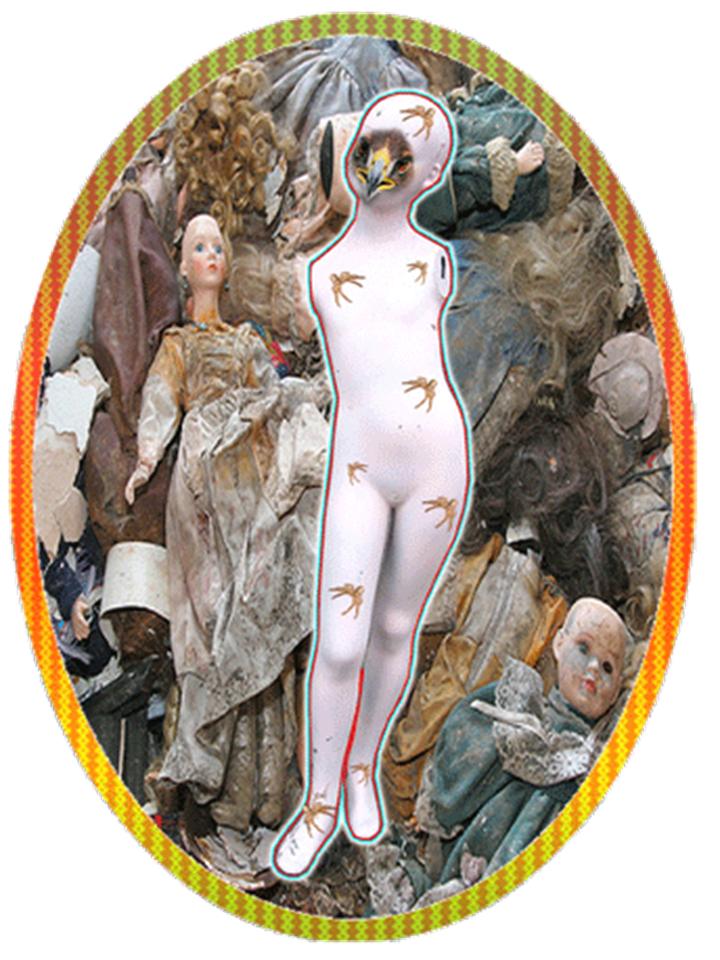
HOUSE OF RATS
They're up there all right,
in the roof playing scrabble,
listening to scratchy
old Fats Waller records.
They started out
a gang of desperadoes
escaped from a laboratory,
arrived via a garbage truck
up overhanging tree branches
elbowed their way in & soon
the colony is an empire of rats
who eat the insulation batts
chew wires, through the ceiling
to ransack the kitchen
take bites out of everything
& carry off furniture. I can hear them
scurrying with bits & pieces, hammering & sawing:
they're building houses—a model rat town—with
imitation garages to park stolen toy cars in.
After munching down another box of double strength poison
the rats are back at work with a vengeance, thump
around the rafters insulating the house with rat shit.
Or hard at love writhing, squealing like sick starlings
or kicked puppies. The weaker explode
and TV screens fill with rats' blood but there's
more where they came from. Teeming over
mountains, down valleys, jamming highways, falling
off bridges to scurry ashore up storm water drains.
Exterminators arrive dressed as astronauts and poison
the house for ten thousand years. It's time to move out.
But the rats have laid eggs in your pockets, stow
away, follow you from house to house.
The curse enters its exponential phase.
Tentacles unwind from the ceiling, dirty great moths
and leopard slugs take over your happy home.
Soon you are a trellis. That's just what the rats say.
I'm down here listening to radio messages,
oiling automatic weapons, building rockets.
Living in a rat's belly.

6. David Thornbrugh
(South Korea)
SHRINKAGE
my pet rhino no bigger
than a dog greets me at the door
when I come home
happy rhino charging my knees
pleased to be alive thanks
to the power of science
to shrink any problem and
change the color of the question
what to do about too many people
crowding out the animals
save the whales by making them smaller
swimming in tanks so cute
a narwhal for your daughter
a polar bear in the freezer
to bring out for parties
it’s the answer of science
to the question of us
what to do about our urges
we can’t consider cramping
we can’t give up our children
and our children need pets
when we run out of room
we’ll shrink us
7. Cyril Wong
(Singapore)
HERE & NOW
Here between the country
that will not remember our love
and the sea, our clothes spill
like sand from a tilted
palm. Then we are walking
arm in arm. We are gazing
in the same, unwavering direction.
There is no need to mourn
for what we have left behind.
Look as our footprints
evaporate when we approach
the chiming of waves, waves
rising and tugging at us like joy.
This is not an ending
and time has not been
unkind. We reach the edge
of our lives. We stop in awe
of how much further we have to go.
8. Amitabh Mitra
(South Africa)
SOMEWHERE
Somewhere
far off
beyond the sand dunes and a ragged
sky-piece
pierced with the last of camel hooves
tired in pursuit of a long
day, the evening in its bridal finery finally lets the day
sleep in her arms.
Somewhere
a sea rages in an impatience of gold and green
of mustard fields
of footfalls
of silence
closing in on
moments again.
Somewhere
somebody lights a candle of dreams in
a back yard of my desire.
9.Nikola Madzirov
(Macedonia)
RETURN
I open fearfully the door
to draw a border with the sun rays
upon the carpet.
I feel like shouting,
but the echo of the unfurnished room
is faster than me.
The sweat on the door-knob is not mine
and the rush on my neck
does not belong to this world.
I emerge in several
painted memories,
My soul is the womb's palimpsest
of a far-off mother.
Hence the thought of return
and the quiet squeaking of the hinges.
Translated from Macedonian by
Zoran Anceski
10. Živorad Nedeljkovic
(Serbia)
Belgrade, a desire to magnify
(Beograd, želja za uvecanjem)
I am relishing my fourth apple,
but peeling words and using only the husks.
I hear a childhood friend, who dropped in
After ten years or so, chatter about the metropolis,
He is grown into its labyrinths, the rat;
Safely drunk, he roll-calls the names of actors and singers,
Bolding bullet points of biography, he focuses on
Skin imperfections, not heeding
The futility of this work. He worms his way still deeper into the fruit,
And I find out about who never sobers up, which one is a whore
And the like detail of urban planning.
Curled before the sudden vivisection,
I foretell needles and narcotics. My friend
Is up to the challenge: he drinks with authority;
Homesick for his birthplace and its distilled beauty,
He skims the unripe cream.
In a short piece on criminality
And murders, he says, You touch nobody,
Nobody touches you, it’s simple. He bears down
On his disbelief, slurring. Is it possible
Not to touch anybody, I wonder. Unaccustomed
To visitors, I shelter behind sober words,
Inside the hollowed-out layers of the predictable
I wander, as always without haste, to the periphery
Of my body’s excavation site. And feed it, like tonight,
Avoiding the worm-ridden parts.
11. James Penha
(Indonesia)
MADDIE’S MIRROR
Maddie hasn’t been
the same since she walked through the door
in the mirror that reflected her reality
when she painted it on her bedroom wall.
So clear to her,
though she could not dance like Fred Astaire
on walls or walk like Alice through glass,
Maddie scaled the dimensions she imagined
when she painted the mirror.
Maddie hasn’t been
the same since she reached the side
where shadows obscure her
but fulfill the perspective in the mirror
she drew where the door remains ajar.
12. Jennifer Compton
(New Zealand)
CASTLE
O forgive me but I forget my name.
It was a long time ago when the men
came on horseback with their swords drawn.
I was a boy. Not a man.
There were plenty like me.
We did what we were told to do.
It might be to carry a plate of food
up into the light of the hall
where the people were.
And then, that day – I was underground –
I heard the noise and went upstairs
to see all the people killed.
The men – on horses – O
white and black and bay – drinking blood.
Nothing to do with me.
I sat all night on the bottom stair. I was cold.
And nothing stirred. Everybody dead.
At dawn I understood that they had killed me.
I got to my feet and walked away from the castle.
As I walked across the meadow towards you
the ones like me were waking from their sleep.
13. Taki Yuriko
(Japan)
A DEAD CHILD AT HIROSHIMA
The sound of a bat flapping its wings
Mama
Is the sound of my knocking?
A hole gapes in the sky
Mama
Is the scar of clouds scorched at the scattering of my fresh.
The voice of Emperor Hirohito praying,
Is my alarm clock screaming at me never to sleep.
Look, Mama
My little sisters are playing over my head.
From inside my eye
A single blade of grass
Is about to grow.
Long have my eyes been bone dry
Mama
No longer do cry.
14. Teresinka Pereira
(Brazil)
NOTHING
Nothing is a long time
in the waiting room
in grief and sorrow
every morning.
Nothing is returning
to the emancipated breath
of freedom under parole.
Nothing was hope
in the lobbies of time,
the fever in my tongue
and inside my body.
Nothing is this life
of strayed eyes and this
almost extinguished
flame still shining
in case that you
decide to love me.

15. Maurice Young – Yun-da Yang
(France)
MIRROR
I am standing
In front of the mirror
Looking from this side
Into the other side
My childhood
Went into mirror
My boyhood
Went into mirror
My middle age
Went into mirror too
How do I appear
In the mirror today?
My naivete disappeared 60 years ago
My handsomeness 40 years ago
My pride 20 years ago
In front of the mirror today
Is standing a silver-haired
Old man
The expression in his eyes
Is so deep, immeasurable
16 Diablo Zhang Zhi
(China)
RISING
You are aloof, evil, elegant and gloomy
Like a snow leopard, like a crescent moon
My witch, my Mona Lisa
In your melancholy and mysterious eyes
I’m willing to be gracefully cut by your knife
I’m willing to turn into a pile of ash
Pillowing the green hills and rivers alone
Listening to your wordless repent
Plum, I’ll stand in hell or heaven
To see how you draw back the cutting edge of your red lips
No, in the centre of the storm of time
I, a free poet
In the instant of falling, will die without a burial place
If I refuse to rise

17. Dimitris P. Kraniotis
(Greece)
ASHES
The fireplace
was eager
to put a full stop
in the sentence
where the road
of my dreams
stuck
upon the word of happiness
with sparkles
of wet logs
I collected
from the inside of me
that I dared
to turn to ashes.
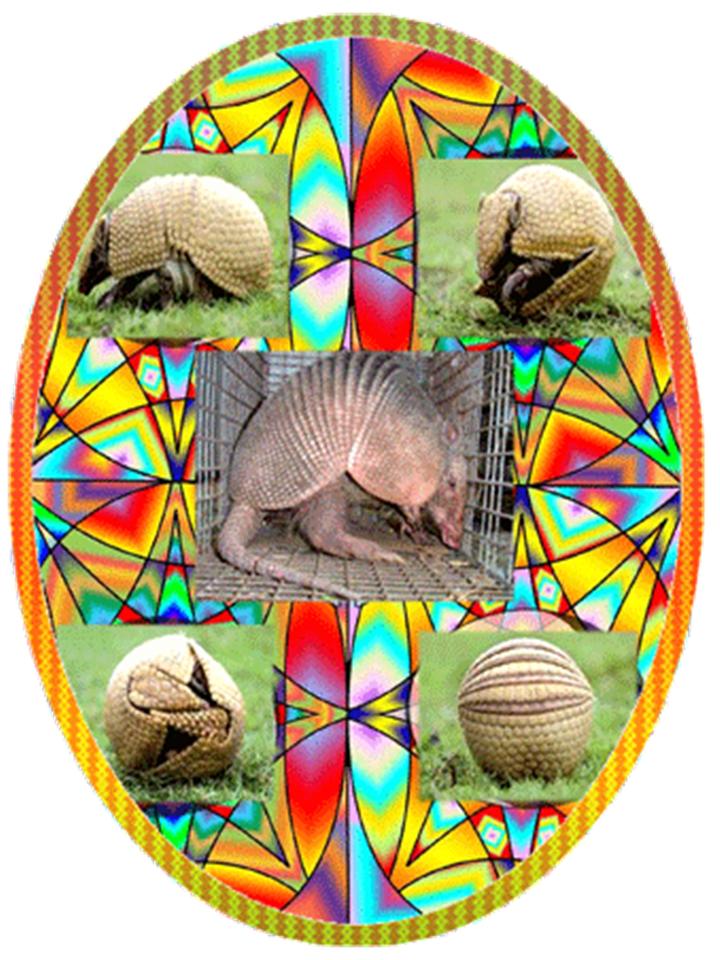
18. Max Babi
(India)
WALLS
Cradled on his knees
I heard my father rattle off
Partition's horror stories -
my dreamscapes' sky turned red.
And I shuddered.
As an adolescent
I came face to face
with corrosive venom
spewed by frothing missionaries
of false pride.
And I cringed.
I read about genocide in Africa,
a victorious general
forcing the rebel loser
to eat his own recently carved-out kidney.
And humanity crumbled.
Driving from Bergotel Bestei to Dresden,
...
I pass a signpost on the road
"To Auschwitz."
Half a million corpses rose.
I swallowed my tongue.
Nearer home,
they smashed an infant's head on the kerb,
shoved an iron rod two feet deep
between a schoolgirl's legs,
carved open a lady lecturer's stomach
and stuffed burning rags inside.
I shrunk.
Now, in my green heaven,
where crickets and frogs
fritter away their songs,
I hear the distant rumble
of the invisible walls
closing in.
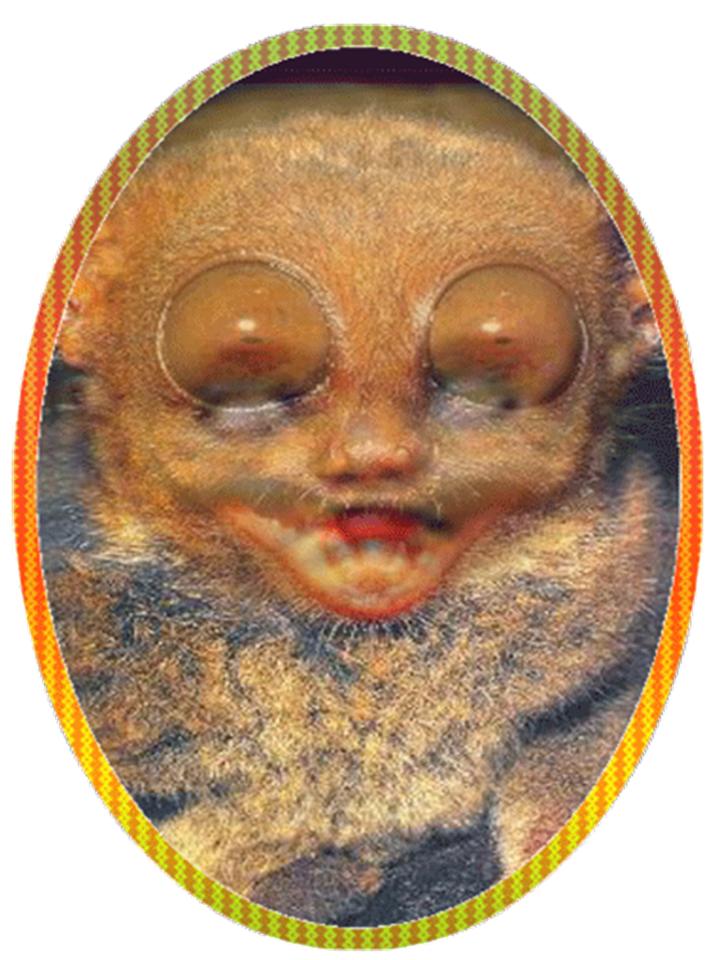
19. Paul Gilbert
(Canada)
DESPERATE HEAT
in desperate heat
I am your prey
My form lies before you spent
I was your predator
It was you I stalked
It was your blood my appetite demanded
Your flesh to feed my need
Your arousal was to be mine
I followed all instincts tuned to you
To swallow you in my love
You were for me to enjoy
I had you in my grasp
Your heart exposed to my talons
With crazed fever I beheld your form
Spread before me
Supple and alluring
Then
I saw in your eyes
in sanctuary a place where
The heat of my passion could be lulled
In peace
Which is when you struck
It was a ruse
Beneath that placid surface
Burned the same urge as in my heart
You pounced
On my exposed form
Your lips your hands your teeth
Tore into my heart to grab the heat of my libido
Your exposed and held my sexuality and forced myself into you
Demanded my surrender
How could I resist
Your heat held me tight
Smothered in this fervour I clawed for air
And found you
Barbaric
A banshee of desire
Overwhelmed
I released my lust
And was swallowed by you
My flesh was torn in the desires we shared
And exhausted I fell
In complete capitulation.

20. Charles Frederickson
(Thailand)
RETROGRESSION
Caterpillar striptease shedding nubby skin
Swaying hammock comfortable silk cocoon
Security blanket petrified by fear
Afraid of turning into butterfly
About face metamorphosis inverse reaction
Deactivated pupa coming to standstill
Spiny larva wormlike slimy regression
Cracked eggs glued back together
Pesky flies reemerge as maggots
Frogs princely tadpoles tails reconnected
Forced open blossoms seedy buds
Mad hatter oaks capped acorns
Counterclockwise hours become secondhand minutes
Future making past presence felt
Once upon history twice retold
Déjà vu all over again
Rearranged tones high notes counterpoint
Upper and lower voices transposed
Establishing harmonic fugue euphonious blend
While retaining own linear individuality
Same-same yet somehow quite different
Fast-forward change activating passive indifference
Be yourself constantly reinventing originality
Everyone else is taken anyway

BIOS –
DALIA MEZIANE was awarded the Ludovic Trarieux Prize in 1996 for her fight to promote universal human rights. She is one of the team of editors of The Arabesques Review (est. 2005), which purports to represent “the voice of peace in all parts of the universe.” A lawyer by profession, Dalila Meziane is also a multilingual author/translator as well as a renowned lecturer/researcher at the University of Science and Technology in Boumediene, Algeria.
GEOFF Jackson has been an intrepid TESOL instructor at 5 universities and 4 colleges, blown off course from England to Holland, Finland, Hungary, Oman, Saudi Arabia and, in the Roaring Forties, to Denmark. A self-described European cosmotrollop and Americanophile with New World dreams, Geoff is the Poetry Editor for Fullosia Press.
PHILIP G BELL was born in London, England in 1948 and educated at the Drayton Manor Grammar School where he first developed his passion for poetry and photography. An engineer by profession, Philip serves as the Mentor for several international writers’ groups and is the founder of the Young Poet Society (www.youngpoetsociety.com). His new book of poetry “Celtic Inspirations” will be published in 2008.
EARL WILCOX founded The Robert Frost Review, which he edited for more than a decade. This highly respected Pushcart Prize nominee has written about aging, baseball, literary icons, politics and southern culture in dozens of literary journals and e-zines.
S.K. KELEN’s poetry has appeared in Australian journals and international digests for over 30 years. His most recent books of poems are Earthly Delights (Pandanus, Canberra, 2006) and Goddess of Mercy (Brandl & Schlesinger, Blackheath, 2002).
DAVID THORNBRUGH was born and raised on America’s West Coast, resided in Poland, worked in Japan for 7 years and currently writes from South Korea, where he teaches at a National University.
CYRIL WONG is the author of 6 books of poetry and has been a Featured Poet at international literary festivals in Edinburgh, Hong Kong and Singapore. He is the founding creator and co-editor of SOFTBLOW, an international poetry online journal.
AMITABH MITRA is a multi-talented poet, author, photographer and artist. A Medical Doctor in a busy hospital in East London, South Africa, Amitabh has been hailed as one of the most popular South African poets by the Skyline Literary Review, New York. Dr. Mitra edits an international print journal titled “The Hudson View.”
NIKOLA MADZIROV is an award-winning Macedonian poet writings have been translated into more than 15 languages. He is managing editor of the poetry e-zine “Blesok” and the internet genius behind “Lyrikline”.
ZIVORAD NEDELJKOVIC is a highly regarded Serbian poet who was awarded the Branko Miljkovic Prize for “Zmajeva nagroda” published by National Library.
JAMES PENHA, a native New Yorker, has lived and worked in Indonesia for the past 15 years. With more than 50 international publications to his credit, Penha edits a popular current events website at www.newversenews.com.
JENNIFER COMPTON was born in New Zealand and now lives on the Southern Highlands of New South Wales. She has been Poet in Residence at the Bogliasco Foundation in Italy and Randall Cottage in Wellington, New Zealand.
TAKI YURIKO was born in Tokyo and has worked at Nippon Radio Broadcasting and in KUMON Institute of Education. Her poetry has been published on 5 continents and translated into 11 languages.
TERESINKA PEREIRA is a Brazilian-American poet, President of the International Writers and Artists Association (IWA) and President of the International Congress of the Society of Latin Culture. In 1985, she received the noble title of Dame of Magistral Grace for her myriad literary achievements.
MAURUS YOUNG, aka Yun-da Yang, was born in 1933 in Wuhan, China and received degrees from the National Taiwan University, the National Chengchi University and the National Paris University. As a poet, writer, journalist and historian, Dr. Young has published 11 books.
ZHANG ZHI (DIABLO) is a prominent poet and critic in contemporary China, serving as president of International Poetry Research and Translation Centre and executive editor-in-chief of The World Poets Quarterly.
DIMITRIS P. KRANIOTIS is an award-winning Greek poet and Founder/President of the the World Poets Society (W.P.S.). The central themes of his poetry focus on contemporary man – his impasse, worries, fears, hopes and dreams.
MAX BABI is a metallurgist and a plasma technologist by profession who loves to write, be it technical articles or “Emotions in Motion” poetry. An avid follower and critic of funky jazz and blues, he often attends or helps organize regional music festivals.
PAUL GILBERT is the dedicated originator, publisher and guiding spirit responsible for AvantGardeTimes as well as more than 100 issues of AboveGroundTesting and 25 inspirational podcasts.
CHARLES FREDERICKSON, No Holds Bard, and coloraturartist SAKNARIN CHINAYOTE are co-editors of this quarterly cosmopolitan e-zine. They also mutually developed PoetryArtCombo.com as well as more than 100 weblished PoeArtry renderings and Art Gallery offerings.