
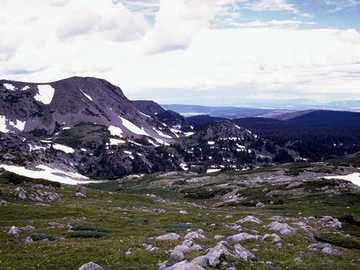
Derived from the Finnish word meaning barren or treeless land the 'tundra' is the simplest biome in the sense that vegetation and wildlife is scarce, very little snow and rainfall and temperatures ranging from -45°C to 7°C (-50°F to 20°F). These temperatures make the wildlife and plant life the strongest and best developed for the harsh conditions. A thick 600 metre layer of frozen soil known as the permafrost prevents trees from growing and is the most distinctive characteristic of the tundra, along with it's extreme temperatures.
This the frozen desert and it's story......
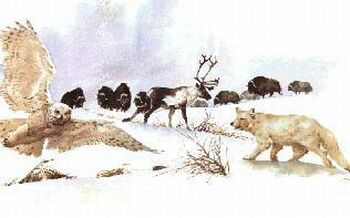
Most Arctic animals in the tundra are herbivorous because the abundance of plants is far greater than that of prey and therefore makes it easier for the animals to eat. Musk-Ox, Caribou and Reindeer are the main grazers feeding mostly on grass, sedge, lichen and willow, other herbivores in the tundra like the arctic hare, snowshoe rabbit and lemmings also feed on grass and sedge. The flesh-eating predators are mostly wolf, arctic fox and snowy owl with the occasional sightings of brown and polar bears. Invertebrate animals are scarce, except for a couple of insects (mosquitoes and black flies) the whole area is populated by mammals, fish or birds.
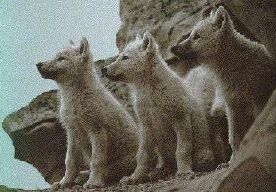
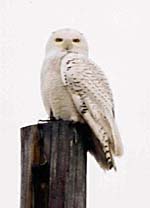
aaaaaaaaaaa aaaaaaaaa aaaaaaaaArctic Fox PuppiesaaaaaaaaaaaaaaaaaaaaaaSnowy Owl
Common adaptations found on the wildlife of the tundra is, large, compact bodies following Bergmann's rule, in 1847 he said that animals in colder climates have larger animals so the weight: size ratio is reduced and less body heat escapes and vice-versa for hotter climates. A thick layer of feathers, fur or blubber is provided for insulation during the freezing temperatures and ice-cold winds, the fur or feathers turn white in winter and brown in summer. A manoeuvre that the animals use to stay at manageable body levels is to store a lot of fat during the short 10 week growing season and use it as an insulation and energy during the long winter. The population of the tundra is nearly entirely dependent on the peaks and lows of the widely distributed herbivore, the lemming, a small rodent that eats grass. The biggest population dependent on lemmings are the Snowy Owls, their diet consists mainly on lemmings so if the lemmings don't reproduce the owls are forced to emigrate as far south as the Taiga Forest and often never make the journey back to the tundra.
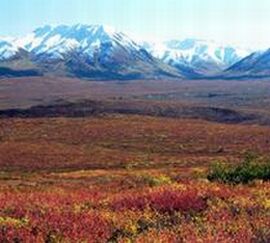
The plants of the tundra must accustom themselves to the conditions of the tundra and plants are most likely to reproduce by spreading their roots than pollination.
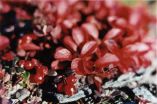
The typical vegetation in the tundra is simple but effective plants compromising mostly of cotton grass, sedge and dwarf heath and some mosses and lichens. These plants all are virtually invulnerable to the fast cold winds by growing very close to the ground and keeping most of its mass under the ground. They can carry on photosynthesis normally by having dark colored leaves so they absorb more sunlight even on cloudy days. Most tundra plants grow as cushions, keeping close together and clumping to make a soft cushion-like surface.
These are a few common plants in the tundra :-
aaaaaa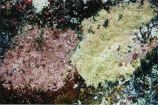 aaaaaaaaaaaa
 aaaaaaaaaaaa
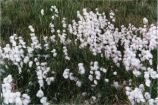
aaaaaa aaaaA cushion plantaaaaaaaaaaaaaaaaaaaaaDark Leafed PlantaaaaaaaaaaaaaaaaaaaaaCotton Grass

The tundra's climate is the coldest and driest biome in the world, characterised by strong freezing winds, low temperatures, little snow and rain, long winters (8-10 months) and short summers. The conditions in the tundra is mostly influenced by its permafrost, a thick layer of frozen subsoil under the ground, 6 inches under and at about 600 meters deep it stops most plant growth because the plants cannot extend their roots. The surface soil is not soft, rather it is quite rocky and coarse. The tundra experiences a short growing period, 8-10 weeks, in this time, the top soil and bit of the permafrost melts and turns the land into boggy and dirty ponds. In the minuscule summer, the plants take advantage and photosynthesise, take in the sunlight and store it for use in the winter.
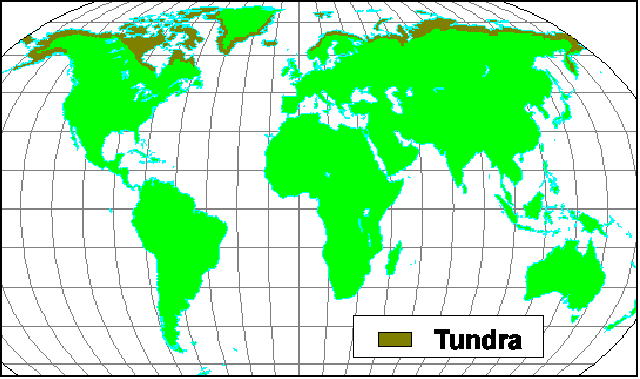
The Distribution of Tundra
Tundra takes up about 20% of the Earth's land mass and is only located in northern Canada and Alaska, Siberia, Russia, Europe and very few places in the southern hemisphere. The temperatures will constantly hit 0°C at winter and not climb much higher for the summer.
The tundra can be broken up into three different areas :- High Arctic Tundra: Confined to the most northern islands of the Arctic Ocean, features included are mostly scattered mosses and lichens.
Medium Arctic Tundra: The majority of tundra is here, just under the Arctic Ocean, it consists of waterlogged land and has a lot of moss and sedge.
Low Arctic Tundra: Here, the permafrost is much thinner and small trees like willow and birch and grow up to about 3.5 meters. Some evergreen plants are here as well as a few berry-bearing trees.
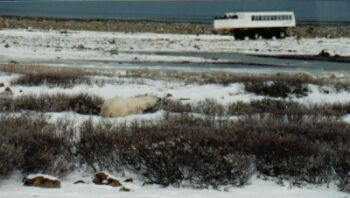
Because the tundra is such a fragile biome the introduction of humans dramatically effected the equilibrium of the land. Because the re growth period of the vegetation is so slow the slightest damage can make drastic changes to the wildlife. Although the tundra has not been effected by humans as much as the rainforest and grasslands, oil spills can seriously effect the bird and fish populations and a major factor of plant loss is vehicles running over the fragile vegetation and when the permafrost is disturbed by tires the tundra can be replaced by soggy marshland, land that is much like swamps.
Hunting by native tribes was very light until modern weapons were invented and then there was a rapid increase in the number of animals being killed by poachers.
Because the tundra is such a remote area, humans leave it alone and try not to damage it much, apart from the occasional oil spill or tourists passing through.
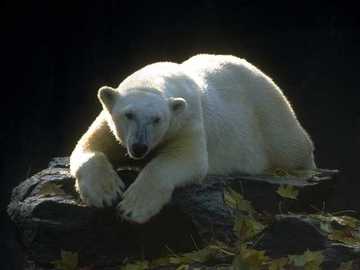
Polar Bears Are Main Targets for Poachers

