|
Red Shield Boys & Girls Club Tulsa, OK
After-School & Summer Literacy Program - 2001
|
|
A Note From
AVID Readers Founder
Email Krista Schumacher
More Pictures from
Boys & Girls Club
AVID Home Page
Related Links
Use Graphics With
Permission Please

Want information about
touch-typing for kids?
Contact:
Barbara Oliver, COTA/L
|
A bridge is in place to span the "digital divide" in north Tulsa.
With the help of numerous volunteers and others we offer children
attending Red Shield Boys and Girls Club an opportunity to
develop the most basic computer access skill of all, touch-typing.
"Reading is the entryway to everything.
You can't use a computer if you can't read the
instructions or what's on the keyboard.
Reading is absolutely basic."
September 5, 2001
Dr. James H. Billington
U.S. Librarian of Congress since 1987
Every week Boys and Girls Club children make more than 100 visits to this computer lab for typing lessons. All are welcome and there is no charge. Typing Pilots is a literacy-based program utilizing the structured touch-typing method of teaching keyboarding. Students voluntarily attend typing classes because they have fun. They continue to show up because they find the experience personally rewarding. Children who choose to spend their free time learning to touch-type, inspire us. We are reminded not to underestimate the aspirations and interests of children who rely on adults to infuse their environment with practical learning opportunities.

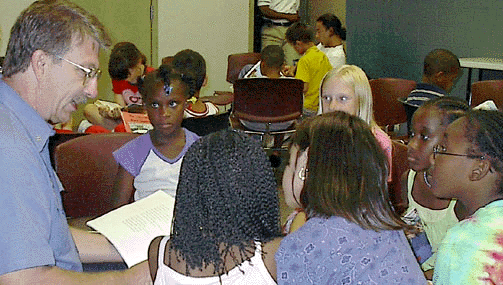
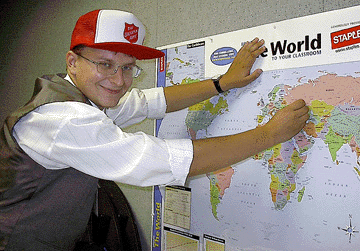
Literacy coach Jesse Magnusson show elementary students
essential techniques for touch-typing skills.
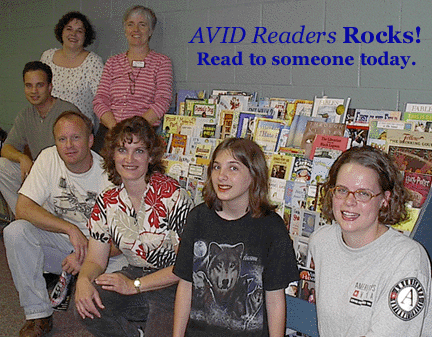
Spartan School of Aeronautics Federal Work Study literacy coaches:
Nicholas Martinez, Jesse Magnusson, Darwin Drake, Juan Valadez.
Each day children enter classrooms where computers are part
of the environment. Some children teach themselves how
to "hunt and peck" while others have the opportunity
to receive formal training and develop excellent keyboarding
habits. Educators are beginning to appreciate the need
for early touch typing training and often find students benefit greatly as a constellation of important skills are more fully developed through the learning process.
In our technology-intensive era, children who do not
know how to type are at a significant disadvantage than
their peers who have mastered keyboarding. Additionally,
students with learning and physical disabilities who
struggle with handwriting find typing helps them command
language and thus more confidently and freely express
their thoughts through writing.
Because of the sensory elements inherent in touch typing
(visual, tactile, kinesthetic, proprioceptive and
auditory), children of various abilities and learning
styles can effectively be taught keyboarding. Touch
typing associates finger position and movement with
individual letters, and combinations of movement
patterns with words. Practicing this activity will improve
and develop fine motor skills, posture, attention to task, instant letter and word identification and left-to-right visual
tracking, important components for fluid reading.
By typing words on a keyboard using the structured touch-typing
method, students may improve their reading, spelling and composition skills.
When students learn to touch type and edit they can work with
less frustration and discouragement. For the struggling student,
every minute spent transcribing at the computer provides another
way to improve skills important for academic success.
-
Target population:
Typing Pilots can be used in conjunction with any reading
program designed for elementary age students, ESL
students, older students/adults with poor reading skills who will benefit from literacy tutoring.
-
Main Program Requirements:
-Networked computers with 64 RAM to run software.
-Computer technical assistance.
-Internet connection is NOT required.
-UltraKeys
and/or
Paws in Typing Town software.
-Access to copy machine and printer.
-Child
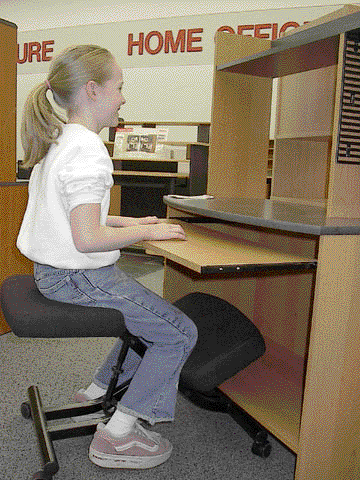
size chairs or adjustable seating and work surfaces with appropriate heights for children.
-A secure and quiet room.
-
Method of Instruction:
Each student is assessed for: fine motor, visual
motor, attention span, language comprehension and motivation. Students are assigned to small Typing Pilots groups, (group size is based on the number of available computers). Preliminary activities include games to ready the hands, introduce terminology and teach computer etiquette. Each child's initial training session is individualized. All keyboarding
groups are closely supervised; progress is monitored and documented.
-
Instruction is designed to encourage and reinforce self confidence, student's best personal effort and teamwork. Progress is measured by acquisition and consistent demonstration of proper techniques; body posture, hand and finger posture/position and movement, "key reaches", accuracy of letters and numbers keyed (not speed) and eyes looking at screen not at hands while typing.
-
Goal: Students will learn correct touch typing techniques and be able to type sentences and paragraphs, using all letters and numbers without looking at hands, with at least 92% accuracy.

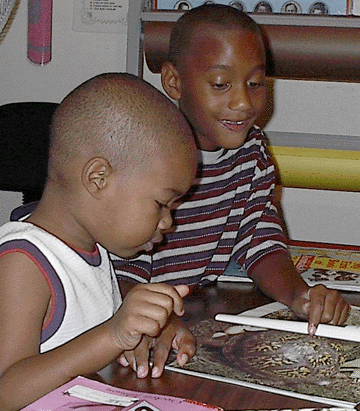
Children learn to play Chess as they wait for a turn at one of the eight computers.
|