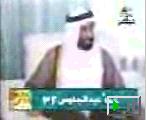
H.H. Sheikh Zayed Ben Sultan Al Nahyan (The Man Behind the UAE)
Sheikh Zayed is the grandson of Sheikh Zayed Ben Khalifa Al Nahyan, Ruler from 1855-1909, the longest reign in the Emirate's history. His father, Sheikh Sultan, was Ruler between 1922 and 1926, and then, after a brief reign by an uncle, Sheikh Zayed's brother, Sheikh Shakhbut, came to the throne at the beginning of 1928. At the time, Abu Dhabi, like the six other Trucial States on the southern shores of the Arabian Gulf that today make up the United Arab Emirates, was in treaty relations with Britain which had first established its presence in the region as early as 1820, signing a series of agreements on maritime truce with local rulers that gave the area its name. Abu Dhabi was poor and undeveloped, with an economy based upon fishing and pearl-diving along the coast, and on simple agriculture in scattered oases inland, like Liwa and Al-Ain. When the world market for Gulf pearls collapsed in the 1930s, the already poor emirate suffered a catastrophic blow. Sheikh Zayed's family, like their people, fell upon hard times. As the young Zayed was growing up, there was not a single school anywhere in the Trucial States. Like his fellows, he received only a basic instruction in the principles of Islam from the local preacher, although a thirst for knowledge took him out into the desert with bedouin tribesmen to absorb all he could about the way of life of the people. He recalls with pleasure all that his expeditions taught him about desert life, including falconry, which has remained a life-long passion, and about the companionship it created among the people.
An early European visitor to Al-Ain, shortly after Sheikh Zayed took up his post, was Edward Henderson, an oil company representative. In his memoirs, he recounted the impression the young Zayed made upon him: He was then around thirty years old, Henderson recalls. He was handsome, with humorous and intelligent eyes, of presence and bearing, simply dressed and clearly a man of action and resolution ... Although he was young, and had only been formally in charge of the Abu Dhabi sector of the oasis and its surrounding deserts for some two years, he was experienced in the politics of the region, and was already by far the most prominent personality in the area. He had a sure touch with the bedouin. Another visitor, the explorer Sir Wilfred Thesiger, whose book Arabian Sands remains a classic of travel writing, wrote that he was like the head of a big family: He was always available to listen to the problems of people, and he tried the problems of those who came to him forjudgement so that they would leave quietly, content with his judgements which were distinguished by their astute insights, wisdom and fairness. The job of Ruler's Representative not only involved the task of administering Al-Ain itself, but also the whole region nearby, giving Zayed an opportunity to learn the techniques of government, and also, during the Buraimi dispute in the late 1940s and early 1950s, to gain experience of politics on a broader plane.
Sheikh Zayed was elected the first President of the Federation, a post to which he has been successively re-elected at five yearly intervals, while Sheikh Rashid Al Maktoum was elected Vice President, a post he held until his death in 1990. The UAE formally came into existence on 2 December 1971, and in a statement issued that day by the first meeting of the new state's Supreme Council of Rulers it was declared: The United Arab Emirates has been established as independent state, possessing sovereignty. It is part of the greater Arab nation. Its aim is to maintain its independence, its sovereignty, its security and its stability in defence against any attack on its entity or on the entity of any of its member emirates. It also seeks to protect the freedoms and rights of its people and to achieve trustworthy co-operation between the emirates for the com)non good. Among its aims, in addition to the purposes above described, is to work for the sake of the progress of the country in all fields, for the sake of providing a better life for its citizens, to give assistance and support to Arab causes and interests, and to support the Charter of the United Nations and international morals.
When the flag of the UAE was raised on 2 December 1971, the individual
emirates moved into a new period of their history, facing the future as
one. Twenty-five years have now passed since that first National Day, and
the UAE has been utterly transformed. Whereas in 1971, the population was
around 180,000, it is now nearly 2.4 million. Where there were less than
30,000 students, there are now nearly 500,000 in schools that cover the
smallest mountain and desert settlement as well as the cities, in addition
to 15,000 students undergoing higher education, most of them at the Emirates
University in Al-Ain and a chain of six Higher Colleges of Technology.
The 'real wealth of a nation,' as Sheikh Zayed terms the new generation,
now has access to opportunities that their fathers, and Sheikh Zayed himself,
lacked.
In a broader reflection of his own interest in the environment, Sheikh Zayed has long displayed a concern to ensure that the country's wildlife is protected and preserved. As far back as the 1960s, he ordered the establishment of a zoo in Al-Ain that is now the largest in the whole of the Middle East. A decade later, recognizing the threat that uncontrolled hunting posed to the survival of the country's wildlife, he promoted federal legislation that effectively outlawed hunting throughout the country, following this up with the establishment of a Higher Environmental Council which, now transformed into the Federal Environmental Agency, is charged with ensuring that man's construction does not have a damaging effect upon the land; and also with preserving the country's flora and fauna. At a personal level, on his island reserve of Sir Bani Yas, Sheikh Zayed has created a protected area free of predators, so that endangered species like the Arabian oryx and the sand gazelle may breed freely. Sheikh Zayed believes that care for the environment is important, not simply because it is held in trust for future generations, but also because an understanding of it is an essential part of comprehending the heritage and history of the people of the UAE. Only through recognition of the structure of the local environment and its fragility was it possible for man to survive in the harsh climate of the Emirates, but, by doing so, the ancestors of today's UAE citizens were able to create a society that did not simply survive; it also flourished over thousands of Vears, establishing trading links that stretched as far away as China. The preservation of the national heritage, Sheikh Zayed believes, is important in helping today's generation to prepare for tomorrow, and within that context he has displayed an active interest in the country's past, supporting the establishment of research institutes and ordering the creation of the Abu Dhabi Islands Archaeological Survey which is charged with investigating the evidence of past civilizations. The country's young people must enquire about our history, and go back to study it again and again, he stresses, whether it be our recent history, or that of the far distant past, until they understand what has taken place in this country, and how past generations were able to cope with life here. They should do this because he who does not know his past will certainly not understand the present. If man knows the past, he will, too, understand the present, and will from that understand what lies ahead in the future.
We now feel that our hopes have been realized, and that the federation has become a recognized entity with an excellent reputation both internally and abroad, and that it now occupies a significant and worthy place in the world ... That which has been accomplished has exceeded all our expectations, and that, with the help of God, and with a sincere will, confirms that there is nothing that cannot be achieved in the service of the people if determination is firm and intentions sincere.... With the help of God, we have arrived at a stage where our feet are firmly planted on the way to building a nation, and we have achieved goals that once appeared to be far away. Much of what has been achieved can be ascribed to Sheikh Zayed's own style of government, which has always been one of direct involvement, rather than of giving orders from afar. Back in the 1940s and 1950s, when he was Ruler's Representative in Al-Ain, one of the most important tasks he undertook was the cleaning out of the falaj irrigation system, so as to improve the amount of water available for the date groves and gardens of the oasis, thus helping to stimulate the local agricultural economy. When the cleaning and digging was under way, he was frequently to be seen lending a hand, down in the channels with the labourers.
Over the years, a number of senior Government officials have come to rue Sheikh Zayed's practice of personal inspection of projects, finding that they are called to account unexpectedly when he visits a project for which they are responsible, and finds evidence of shoddy construction or of inefficient management. If the officials may on occasion have been discomfited, sometimes losing their jobs on the spot, those for whom the projects are intended, the country's people, are well aware that there is supervision from the highest level within the state of the projects being built to serve them. The traditional form of government among the people of the United Arab Emirates has, since time immemorial, been one where the sheikh of a tribe has led his people on the basis of consultation and consensus. In the modern society that the United Arab Emirates has now become, Sheikh Zayed has been at pains both to ensure that the channels of communication remain open, and that he and his fellow members of the Supreme Council continue to rule in the same manner. Speaking at a recent meeting of the Supreme Council of the Federation, he told his colleagues: The most important Of our duties as Rulers is to raise the standard of living of the people. I bear the prime responsibility for looking after the country and its citizens. To carry out one's duty is a responsibility given by God, and to follow up on work is the responsibility of everyone, both the old and the young. In such a way, we can do all that is within our power because the people always focus their attention on the leadership, and what that leadership is doing on their behalf... Many things may remain concealed from a man, and there are many things that I may not know even though I am the first among the state's officials. Sheikh Zayed added: You must tell me if there are any shortcomings. You are my aides in performing my duty, and I cannot blame anyone other than you as Rulers and as my partners who are responsible to me in dealing with shortcomings. I will accept every comment with an open mind and a capacious heart.
While showing clearly through his own actions that he is prepared to take an active lead in the building of a better society for his people, Sheikh Zayed has also made it plain that he expects others, too, to take on some of the responsibilities. At the same time, however, he has recognized that, in order for this to happen, it is essential that , the citizens of the UAE are equipped to deal with the task they have been set, and that this can be done only through provision of the appropriate access to education. We were confident from the beginning that it is the individual human being who is the basis of all civilized life, for it is on him that progress depends, he has noted. Within this context, we must foster the right individual, by being generous in the allocation of effort and financial resources, to create an educated human being who will be the basic support upon whom the state will depend in its march towards progress. The real wealth of the country, he notes, lies not in its financial resources, but in its people. Wealth is not money. Wealth lies in men. That is where true power lies, the power that we value. They are the shield behind which we seek protection. This is what has convinced us to direct all our resources to building the individual and to using the wealth with which God has provided us in the service of the nation, so that it may grow and prosper, and so that (the new generation) will be able able to take upon their shoulders the responsibilities, at the appropriate time, when their roles will be of a help to us and to our brothers. In the process, he has encouraged his people to strive for development, meeting them in cities and villages throughout the land to ensure that he keeps his finger firmly on the pulse of public opinion.
Consultation and mediation are the stuff of bedouin life, and Sheikh Zayed has been a skilled practitioner of both since early manhood. Now the skills honed in Al-Ain are being put to good use far beyond the borders of the UAE. Deeply committed to the long-term objective of Arab unity, Sheikh Zayed has spared no effort to build co- operation between his fellow Arabs. He was a prime mover in the establishment in 1981 of the Arab Gulf Cooperation Council, which groups the UAE, Kuwait, Saudi Arabia, Bahrain, Qatar and Oman, which he saw, not without reason, as a logical outgrowth of the successful experiment in cooperation represented by the UAE itself. Commitment to the AGCC, and to the principles of international law and brotherhood enshrined in the Charter of the United Nations saw Sheikh Zayed and the UAE first offer support to fellow AGCC member Kuwait after its invasion by Iraq in 1990, and then commit UAE troops to UNISOM 11, the force created to restore peace and order to strife-ridden Somalia.
Not just an Arab nationalist, but also a devout Muslim, Sheikh Zayed
has ensured that the UAE adopts a policy of support for the poor and down-trodden.
During the peak of the fighting in Bosnia, for example, when that country's
Muslim community was suffering under the genocidal attacks launched by
the Serbs, Sheikh Zayed made an impassioned appeal for the international
community to act. The continuing Serbian aggression against Bosnia is
an aggression against the human conscience and against human rights, he
said. It is a mark of disgrace upon the forehead of humanity ... He who
fails to put a stop to aggression is himself a partner in the injustice
and the aggression.
... All help that is required by the city of Jerusalem shall be offered to it, for it is the most deserving of support and assistance. Underlying that commitment is the President's recognition that the very essence of the city, its Arab nature and its status as a holy place for both Muslims and Christians, is under threat. Naturally, however, his main pre-occupation, as Sheikh, as Ruler and as President, has always been with his own people. One such concern has been the impact of the wealth now available in UAE society upon traditional values, and, in particular, the way in which those who are less wealthy are spending far beyond their means. He has been particularly critical of the growing habit of extravagant weddings and of the reluctance of some young people to contribute in a positive way towards society. The phenomenon of expensive weddings, he notes, make it increasingly difficult for local young men to marry fellow citizens. If they did, he added, they would be burdened by debt, with the result that many now preferred to marry young women from abroad, leaving young UAE ladies unmarried, and affecting the country's culture and heritage. Extremely high dowries, extravagance at wedding parties and everything else which burdens young people with debt when they are on the threshold of their lives as a family are matters for which there can be no justification, he said. Such are in contradiction with the principles of Islamic Sharia law, and, furthermore, they are in contradiction with the customs of our ancestors.
At the same time, Sheikh Zayed has urged young people to be realistic, and to live within their means: Why should our young men buy cars that are inappropriate to their level of income? he asks. Why should a family have a large number of housemaids, cooks, drivers and so on? Why does a housewife prefer to go to expensive tailors when she can have a sewing machine in her house? He urges parents to take more care to ensure that their children are properly raised, noting that a number of young people have been sent to rehabilitation centres after falling into bad ways.. But more than 80 per cent of those who have passed through this government programme of correction and rehabilitation have returned to normal life, and are now taking up their national obligations with a sense of responsibility, he notes. Regardless of an individual's wealth, or that of his family, it is important that young people should work, thereby contributing to society, Sheikh Zayed believes: Work is of great importance, and of great value in building both individuals and societies, both of which are dependent on the strong arms of a country's young people. The size of a salary is not a measure of the worth of an individual. What is important is an individual's sense of dignity and self respect. It is my duty as the leader of the young people of this country ... to encourage them to work and to exert themselves in order to raise their own standards and to be of service to the country. They must be encouraged to exert all possible efforts in order to take up responsibilities and to share in the building of the country ... The individual who is healthy and of a sound mind and body but who does not work commits a crime against himself, and against society. He who is not prepared to work will find problems in his path, and this will lead to disaster.
All men are equal, and social justice cannot play its (proper) role without this concept, he adds. It is Islamic social justice which has asked every Muslim to respect others. To treat every person, no matter what his creed or race, as a special soul is a mark of Islam. It is just that point, embodied in the humanitarian tenets of Islam, that makes us so proud of it. With such a clear view of the essential tolerance of Islam, Sheikh Zayed has spelt out very plainly his rejection of those who would follow an extremist path. Addressing a group of newly arrived ambassadors in late 1995, he commented: In these times, we see around us violent men who claim to talk on behalf of Islam. Islam is far removed from their pronouncements. If such people really wish for recognition from Muslims and the world, they should themselves first heed the words of God and His Prophet. Regrettably, however, these people have nothing whatsoever that connects them to Islam. They are apostates and criminals. We see them slaughtering children and the innocent. They kill people, spill their blood and destroy their property, and then claim to be Muslims. We would like you to know Isla m in its true meaning, Sheikh Zayed told the ambassadors, a Muslim is he who does not inflict evil upon others. Islam is the religion of tolerance and forgiveness, of advice and not of war, of dialogue and understanding. Sheikh Zayed went on to call for a better understanding between people of the world's faiths: A Muslim should be familiar with the true teachings of Christianity, and a Christian with the true teachings of Islam. Sincere people from both sides should enter into dialogue, and should not leave thefloor to the extremists who are there amongst both Christians and Muslims. A true dialogue between religions is the real deterrent and a strong defence against fundamentalism and extremism. The faith and tolerance implicit in Sheikh Zayed's stand against extremism is well summed up in a statement explaining the essential basis of his own belief. My religion is based neither on hope nor on fear, he says, I worship my God because I love him. In 31 years as a Ruler, and 25 years as a President, Sheikh Zayed has shown statesmanship, vision, wisdom and understanding that has not only served him and his country well abroad, but has also deservedly won him the loyalty and affection of his people. VIVO Clips for Sheikh Zayed
|