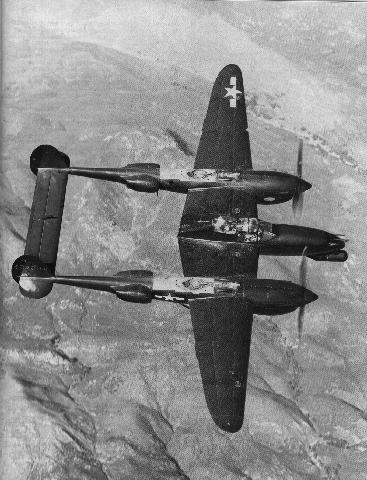
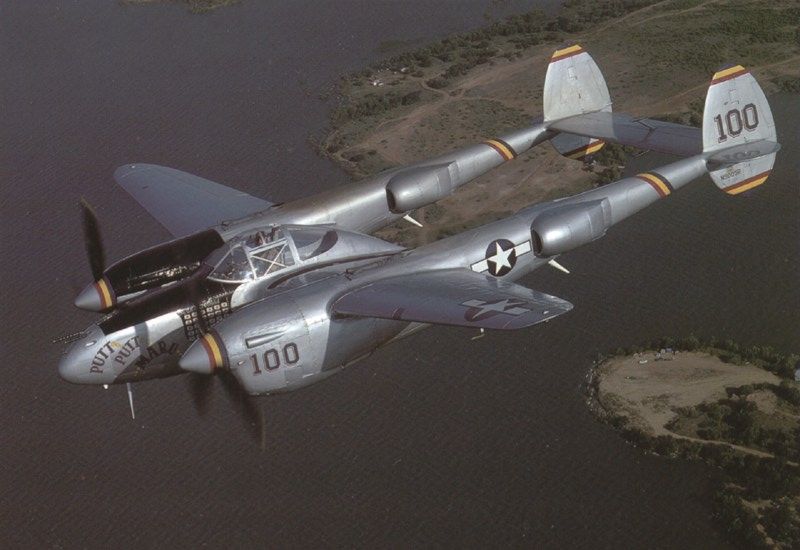
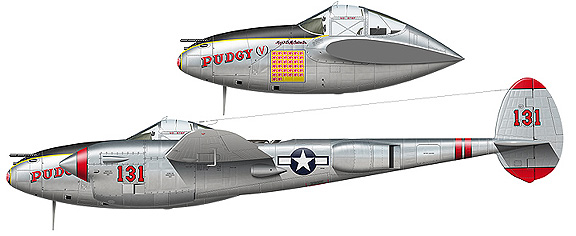
P38 Lightning
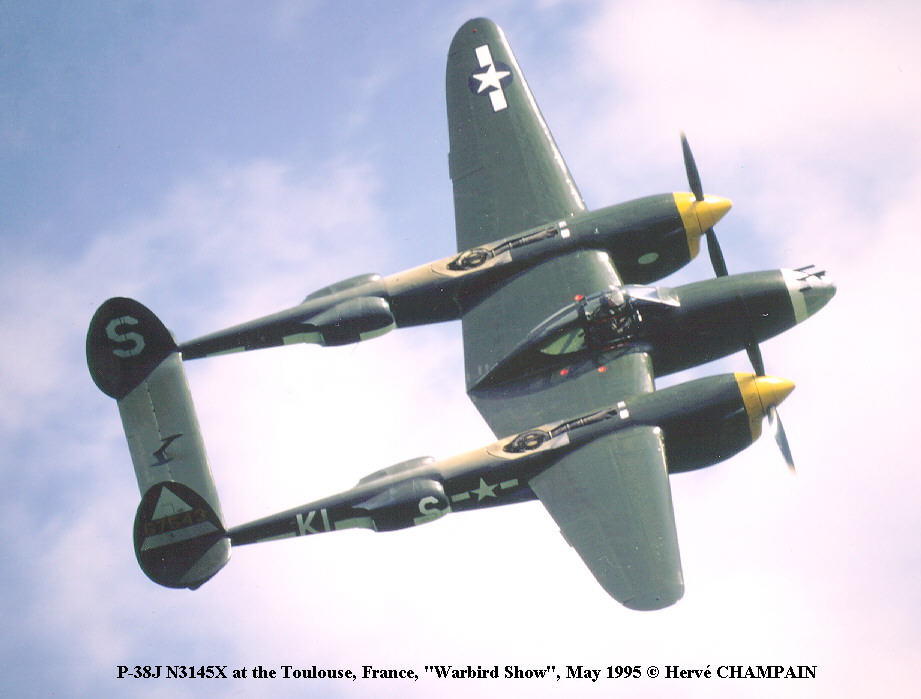
To meet the Army's need for a night interceptor aircraft, several types such as the British Bristol Beaufighter and the deHaviland Mosquito (both were acquired through the "reverse Lend Lease" program), and the Douglas P-70 (variation from the A-20 Havoc light bomber) were tried. In the Pacific there some P-38s were converted into night fighter roles. The 6th Night Fighter Squadron on New Guinea mounted two SCR-540 Airborne Intercept (AI) radar units which were mounted into two P-38 drop tanks. These aircraft were also able to carry a passenger located directly behind the pilot under a small bubble canopy. There were other field converted P-38s but none were produced with the night fighter role in mind. During 1944, Lockheed began the development of the P-38 night fighter which involved the conversion of the P-38J with an AN/APS-4 AI radar pod mounted under the nose on a modified bomb pylon. In October 1944, Lockheed began production of the P-38M with all the modifications mentioned previously and it made it's maiden flight on January 5, 1945. The P-38M crews trained at Hammer Field, California early in 1945, but did not finish training until early in the summer of 1945 and were not deployed because of the end of the war. By March of 1946, the P-38M was phased out of service.
Type: Fighter
Crew: 1 Pilot
Armament:(4) .50 cal machine guns and (1) 20 mm cannon
Specifications
Length: 37"-10 inches;
Height: 12"-10 inches;
Wingspan: 52"
Max Weight: 17500 lbs loaded
Propulsion
No. of Engines: 2
Powerplant:Allison V-1710's
Horsepower: 1745 hp each
Range: 1100 miles
Celing: 40000 feet
SOURCE:
Aviation Enthusiast Corner
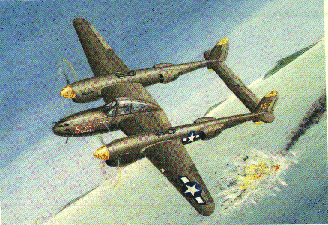
Night Version