
RADAR
RADAR
Radar is a way of tracking objects using radio waves. These waves are sent out and are reflected back by objects. This provides a resource for determining speed and direction of the object. Radar was first and is still used to track such things as aircrafts. It turned out we can use the same technology to track precipitation.
Weather radar operates by sending out radio waves in all directions, usually from the top of a high building. The radar must be located at a certain height so that the waves will not reflect off of nearby buildings. The waves that are sent out are then reflected off of precipitation and travel back to the source.
When two waves are sent out at different times and reflected off of the same area of precipitation, the speed of the precipitation area can be determined. Computers can calculate the change in distance using the fact that these waves travel at the speed of light. This change in distance is then divided by the time between the waves being sent out to get the velocity.
When you look at a weather radar you can see different colors that represent different intensities in precipitation. This is determined easily by the radar itself. Precipitation that is bigger in size will reflect more waves than smaller precipitation. This difference in reflectivity is transferred into a color scheme which is what you see on the actual radar screen. Light rain will not have a very high reflectivity but heavy rain and hail will reflect the waves better and you see a darker color on the radar. In winter light snow shows up the lightest on the radar and heavy snow and sleet show up the darkest because they reflect more waves.
Weather radar can show some interesting features during severe weather. In a super-cell thunderstorm, if you see a small comma shape, it may indicate a tornado on the ground. Another feature that can be seen on weather radar is a bow echo. This is a line of storms with the middle traveling at a faster speed than the outer edges to form a boomerang shape. This is indicative of much faster winds in the middle and could be a downburst. Yet another feature that can be seen is an outflow boundary.
Downburst - During a sever thunderstorm, high winds aloft can be deflected downward. As they hit the ground they spread out and are seen as intense straight line winds. Downbursts can do major damage to property over a large area, sometimes more damage than tornadoes.
Click here for a radar image of a
downburst 
Outflow Boundary - A boundary separating thunderstorm-cooled air (outflow) from the surrounding air. It is similar in effect to a cold front, with passage marked by a wind shift and usually a drop in temperature. New thunderstorms often develop along outflow boundaries, especially near the point of intersection with another boundary (another front for example).
Click here for a radar slideshow
showing thunderstorms forming along an outflow boundary 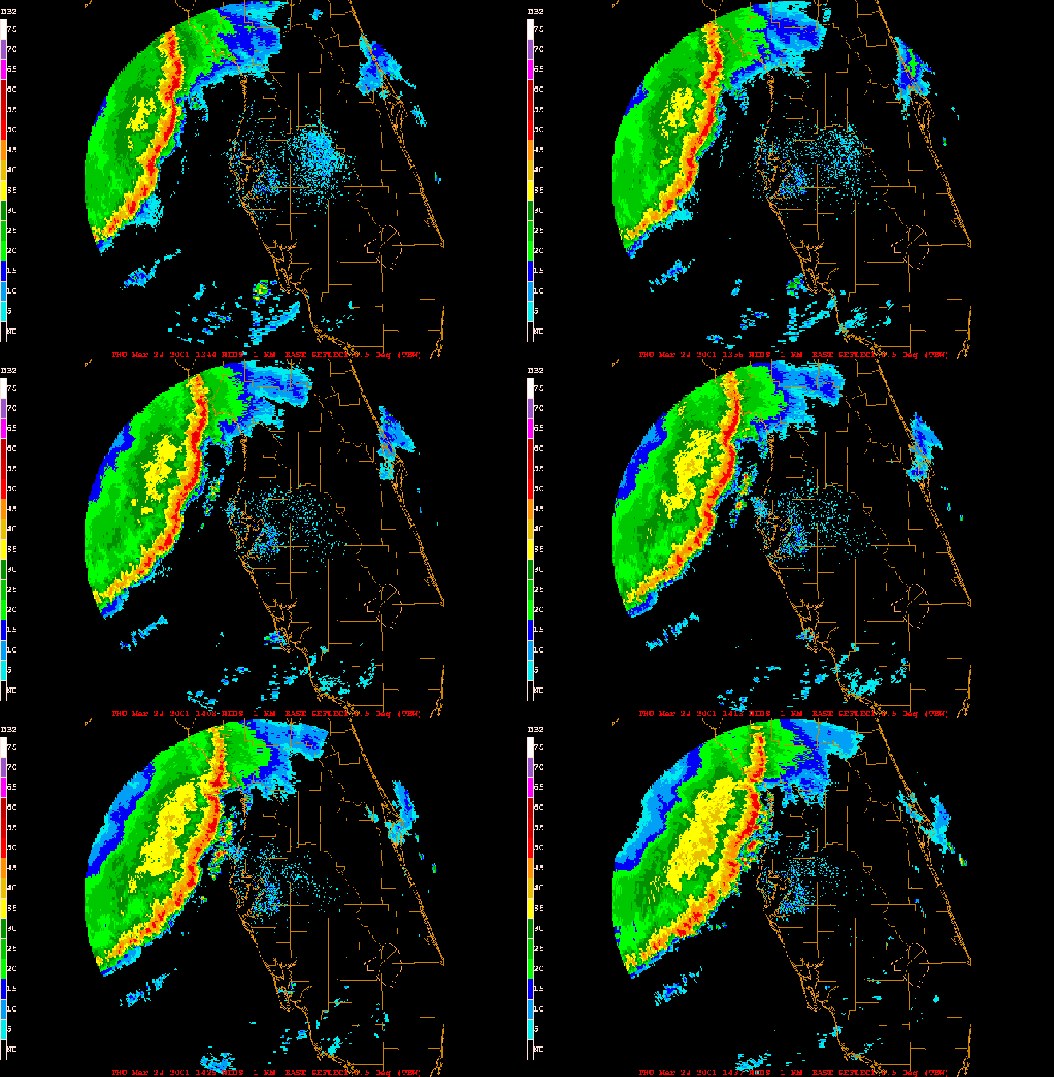
This page was last updated: December 11, 2003
created by: cyclonic_vortex@yahoo.com
