Inferno!
But now, thus says the LORD, your
Creator, O Jacob, And He who formed you, O Israel, “Do not fear, for I have
redeemed you; I have called you by name; you are Mine! 2 When you
pass through the waters, I will be with you; and through the rivers, they will
not overflow you. When you walk through the fire, you will not be scorched, nor
will the flame burn you.” (Isaiah 43:1-2).
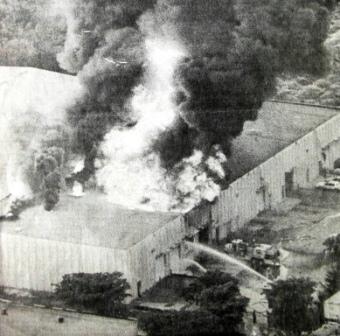
It was a late afternoon in June and I was just finishing up
what had been a rather slow day at the fire station. I was locking the office door and turning to walk out to my car
and drive home when my eyes were caught by the black, billowing smoke filling
the horizon to the south. Sirens
started to sound and all normal people looked and were glad that they were in a
position of safety. I am a professional
fire fighter and it looked bad enough to know that my short-handed troops would
need an extra hand, so I grabbed my fire fighting gear and was on my way.
Smoke was pouring from the roof of a large warehouse and, as
I arrived on scene. I gave a hand to a
driver engineer who was making some hose connections and then I looked up to
see a couple of fire fighters putting a ladder to the building and head to the
roof. There were lines being hurriedly
laid and I made my way over to where one of my own department’s engine crews
had a hose line set up along with another line manned by a crew from a
neighboring fire department.
“I have to see what is in there,” yelled the lieutenant from
one of the other departments. Our own
captain was there with a two man-crew who were ready to make entry. “John, do you want to take in the
team?” I looked at the fiercely
billowing smoke that was thrusting its way from the roof of the structure and
thought that was the last place that any sane person would go. But they pay me to do this sort of thing, so
instead, I nodded my head in affirmative and took the nozzle.
My wife asked me once what goes through the mind of a fire
fighter on this sort of emergency situation.
It isn’t something that I had pondered before. Most of our focus is on the job at hand, but there is also a
measure of fear that lies somewhere in the back of our minds. It isn’t fear of what the fire can do. There isn’t usually time for those sorts of
reflections. Rather, it is a fear that
we might somehow let down the rest of the team.
In this case, I was part of a team of three. Another fire fighter was backing me up and a
third was following with a large battle lantern. Normal protocol would have called for an officer to lead us, but
in those days our department was underfunded and understaffed. The other hose line was going in and we
followed after them. Once inside the
door, we found ourselves in a smoke-filled office. Visibility wasn’t too bad and we could see a few feet in front of
us as we made our way through the twists and turns of the gloomy office. We came to a door that opened into the
warehouse and went through it. It was
darker in here and one of the fire fighters made his way over to a large garage
door. He fiddled with it for a moment
and then found the mechanism to open it.
A couple of other fire fighters jumped in to help him and soon light was
streaming in as the overhead door was raised.
This seemed like a good time to reposition our hose line and
we backed it quickly out of the office and then came back in through the open
overhead door. Fresh air was sweeping
into the warehouse and driving back the smoke so that we could see. It was also a warning sign that we failed to
notice as the smoke was sucked back into the depths of the building.
Fire has been likened to a living organism. It grows.
It moves. It spreads. And it needs oxygen to breathe. It normally produces smoke and, when a
building is on fire, you normally see smoke coming out of the building. On the other hand, when you see the smoke
being pulled back into the building, it is a sign that the fire is about to do
something bad. The technical term for
this is a backdraft. We were about to
get a firsthand lesson in this sort of phenomenon.
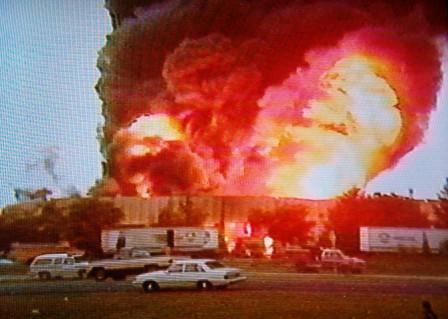
We advanced both hose lines into the depths of the warehouse
and suddenly we stopped, mesmerized by the sight that accosted us. There was a mountain of 55 gallon drums in
front of us that seemed to reach all the way to the ceiling that was a very
long way above us. Behind them the
entire wall seemed to be glowing as giant flames licked over the roof like a
spewing volcano. Bang! Bang!
Bang! There was a steadily
increasing staccato that sounded like machine gun fire -- it was the crashing
sound of stressing and exploding drums of flammable acetone.
We opened up our two hose lines, shooting water at that
raging inferno, but the fire just seemed to eat up our insignificant water
streams. I had never seen so much fire
in one place at one time. As I watched,
the hose team in front of me closed their line and dropped their hose and
nozzle and ran past me. “Let’s get out
of here!” I heard someone yell.
Actually, he added a few colorful words to make his point that much more
explicit. Then they were all running
past and a wall of smoke and fire was sweeping down on us and enveloping us.
I never thought to drop the nozzle. I had been taught that you hold onto it, no
matter what and I did so, even as we turned to follow the other team out of the
building.
Suddenly there was a burning heat that cut right through my
fire fighting gear as though it did not exist at all. “I’m on fire! I’m burning
up!” I heard another fire fighter cry in front of me. I couldn’t see him, but I could hear him only a couple of feet
from me and I opened up my nozzle in a fog pattern in an effort to cool him
down and put out any fire that was impinging on him.
Then I was swept from my feet and the next thing I knew I
was lying on the ground outside of the warehouse. Reports from those outside the building said they saw me blown
out of the building. I didn’t realize
this at the time and wasn’t certain that I had not tripped over my own
feet. The nozzle was still in my hands,
but my helmet had been ripped off, its strap literally torn from the supporting
rivet and my air mask was pulled sideways on my face, spilling air from the
openings. I tried to shut the flow of
leaking water from the nozzle, but my left arm would not work. I reached the nozzle with my right hand and
closed it the rest of the way down and then straightened my mask on my
face. There was still thick, black
smoke streaming past me from the explosion.
Then other fire fighters were beside me, helping me to my
feet and out of the way of the open doorway.
There was a sharp pain in my ribs.
I tried to pull my air pack off, but my left arm was still hanging
uselessly and I needed help to get the pack and my fire fighting coat off. Then I was being hustled over to some paramedics
who hustled me into a medical unit and rushed me off to the local
hospital. I hadn’t been at the hospital
more than 15 or 20 minutes when I was joined by two other fire fighters
suffering from a bit of smoke inhalation.
I was lucky. I had been spared
this by wearing breathing gear the entire time I had been inside. X-rays were taken and I found that I had
somehow broken one of the bones in my shoulder blade. The doctor said it was a bit unusual and the injury could only be
accounted by having something hit me from behind.
This was the biggest and most spectacular fire that South
Florida had seen in many a year. News
footage was shown across the country and I received calls from all over. Years later I would continue to see footage
from the fire aired at training seminars throughout the world.
The G.L.S. fire has been used as an excellent example of
what not to do. There were no safety
officers, no real plan that was communicated to all of those present and no one
who was in charge of all of the operations.
There were as many as six different fire departments involved in
battling the blaze and, to be fair, they did manage to save the majority of the
building. It still stands there as I
write this account many years later.
But the outcome could easily have been very different. Mine was the worst injury -- I was out of
work for a month or two as I waited for the bones to heal in my shoulder and
back. Years later it would still ache a
bit when the weather turned cold.
You can go through life with no real plan and without
recognizing that the God of the universe is in charge and it may look like
things are going well. But when the
flames of failure race across your world and things go to hell in a hand basket,
then you come to the glaring conclusion that your life is serving as a living
image of what not to do.
This book is written to tell you that there is a better
way. Because I’ve served over 25 years
as a professional fire fighter, I’ll be couching a lot of what I have to say in
terms of the career where I’ve spent so much of my life. But the same truths apply to you, no matter
what your chosen profession.
Bad things happen in this life. We didn’t need to see the Twin Towers of the World Trade Center fall
down to teach us this basic lesson.
Just look at the regular business of any funeral parlor and you will see
the same truth. Life can be hard and
then you die. Even if you manage to get
through most of the trials of this life relatively unscathed, death still is
waiting at the end.
As I said, there is a better way. It is found in the Bible.
God gave us a preplan for life and for death and, if we learn its
lessons now, we will be ready for those lessons in the future. This book is designed to teach us some of
those lessons.
If you are a fire fighter, then I am sure that you have plenty of your own “war stories” that would just as effectively illustrate these sorts of spiritual life lessons. Perhaps this book can help you to gain a new perspective on those experiences. And if you are not a fire fighter, then I invite you to join me for what has been an exciting and fulfilling adventure -- the spiritual life that is found in Jesus Christ.
Return to the John Stevenson Webpage