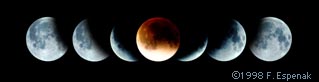
Lunar Eclipse Thursday, January 20 - 21
10:01 P.M. Eclipse begins
11:05 P.M. Totality Phase
(Click here to see eclipse diagram)
12:22 A.M. Moon begins to emerge
from earth's shadow
1:25 A.M. Moon appears
whole again
 |
An eclipse occurs at those times when the
Moon moves into
position of direct alignment with the Sun and the Earth. There are two basic types of eclipses – lunar and solar. Most people have seen at least one total lunar eclipse,
when the
|
Links
What
Causes a lunar eclipse?
An
Awesome Eclipse of the Moon
http://members.aol.com/kcstarguy/blacksun/lunar.htm
http://sunearth.gsfc.nasa.gov/eclipse/SEextra/TLE2000Jan20.html
(*)