
1. You can obtain data about the shape, size, color, and texture of an object by making .
2. In SI, the basic unit of length is the .
3. A measurement must include both a number and a .
4. What is the formula for finding volume? ___________________.
5. An experiment in which all variables except the
independent variable are identical to those in the
experimental setup is called
a
.
6. A balance is used to determine an object's .
7. The type of graph used to show how a part or
a share of something relates to the whole is a
.
8. On the Celsius temperature scale, water freezes at .
9. The envelope of air and water vapor between the
earth's surface and outer space is the
.
10. Soil is produced by the .
11. The SI unit of volume is the .
12. Air polution technicians, air traffic controllers,
and weather forecasters are most interested in
the branch of science called
.
13. The branch of science that studies the structure and
makeup of the earth is
.
14. What type of safety is idenified by 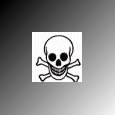 ?
?
15. Which of the following is the largest unit? decigram, decagram, microgram, hectogram
16. An object with a density greater than 1 g/cm3will float in water. true / false ( )
17. An experiment is a way of testing a hypothesis. true / false
18. When you infer, you state in advance
what you think might happen in the future.
true / false (
)
19. In an experiment a variable that causes a change in
another variable is a dependent variable.
true /
false (
)
20. Because of gravity, your mass will
be slightly less at regions near the equator than at regions
near the poles.
true / false (
)
21. The systemized testing of ideas, hypotheses, predictions,
and inferences about the natural
world is the
scientific method. true / false
22. Optical telescopes are often used by cartographers
to study distant objects in space.
true / false
(
)
23. All the places where life exists make up the atmosphere. true / false ( )
24. Several different sets of data can be plotted on a single line graph. true/ false
25. The measure of an amount of matter packed into a given
volume us weight.
true
/ false (
)
Chapter One - Answers
Chapter One Study Guide
1. You can obtain data about the shape, size, color, and texture of an object by making observations .
2. In SI, the basic unit of length is the meter .
3. A measurement must include both a number and a unit .
4. The formula for finding volume is length x width x height =___cm ³
5. An experiment in which all variables except the
independent variable are identical to those in the
experimental setup is called
a control or controlled experiment .
6. A balance is used to determine an object's mass .
7. The type of graph used to show how a part or
a share of something relates to the whole is a
circle
.
8. On the Celsius temperature scale, water freezes at 0° .
9. The envelope of air and water vapor between the
earth's surface and outer space is the
atmosphere
.
10. Soil is produced by the breakdown of rocks and decay of dead organisms.
11. The SI unit of volume is the liter.
12. Air polution technicians, air traffic controllers,
and weather forecasters are most interested in
the branch of science called
meteorology.
13. The branch of science that studies the structure and
makeup of the earth is geology.
14. What type of safety is idenified by
? poison
15. Which of the following is the largest unit? decigram,
decagram, microgram, hectogram
hectogram
16. An object with a density greater than 1 g/cm3will
float in water. true /false
(sink)
17. An experiment is a way of testing a hypothesis. true / false
18. When you infer, you state in advance
what you think might happen in the future.
true / false (predict)
19. In an experiment a variable that causes a change in
another variable is a dependent variable.
true /
false
(an independent variable)
20. Because of gravity, your mass will
be slightly less at regions near the equator than at regions
near the poles.
true / false (weight)
21. The systemized testing of ideas, hypotheses, predictions,
and inferences about the natural
world is the
scientific method. true /
false
22. Optical telescopes are often used by cartographers
to study distant objects in space.
true / false
(astronomers)
23. All the places where life exists make up the atmosphere. true / false (biosphere)
24. Several different sets of data can be plotted on a single line graph. true / false
25. The measure of an amount of matter packed into a given
volume us weight.
true
/ false (density)

