|
BISHAARO
BISHAARO
Dadweynow ku soo dhowaada Ogaden News |
|
|
  |




Ogaden needs justice and attention
ogaden people they are suffering under evil ethiopian rule we must stand togehter to kick our enemy out our landReport From The Times News Paper From London
War blunts famine plea
BY RICHARD BEESTON, DIPLOMATIC EDITOR
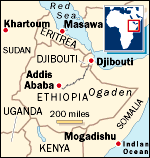
THE international aid community has been split down the middle over how to respond to the famine in the Horn of Africa. The Ethiopian Government is appealing for emergency relief to feed millions but donors are showing reluctance to help a country at war.
The row came to a head yesterday when Sir Bob Geldof issued a warning of disaster in four weeks unless food was sent to the main famine region in the Ogaden. He said the blame would be "laid squarely at the doors of those responsible" if no action was taken.
The United Nations first called the world's attention to the famine last month and since then the BBC has been broadcasting harrowing pictures of dying children, similar to the ones which led to Sir Bob's hugely successful Band Aid appeal in 1985. Eight million people are thought to be at risk in the latest tragedy.
"Everyone has been alerted to what is going on. Everyone feels a natural state of repugnance," Sir Bob told the BBC, adding that the issue of the war between Ethiopia and Eritrea was a "red herring".
However, the Government and some aid workers are not so sure and are approaching the disaster with caution. Unlike the Mozambique flood disaster, when Britons raised £28 million in private donations, this time the main charities are still debating whether or not to launch a joint disaster emergency appeal.
There are fears that giving assistance to Ethiopia will simply ease the cost of fighting the border war which has claimed thousands of lives and swallowed up scarce resources at the same time as the drought in the southeast of the country over the past three years.
Clare Short, the International Development Secretary, hit back at accusations from the Ethiopians that Britain's pledge of £2.4 million was "not sufficient" by suggesting that the authorities in Addis Ababa, the capital, stop "wasting valuable resources" on fighting."People should never be made to pay for their Government's devoting resources to war," she said.
"I think the international community should help, but also put increased pressure on the Governments of Ethiopia and Eritrea to make peace and put all their resources into helping the hungry and developing their country so we won't have hunger in the future."
Aid agencies have grown wary of helping countries at war, particularly after the fiasco of Somalia, where aid became the cause of the fighting, and more recently in southern Sudan, where a dozen agencies quit in February rather than work under the control of the rebel Sudanese Peoples' Liberation Army.
Sir Bob's own relief work in Ethiopia in 1985 has also come under attack amid allegations that President Mengistu, then Ethiopian dictator, used the huge influx of foreign relief to fight three separatist wars and to finance the forced resettlement of villagers.
This time the aid is expected to reach the famine areas, but donors have signalled that they also want an end to the recurrent cycle of war and famine in Ethiopia.
"There would be no famine if there was responsible government," a British aid worker said. "Frankly you get fed up when you see the money spent on tanks, planes and guns and then when there is a three-year drought we are expected to come in and save the victims.
"Of course the starving children and their families are not to blame and should not be held responsible. But equally if there was ever a place that needed an end to fighting it is Ethiopia."
Disaster looms: Efforts to stave off the famine threatening up to 16 million people in the Horn of Africa face such huge obstacles that only immediate and massive aid will avoid a repetition of the disaster of 1985, when nearly a million died in Ethiopia (Anthony Loyd writes).
According to the Ethiopian Government eight million of its people face starvation, while the UN says that a further eight million are under threat in Eritrea, Kenya, Somalia, Uganda and Djibouti.
"We're in crisis in the region already," Ian Bray, an Oxfam spokesman, said. "If we're not swift enough now the situation will deteriorate completely."
Ethiopia's plight is the result of consecutive droughts which have led to widespread harvest failures. Only 15,000 tonnes of food aid of the 1.2 million tonnes requested by Ethiopia has arrived.
Source From The Times News Paper