St. Peter's Plaza
The St. Peter's Plaza was designed by Bernini in 1637. People go to St. Peter's Plaza to celebrate Christ festivals and pop blessing. The plaza is divided in two parts and this parts shape are trapezoidal and elliptical and has an obelisk in the middle of the plaza, an obelisk is a column. There are 284 columns on the sides of the plaza and their tuscan type, Bernini wanted the rows of columns to symbolize arms.

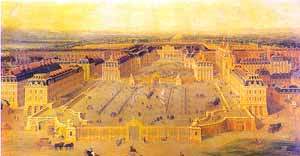
Luis XIV was the French king that decided to move the king's court from Paris to Versailles. Befor it became a palace it was a hunting lodge and it had hundreds of rooms and served 70,000 people and 7,000 servants lived in the palace. This king nicknamed himself "The Sun King". The Hall of Mirrors had 17 large mirrors and the reflection of the sunlight in them represented how powerful the king was, and at the two ends of the Hall of Mirrors were the "Salon of War" they were used to receive embassers from other countries.

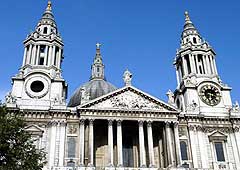
Sir Christopher Wren was the most important Baroque architect in England. In 1666 occurred the great fire of London and destroyed 51 churches. The St. Paul's Cathedral was the first protestant church in England. The columns on the outside of the church are arranged in pairs. St. Paul's dome is the 2nd biggest dome in the world the 1st is St. Peter. It took 40 years to build the cathedral.

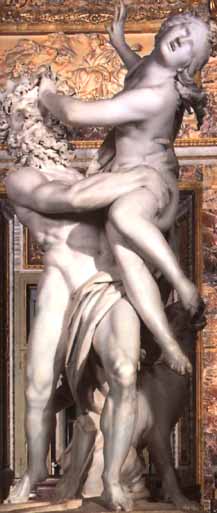
It was made by Bernini, Pluto is the god of dead and underworld and Prosperina is the daughter of the earth goddess, Ceres. Prosperina had to lived in the underworld because she ate Pluto's pomegranate. According to the myth we have fall and winter because Ceres mourns and nature dies and spring and fall because Proserpina comes back and she is hapy. In the sculpture is represented when Pluto kidnapped Proserpina.

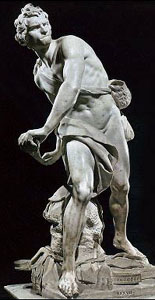
It was made by Bernini. In the sculpture David has a Sling in his hands and he is getting ready to throw the stone to goliath. In Michelangelo's David is before throwing the stone this one is during the action and in Donatello's its after throwing the stone.
It was made by Michelangelo Merisi da Caraggio. The two man that appear walking into the room are Christ and an apostle and the people that are around the table are counting money, the man sitting on the center of the table is St. Matthew and when Christ points him means to follow him. The coin in the mans hat represents preoccupation of money and the Matthew's future is serve Christ become an apostle. The name of this Baroque painting technique is tenebrism.

It was made by Artemisia Gentileschi. She was the first female to became an artist. The story of this painting comes from the book Judith in the Bible, in this story king Nebuchadnezzar wants Holofernes to destroy Judah. Judith was a widow, she and her servant went to the Holofernes camp and being there Judith flirt with Holofernes and then cutted him the head. This female artist was raped by her art teacher, and before they decided he was guilty the tortured him with thumbscrews, and as consequence of that she usually paints about heroic women.

It was made by Rembrandt, a Holand artist. The man in the middle of the painting is Belshazzar and he has a look of fear in his face because there's a light with a message, and that night he was killed. This artist made more than 100 self-portraits.

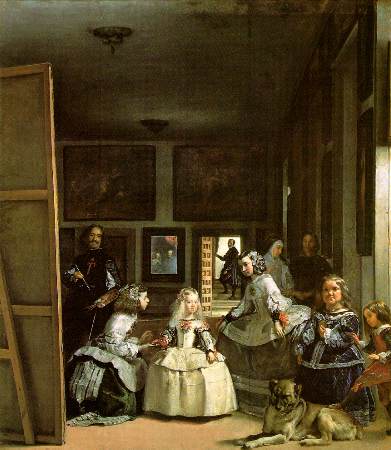
It was made by Diego Velazquez, a Spanish artist. The little girl in the middle of the painting is a five year old princess called Margarita. Meninas means maids. The man on the left sife of the painting is Diego Velazques and he is painting, and at the background you can see the king and queen of Spain, Margarita's parents.