

There are literally thousands of plant species that live through out Pennsylvania and the greater Bucks County area. This diverse group of spieces either evolved here over time, or was introduced by native human populations and one time or another.
On this page you'll find just some of the familiar plants you might run into on your hikes in Bucks county. Listed below are Native, Invasive, and even a few Poisonous plant species you might encounter on your travels, along with some quick information about each (so you can impress your friends)!http://s1290.photobucket.com/user/ralexan89/slideshow/?sort=3
NATIVE Plants
GRAYS SEDGE
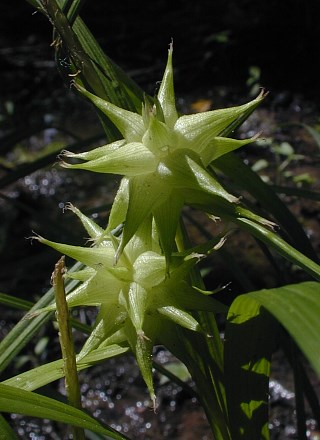
Scientific Name:Carex grayi
A native perennial sedge, usually reaches heights of 2-2.5 FT. The seeds of sedges are a fairly important food source for various waterfowl, rails, upland gamebirds, and granivorous songbirds. The pistillate spikelet of this attractive sedge resembles a medieval mace. Because of this unusual characteristic, Gray's Sedge is fairly easy to identify.
MISTFLOWER
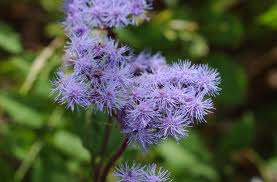
Scientific Name:Ageratina riparia
Mistflower is a low growing, sprawling perennial herb that grows up to 40 60 cm high. Mistflower buds from July until August, with full flowering occurring from August through October. It is sometimes referred to as Creeping Croftonweed. It is also considered an invasive species in Africa, Madagascar, and Australia where is was introduced.
JAPANESE HONEYSUCKLE
POISON IVY
EARLY SAXIFRAGE
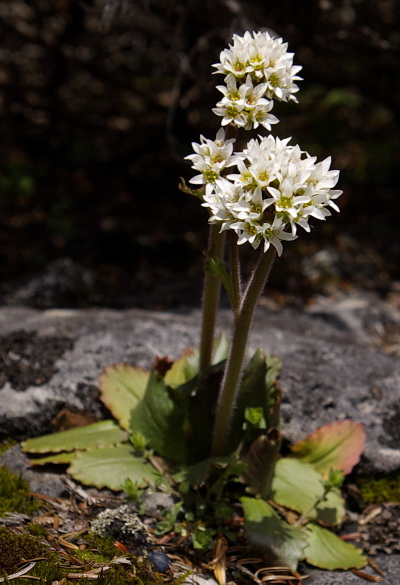
Scientific Name:Saxifraga virginiensis
It is a herbaceous plant, which can reach 1 ft. This species flowers in the spring and is usually found growing on rocks, cliffs, or logs. The pubescent stem is thought to deter ground insects from reaching its flowers, which would be less effective for pollination than flying insects.
INVASIVE Plants
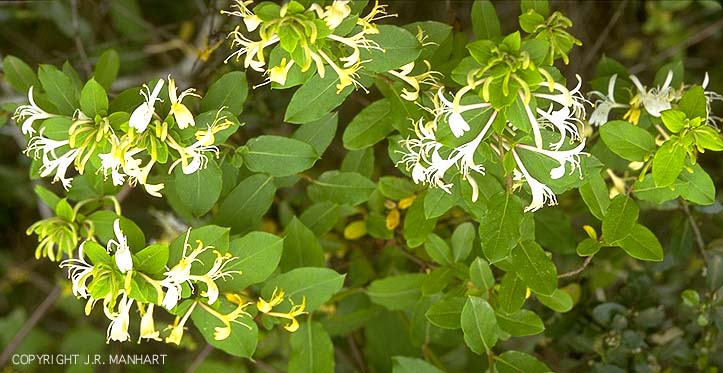
Scientific Name:Lonicera japonica
Called "Suikazura" in Japanese, although you will see this plant almost everywhere, it is not a native species of the area. It is a twining vine able to climb up to 33 ft high or more in trees.The flowers are double-tongued, opening white and fading to yellow, and sweetly vanilla scented. Although invasive, it can be a significant source of food for deer, rabbits, hummingbirds and other wildlife.
DAMES ROCKET
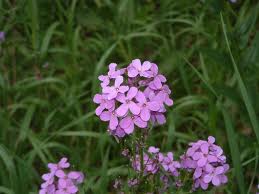
Scientific Name:Hesperis matronalis
It has numerous common names, including dame’s rocket, damask violet, dame’s violet, dames-wort, dame’s gilliflower, etc. Plants are biennials or short-lived perennials, native to Eurasia and cultivated in many other areas of the world for their attractive, spring-blooming flowers. The plants have showy blooms in early to mid spring. But out here, they are an invasive species.The genus name Hesperis is Greek for evening, and the name was probably given because the scent of the flowers becomes more conspicuous towards evening.
POISONOUS Plants
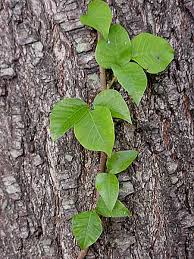
Scientific Name:Toxicodendron radicans
STAY AWAY!!!! That's what poison ivy would scream if it had a voice. It's best to avoid this unfriendly plant at all cost. It produces urushiol, a clear liquid compound found within the sap of the plant that causes an itching, irritation and sometimes painful rash in most people who touch it!It can be found growing as a trailing vine, a shrub, or growing as a vine on trees. It is distinguishable by its three leaves, so if you run into ivy with three leaves its best to just avoid it all together.
STINGING NETTLE
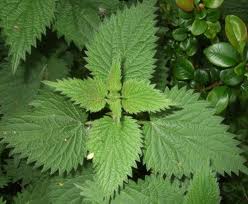
Scientific Name:Urtica dioica
STAY AWAY!!!! It is a perennial flowering plant, native to Europe, Asia, northern Africa, and North America. The plant has many hollow stinging hairs called "trichomes" on its leaves and stems, which act like hypodermic needles, injecting histamine and other chemicals that produce a stinging sensation when contacted by humans. Best to just avoid this bad boy at all cost!
Click here for a Picture Slide show of other plants you might see in your hikes!
