|
*
|
APOLLO 11 MOON LANDING - - - A SALUTE TO APOLLO 11
Apollo 11 landed on the Moon July 20th 1969.
If you would like to see an official day of recognition for space pioneers,
particularly if you would prefer observing July 20th, the anniversary date
of the Apollo 11 landing as that day, please view and sign the online
petition at the web site link below (http://www.july20th.org).
Please pass this web site along to your colleagues and friends. Apollo was
successful thanks to the selfless sacrifice of more than 400,000 workers who
participated in the largest civilian "research and development" project in
history. The Apollo landing alone is worthy of recognition as a historical
event, but the significance of Apollo reaches well beyond that single event.
The monumental efforts made by the Apollo team provided a significant boost
for the development of methods and technologies that led to accelerated
improvements in health care, education, business, military and
administration/management. Apollo changed the future of America and humanity
for the better in more ways than most people appreciate. A national day of
recognition could help educate the general public about the impact of space
exploration on the individual lives of the beneficiaries of the Apollo
legacy.
-Jim McDade
SpaceADG
Click here:
http://www.july20th.org
|
*
|
A TRIBUTE TO MR. MAC
A historical biography of James S. "Mr. Mac" McDonnell
A speech by his son John F. McDonnell, given Apr 8, 1999 at the National Academy of Sciences
Washington, D.C.
You will find this to be a very interesting biography of Mr. Mac from a young age, through his early career,
the founding of McDonnell Aircraft Co., the development of the corporation, and it's products.
This site has numerous photos, merged vertically. So, give it a little time to load up, and you will
scroll down through the photos to reach the text. You will enjoy it!
Click here:
TRIBUTE TO MR. MAC
|
|
*
|
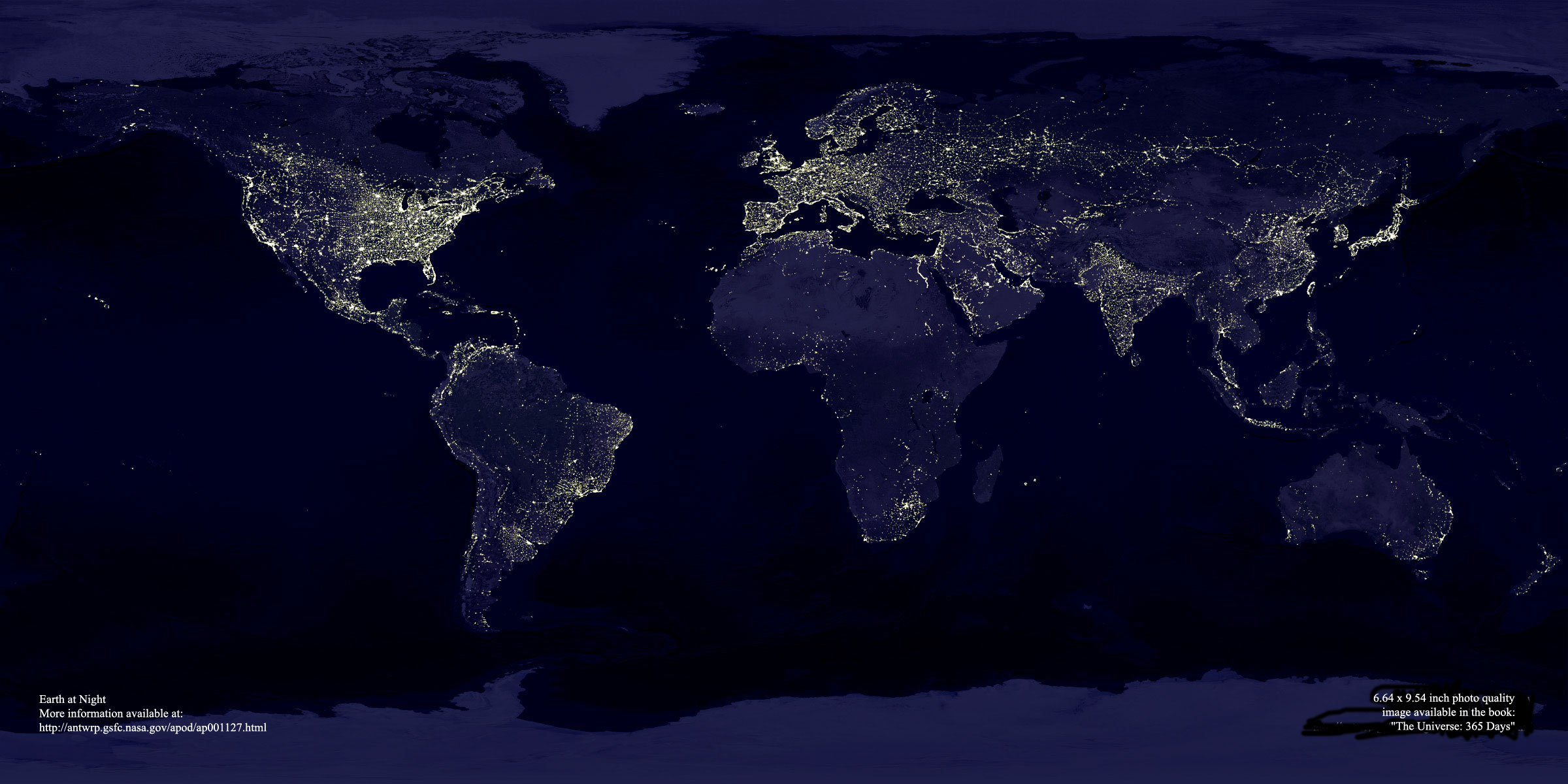
THE EARTH AT NIGHT
If you click on the Web address below, you'll find a great night-time
picture of the whole world. In this panoramic night picture, the lights clearly indicate the populated areas.
Be sure to scroll East-West and North-South using your browser scroll bar.
Can you find your favorite country or city? Surprisingly, city lights
make this task quite possible. Human-made lights highlight particularly developed or populated areas of the Earth's surface,
including the seaboards of Europe, the eastern United States, and Japan. Many large cities are located near rivers or oceans
so that they can exchange goods cheaply by boat. Particularly dark areas include the central parts of South America, Africa,
Asia, and Australia. The above image is actually a composite of hundreds of pictures made by the orbiting DMSP satellites.
Click here: EARTH AT NIGHT
|
|