Site hosted by Angelfire.com: Build your free website today!

Sinkhole Formation

The diagram below shows a general cross section of karst topography. Sinkholes form in enlarged joints (cracks) in the bedrock. Blind valleys happen when a river valley runs into a skinkhole. Because surface water generally doesn't have time to stand still for long before sinking into the ground the "favorite" Minnesota bird, the mosquito is rare in this geographic terrain. The diagram was produced by the Minnesota Geological Society for a display at Forestville State Park.

karst drainage
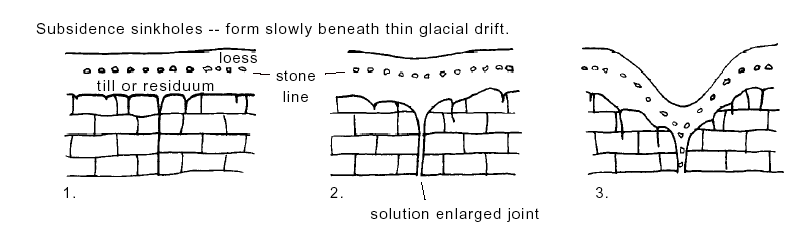
The diagrams below show a typical sinkhole formation. The start of a sinkhole happens when a thin layer of glacial drift or other soil ("good black dirt" is called loess) allows rapid drainage of rain water into the carbonate bedrock. A crack or "joint" in the rock gets enlarged as more water dissolves the rock along the path of the water. Each of the three following diagrams demonstrate this basic process with slight variations depending on the depth of the overlying soil and amount of eroded bedrock.
sink hole 1
sink hole diagram 2
sink hole diagram
 
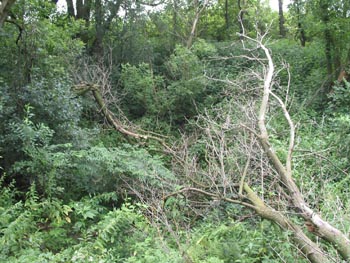
  The photographs below are from the DNR sinkhole demonstrate site described on the previous page. It is not obvious from above ground what happens to the water that runs into the sinkholes. To test the scientific viability of the karst sinkhole explaination, geologists had to be able to describe where the water goes. To help determine this some geologists put a very intense nontoxic dye in the water as it ran into this sinkhole and then litterally drove around the countryside to find a place where that dye would show up. On the next page you will be able to see the spring where the dye (and water) put into this sinkhole resurfaced.

sinkhole sink hole

Backprevious pagehomenext pageNext

Home