
Being careful of the broken glass, he began to search the rest of the building. The bathrooms were also destroyed. Toilets, sinks, and urinals were broken, spilling fecal water onto the floors. The dressing room had been ransacked, the long mirror over the make-up counter was broken as had been the mirror behind the bar. The storeroom was a clutter of smashed boxes and bottles, reeking of alcohol. The pay phone in the hallway had been ripped right off the wall. And not a sign of anyone. Where was the bartender, the waitress, the owner?
The
poet opened a door leading to the back alley and stepped outside again,
out of the disaster. He should get away from 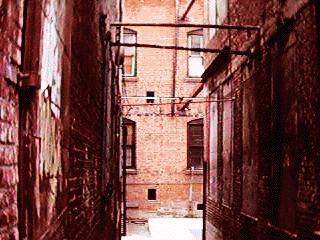 here
before being discovered, but he could not leave without first puzzling
out what had transpired. He glanced around the alley littered with
empty boxes, an overflowing dumpster. There was something hidden
in the shadows among the empty boxes. Was that some homeless wino,
or a dead body? The poet cautiously stepped forward to investigate.
here
before being discovered, but he could not leave without first puzzling
out what had transpired. He glanced around the alley littered with
empty boxes, an overflowing dumpster. There was something hidden
in the shadows among the empty boxes. Was that some homeless wino,
or a dead body? The poet cautiously stepped forward to investigate.
It was the old blind sax player, huddled fearfully among the refuse, his face not yet dry from the tears he had shed. Knowing that he had been discovered, he spoke in a voice at once timid and defiant, “Who is that?”
“Don’t worry,” the poet told him, “it’s me.”
The sax player breathed a sigh of relief and relaxed back into his grief. “Doesn’t matter much anyway.”
He produced a half-empty bottle of whiskey and took a long drink. The poet eyed the saxophone on the old man’s lap, bent and broken. The old man passed him the bottle and he took a healthy drink before passing it back.
“What happened?”
“The old man grimaced, one hand fell to his broken sax, then he shook his head remorsefully.
“There just ain’t no place in this world for the likes of us, son.” He took another pull off the bottle. “The police came and took everybody away. I was coming out of the bathroom when they stormed through the doors. Don’t know how they didn’t see me in the hallway. I hid in the storeroom till they were gone, then I came out to find my sax and beat it out of there. But right after the police left, a mob came in through the front doors and destroyed the place. I snuck out here and waited until it was quiet again. At first, I thought they lit the place on fire, but I guess it didn’t catch. Once they were all gone I went back in and found my sax.” He bowed his head back over the broken saxophone. “They broke it, they broke my sax.”
“The police hauled everybody off,” the poet could not believe it. “What for?”
“For chasing dreams, boy,” the old man’s voice held a rough edge of grief. “They knew this club was full of shadow chasers, and tonight the deepest shadow was here.” He passed the bottle back to the poet.
“It was always in this club.” The poet sat down beside him and drank. “Nobody ever had to go chasing after the deepest shadow, it’s here within all of us.”
The old man chuckled cynically. “That’s something few people know.”
“That’s why I came here tonight, to tell them the police can’t keep us from our dreams.” The poet told the old man of his discovery and of his dream. “I have it now, and I will tell it so that the whole world will listen.”
“Nobody will listen.”
“What do you mean?” the poet asked.
“They
don’t want to hear that--they don’t want to know  anything
about it. Who the hell do you think ransacked this club? It
was our neighbors, the citizens of this fair city. They don’t want
to know where the deepest shadow resides, or what they might find within
it.”
anything
about it. Who the hell do you think ransacked this club? It
was our neighbors, the citizens of this fair city. They don’t want
to know where the deepest shadow resides, or what they might find within
it.”
“But they need to know,” the poet insisted, “and I aim to tell them.”
“They’re not gonna listen to you,” the old man argued. “And if you keep it up, they’ll break you just like they broke my sax.”
“But I have to sing about it, just as you have to play your sax.”
“No, they got me.” The old man mourned over his broken instrument. “I can’t play anymore, I’m beaten.”
“You can’t give up,” the poet argued for life. “Get your sax fixed or buy another one.”
“You don’t understand,” the old man protested. “I’m not up to the fight. I’m getting old, and it’s too much of a struggle anymore just to face this world each day. You’re young and naive; you’re full of life and eager for battle, you go out for a bit until you tire of having your head knocked.”
“I have to keep trying,” the poet confirmed, “I’m not ready to give it up.”
“Then here’s my advice:” the old man told him, “go to Europe. They’re more receptive over there.”
“No,” the poet disagreed, “this is where I’m needed most.”
“Then
give it all you’ve got,” the old man concluded, “and always watch your
back. Hide it in a good story and maybe they won’t realize what you’re
up to. Most likely, they’ll break you in the end; but till then,
you give them a fight you can be proud
of.”
“Here’s to the fight,” the poet drank and passed the bottle to the old man.
“Here’s to the night,” the old man drank in turn.

Detail from the Lagoon Nebula
