
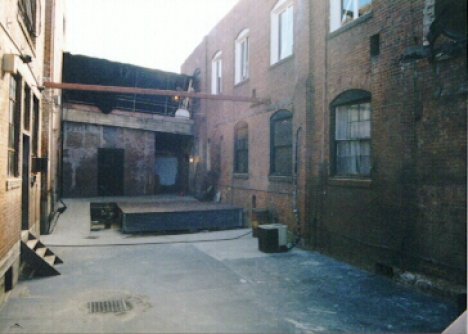
 The poet looked out from an alleyway. Across the street, in the lee
of a large maple, was the darkest shadow of the night. He had been
casing the area for a quarter of an hour; no one was in sight but a harmless
homeless drunk sitting back against a fence post twenty yards down from
the tree. Just as the poet made up his mind to cross the road, the
drunkard pulled himself up along the fence and stumbled over to the tree.
He placed his left hand against the tree to hold himself steady and fumbled
at his pants with his right hand, freeing his member to urinate on the
tree trunk. While he was attempting to pack himself away and zip
up, he wavered on his legs and the toe of one foot crossed into the deepest
shadow. In a manner of seconds, two men stepped out of the building
behind the drunkard and forced him into an unmarked police car which appeared
as though out of nowhere. The car drove away and the two men resumed
their station in the building close by the tree. Somewhat shaken,
the poet hurried back through the alley, away from the stakeout and away
from the darkest shadow.
The poet looked out from an alleyway. Across the street, in the lee
of a large maple, was the darkest shadow of the night. He had been
casing the area for a quarter of an hour; no one was in sight but a harmless
homeless drunk sitting back against a fence post twenty yards down from
the tree. Just as the poet made up his mind to cross the road, the
drunkard pulled himself up along the fence and stumbled over to the tree.
He placed his left hand against the tree to hold himself steady and fumbled
at his pants with his right hand, freeing his member to urinate on the
tree trunk. While he was attempting to pack himself away and zip
up, he wavered on his legs and the toe of one foot crossed into the deepest
shadow. In a manner of seconds, two men stepped out of the building
behind the drunkard and forced him into an unmarked police car which appeared
as though out of nowhere. The car drove away and the two men resumed
their station in the building close by the tree. Somewhat shaken,
the poet hurried back through the alley, away from the stakeout and away
from the darkest shadow.
Later,
he followed the sound of horns and sax’s blowing 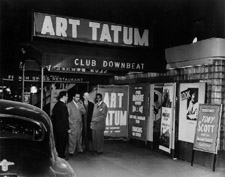 mournful
jazz. The music led him to a hazy nightclub, where there were gathered
all the denizens of the night. He ordered a double bourbon, slugged
it down and called for another, then tried to lose himself in the bluesy
improvisations of the jazz musicians. There was one old, blind sax
player, in particular, who seemed to pack emotion into every note he blew.
mournful
jazz. The music led him to a hazy nightclub, where there were gathered
all the denizens of the night. He ordered a double bourbon, slugged
it down and called for another, then tried to lose himself in the bluesy
improvisations of the jazz musicians. There was one old, blind sax
player, in particular, who seemed to pack emotion into every note he blew.
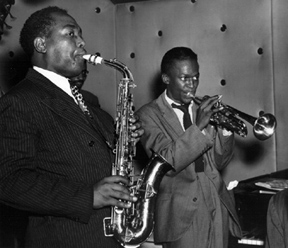
“You another refugee of the night?” a man, dark as the night and seated at the barstool next to him, inquired.
“Huh?”
“C’mon man, what do you think we’re all doing here, now that the police are patrolling the shadows to prevent escape?”
“I saw them haul away some poor drunk simply because he tripped over a spot of darkness,” the poet slammed away his second double-shot.
“Hell,” said the man, “I wouldn’t be surprised if they were even keeping an eye on the cats and the rats.”
“The night isn’t safe anymore,” the poet concluded, “but the police must save us from it.”
“Whatchu drinkin’, whiskey?” the man ordered him another bourbon and a tequila for himself. “C’mon over,” he invited the poet, “and let me introduce you to a bunch of straight drinkers.”
The
poet took his replenished drink and followed the man over to a table where
were seated two other men and a woman. His newfound acquaintance
sat down and drew over a chair for the poet. “This guy says he saw
them cart away some drunk who
got
too close.”
The
other three looked to the poet for confirmation. One man was big
and brawny with scars on his knuckles which indicated that he had done
a lot of fighting. The other man was about the poet’s size, emotionless
and icy calculation. The woman
glanced
at him with feverish eyes, then returned her attention to the jazz musicians.
“They snatched him up before he even had a chance to catch his breath,” the poet attested.
The woman spoke to no one in particular, “Had you ever known freedom, would you mourn its loss?”
“Ask Joe Hill or Francis Farmer about freedom in Amerika,” the poet replied. “Ask Karen Silkwood or any of the other countless victims of democracy. Hell, ask any Indian you meet.”
The table was silent for a moment. Finally the poet spoke again, “Why are they doing this, are we in danger?”
“Only from them,” spoke the man who introduced him.
“They are society’s watchdogs,” the cool one said, “and society views us as a threat.”
“Because we see in the darkness,” the poet posed. “Because we seek our dreams.”
“Because we bring back those dreams to the waking world,” the cool one pronounced, “and because these dreams might reveal the waking deceit.”
They listened to the music for a while, then the cool one spoke again, “We cannot let them keep us from the deepest shadow.”
The silent giant clenched his scarred and stony fists, “Just let them try and stop me.”
“Do your fists turn bullets?” the dark man asked.
“Relax,” the cool one calmed the giant. “Have another drink. We’ll come up with a way to get around them.”
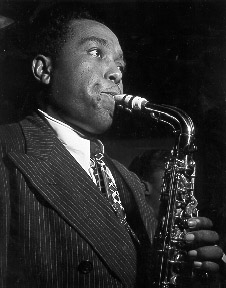 The blind saxophonist blew one last searing solo, and then the song ended
and the band took a break.
The blind saxophonist blew one last searing solo, and then the song ended
and the band took a break.
“Man, that is one hot sax player,” the poet exclaimed.
“Would you like to meet him?” the woman asked. She stood up and urged him to follow, “Come on.”
The feverish woman led him backstage, to a large dressing room where all the musicians hung out between sets. The blind saxophonist was sitting in a folding chair with his back to the far wall, nursing a beer and smoking a cigar.
“Those were the hottest sounds this side of dreamland,” the feverish woman announced her presence.
“Hey babe,” the sax player sat his drink on the makeup table and extended his arms, “come on over here and give me a hug.”
She sat on his lap and they held each other playfully.
“Why they’d want to lock up a fine young lady like you is beyond me,” the sax player told her.
“Honey, they’re after all of us,” she said, “anyone who can dream.”
“Don’t let them touch my sax; this would be a sad and solemn world without music.”
“Don’t worry, daddy, we’ll keep you safe long as your chops hold up. I brought a friend along,” she left his lap and brought the poet forward. “He’s another refugee, and don’t you know he liked that sax of yours.”
“You can really play,” the poet complimented him. “The darkest shadow must bed down in your sax.”
“Man, don’t be saying that,” the musician half-jested. “The police will be all over me for sure if they get wind of that.”
“I won’t repeat it,” the poet promised.
“Babe, you got any of those dream sticks you like to carry around? A little tea would taste great right now.”
“Look, they may keep up out of the shadows,” she told him as she produced a joint out of her pocket, “but they’re gonna have to catch me if they want to take away my smoke.”
The
other musicians gathered around at sight of the joint. She lit it
up and passed it along the circle. The poet smoked with them; it
was a poor substitute for his dreams, but in this land it was all they
had. Stimulated by the joint, he speculated out loud,
“There’s
got to be some way into dreamland, other than through the darkest shadow.”
“Well now, if you find it let us know,” said the sax player as he hit the joint again.
If there is another way, the poet thought, I will find it--or it will find me.
Lagoon Nebula
