Tabloid Press
When she was a journalism student at the University of Massachusetts, Tamara Matthews hoped to one day write for a respected newspaper such as The New York Times, The Boston Globe or The Washington Post. She imagined being assigned to headline news stories or sensitive human-interest pieces, taking a stand on controversial issues or covering national, state and local politics. Never in her worst nightmares did she imagine she would wind up writing for The National Tattler, the disreputable supermarket tabloid.
Although she considered the job a compromise of her personal goals and professional ethics, the young journalist had to pay her living expenses somehow; and since good reporting jobs were almost impossible to come by (unless one had several years of experience or highly placed connections), she had to swallow her pride and sell her soul to the Tattler—at least until something better came along.
While Tamara had gotten straight A's in her journalism and writing courses and had graduated with honors, her education did her little good in her job at The National Tattler. There were no in-depth interviews, no hard-core news articles and no quotes from unnamed, high-ranking political sources. Hers was not a job for Bob Woodward or Carl Bernstein. The articles that appeared in the Tattler seemed more like fictional plots hatched from the imagination of Stephen King than legitimate news stories.
One day the frustrated reporter was sitting at her desk trying to come up with an idea for her next article when fellow reporter Neil Kresge handed her a sheet of paper from his printer.
"Hey, Tammy," he laughed, "here's one that's sure to win me a Pulitzer: an eight-hundred-and-sixty-two-pound man wed his seven-hundred-and-forty-nine-pound high school sweetheart. The rotund couple wants to take a cruise on the Love Boat for their honeymoon."
"Is this story on the level or is it just something you dreamed up in your demented imagination?" his coworker asked.
"Are you kidding me?" Neil chuckled as he saved the article on his computer's hard drive. "What do you think I do, hang around Weight Watchers' meetings waiting for potential stories to appear?"
"Where did you get the photograph then?"
"It's a picture of my brother and sister-in-law at their engagement party. I used Photoshop to edit the picture and to add a few hundred pounds to each of them. Not bad work, huh? Maybe I ought to get a job in the art department."
"Your brother and sister-in-law are going to love you when they see that. I don't think you'll be getting an invitation to the wedding."
"That's nothing. Last year I took a picture of my wife and turned her into a hundred-and-two-year-old Titanic survivor."
"It makes me wonder how reporters ever plied their trade before the invention of the personal computer."
"If I ever meet any real reporters, I'll be sure and ask them. What about you, Tammy? What journalistic masterpiece are you working on now?"
"Nothing," she replied with a sigh of frustration. "I'm suffering from a severe case of writer's block at the moment."
"Do you know what sage advice my first editor here gave me? 'When all else fails, steal an idea from Star Trek or The Twilight Zone.'"
At first, Tamara laughed at Neil's ludicrous suggestion, but several hours later when she was still no closer to an idea for an article, she began to consider a few episodes of Star Trek as potential storylines.
Reporters who had been at the tabloid newspaper for any length of time knew that the more bizarre and unbelievable the story, the more likely it would be printed. After all, if someone wrote that Michael Jackson had a penchant for young boys, The National Tattler could find itself hit with a hefty lawsuit. On the other hand, if someone wrote that Abraham Lincoln was reincarnated as a Mexican and was selling used cars in Cleveland, what were the odds that Old Abe's lawyers would come knocking on the door?
During her few short years of tenure at the Tattler, Tamara had written articles on the existence of Big Foot, the search for the Loch Ness Monster, the whereabouts of Jimmy Hoffa, supposed sightings of Elvis Presley, more disappearances in the Bermuda Triangle and the aliens of Area 51. Were the plots of episodes from Star Trek or The Twilight Zone any more implausible?
The Star Trek episode that eventually inspired her to write her article was "A Piece of the Action," wherein Captain Kirk and Mr. Spock beam down to a planet that patterned its society on a book about 1920s Chicago gangsters. The book, which had been inadvertently left on the planet by a visiting Earth ship years before, became the blueprint for the laws and behavior of the planet's entire population.
In the same vein, she wrote an article claiming that a British archeologist—whose existence was a mere figment of her imagination—while digging for artifacts in the Holy Land found "proof" that the Bible (which has been considered the testament of God throughout the centuries) was actually an ancient novel. Her article concluded that Moses, Mary, Jesus and the Apostles were only fictional characters, no more real than Cinderella, Scarlett O'Hara, Michael Corleone or Hercule Poirot. Yet bizarre as it was, the story was rejected.
"Congratulations!" Neil laughed. "You're the first reporter to have a story rejected by the Tattler."
It was a dubious honor, but Tamara was not about to let it discourage her.
The following day, back at her word processor, Tamara began to write another article—also inspired by Star Trek. This time she chose the episode "Who Mourns for Adonis?" in which the Greek god Apollo reveals to the Enterprise landing party that he and his fellow heroes of mythology were actually space travelers who had landed on Earth and were proclaimed gods and goddesses by the superstitious people of ancient Greece and Rome.
Tamara's article, on the other hand, quoted a clairvoyant—as fictional as the British archeologist—who claimed that Jesus Christ was actually an alien who visited Earth two thousand years ago. This mystic pointed out that the lord's many supposed miracles were merely the result of his extraterrestrial powers. Even his resurrection was not a work of God, but a normal occurrence in Christ's alien physiology. The imaginary psychic, who supposedly wished to remain anonymous for her own protection, further stated that Jesus's references to heaven referred to outer space—the planets, stars and distant galaxies—rather than to a spiritual heaven as most people assumed. The journalist even went so far as to write that at the time of his crucifixion, when Christ looked to the heavens and appealed to his father, he was searching the sky for a sign of his own people. Finally, she ended her article by explaining that when Jesus said goodbye to his disciples and ascended to his father's kingdom, he had in reality transported aboard his spaceship and returned to his home planet.
"If that story doesn't get printed," Tamara announced with a sigh, "I suppose I'll have to do another article on O.J. Simpson, Scott Peterson or the JonBenet Ramsey murder."
* * *
That night, as Tamara slept, she dreamt she was floating on a calm river, with the low hum of insects on shore adding to the soporific effect of the gentle rocking of the boat. When the young reporter opened her eyes the following morning, she discovered she was no longer in her bedroom. On the verge of panic, the terrified young woman looked around the room, trying to recognize something that would give her a clue as to where she was. Once she was fully awake, however, she realized that the hum she had heard in her dream had not been made by insects but rather by some kind of air conditioning or ventilating system. Furthermore, the feeling of movement was still there.
"I must be on some type of vehicle: a train or perhaps a boat. But how on earth did I get here?" she wondered with a growing sense of fear.
Neil had once written an article in the Tattler about a gang of white slavers who kidnapped attractive young women from their homes and sold them in foreign countries. At the time, she thought the idea—like everything else Neil wrote—was just nonsense. Maybe she had been wrong.
As she walked the room's perimeter, Tamara was amazed by its unusual appearance. There were no angles. The room was almost cylindrical in shape with curved walls and ceiling. There were no doors or windows, yet surely there must be some way to get in and out.
She was searching for a switch that might trigger a sliding door when suddenly Tamara saw a hole forming in the center of the wall, almost as if its surface were melting. A young man stepped through the bizarre doorway into the room, after which the material melded together again in the shape of a wall.
"Good day, Miss Matthews. I trust you rested comfortably," the man said politely.
When he reached for her hand, Tamara pulled away, afraid of his touch.
"Please don't be frightened," he said, comforting her like a father would a small child. "No one will hurt you. I know people on your planet usually react to the unknown with fear and mistrust, so I've come here to answer any questions you might have."
All Tamara could do was stare at him since she was incapable of speech. At that moment, her brain was desperately trying to assimilate the incredible situation.
"I suppose that the first question you will ask when you are finally able to speak is 'Where am I?' I surmise you've already come to the conclusion that you're traveling on a ship far from the planet of your birth."
The man had a remarkably calming effect on Tamara. His voice was soft and gentle, and his eyes warm and tranquil.
"Why was I kidnapped from my home and brought here aboard this ship against my will? What do you want of me? Do you intend to study me? Run dozens of tests and then dissect me to see how a human body works?"
A pleasant smile, almost angelic in appearance, transformed his serene face. He was beautiful, Tamara concluded, but not in the sensual way that human beings are beautiful. His beauty was more like that found in nature, a beauty similar to the splendor of a sunset over the ocean or the sight of a distant snow-covered mountain. It was the kind of beauty that had inspired musicians, poets and artists for thousands of years.
"You will no doubt find what I'm about to tell you more astounding than anything printed in your newspaper, Miss Matthews," he began, but then he, too, seemed to suffer from a loss of words.
There were several minutes of silence. Finally, the beautiful alien continued.
"I suppose the easiest way to explain the situation is to relate it to the Star Trek shows that you're so familiar with—which, by the way, were often closer to fact than fiction. Your Gene Roddenberry was as much a prophet as your Nostradamus," he chuckled. "Two millennia ago—to use your world's time reference—the people of my planet, along with the inhabitants of many other galaxies—all of whom were highly advanced technologically, intellectually and socially—joined together to form a union very similar to Star Trek's Federation. Its purpose is to send out emissaries to planets throughout the universe. We make contact with the inhabitants and try to share with them the vast knowledge our members have acquired. While the people of most planets welcome us and the gifts that we offer, others are not as hospitable. The people of Earth fall into the latter category, I'm afraid. When I first visited your planet, it was far too early in man's development for people to understand the concept of space travel."
"Oh, no!" Tamara exclaimed, seeing where his explanation was heading.
"Yes, my dear. you're here because of the story you wrote. It was a little too close to the truth. We couldn't allow it to be printed."
"But I just made it up!"
"I know you did. But, quite by accident, you wrote what was probably the most astounding news article in your planet's history."
"How did you find out about it?" she asked. "It never even appeared in print."
"We have contacts on the staff of The National Tattler as well as the other major tabloids."
"Why would a race as highly intelligent as you claim you are be interested in what's printed in the tabloids?"
"Because my associates and I believe that if word of our existence ever leaked out, no respectable newspaper would print it. So, we have our people keeping close track of the articles submitted to the tabloids. When one of them came across your story, he felt it wasn't safe to leave you on Earth."
"What do you intend to do with me?" she asked fearfully.
"We'll take you to a planet very similar to your own, but one where our presence is known and welcomed. You will be treated very well, like visiting royalty most likely. I'm sure you'll enjoy the experience. Don't worry; they're quite human. You won't have to spend the rest of your life on a planet populated by scaly green aliens with squirming tentacles!"
Tamara laughed, able to relax for the first time since she woke on the alien ship. In fact, she found she was actually looking forward to such a unique opportunity.
"Are the people on your planet human, too?" she asked, her journalist's curiosity finally awakening.
"No. Four millennia ago, my people mastered control of mind and matter. Similar to the chameleon on Earth, our physical bodies assume the form that best functions in a given environment. On your planet, for instance, we have appeared as everything from birds to fish to various forms of plant life, as well as human beings. That was how so many of your Earth legends and myths were born, by the way. Your ancestors assumed that anything they couldn't explain or understand was either a god or a demon. People would actually fall down and worship a talking bird, a cat or a tree."
"Do you mean that some of the ancient religions like those practiced by the Egyptians, the Romans and the Druids were based on the worship of your people? Is that why you feared my article being published?"
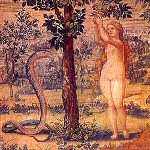
"It wasn't just some religions, Miss Matthews, but all religions. The burning bush that spoke to Moses was actually one of my people. We also appeared in what came to be known as the Garden of Eden—both the Tree of Knowledge and the serpent—again, they were my people trying to communicate with the people of Earth."
"But the serpent was evil."
"No, he wasn't. A group of people saw him transporting down from his ship. Word soon spread that he was cast out of heaven, and as such, they assumed he must be evil."
"What about the ships? Why were there no references to them in the Bible?"
"Back then our ships appeared as tiny spots of light in the sky. During the day they weren't even visible in the glare of the sun, but at night they were usually mistaken for stars. Of course, just as the people of Earth have advanced from the abacus to the computer, our technology has also improved. Our newer ships don't even have to enter the Earth's atmosphere for our people to disembark."
Tamara shook her head in amazement.
"I still can't fully grasp what you're telling me. I feel as though my whole world, everything I ever knew or believed, has suddenly been turned upside down and inside out."
"Do you see now why we can't allow your story to ever appear in print or take the risk of you ever writing a similar one? Strange as it may seem to you, some people actually believe the stories printed in the tabloids. If the people of Earth—at least in this stage of their development—ever learn the truth, I don't know what might happen to your planet. Your laws, your customs and your sense of right and wrong are all based on your planet's religious teachings. Even atheists who fiercely deny the existence of a god retain the concepts of good and evil: concepts that were taught to your ancestors long ago by our emissaries. What do you think the people of Earth would do if they found out that the Father, Son and Holy Spirit are just beings from another galaxy and are no more divine than they themselves are?"
"So, there's no such thing as heaven and hell then, is there?" Tamara asked.
"There's no truth to your concept of heaven where God rules benevolently over a kingdom of winged angels with harps or a hell where sinners burn in a fiery pit throughout eternity. When your body dies, you do go on to an afterlife, another level of existence, but it's one that I'm not about to try to describe to you now," he laughed.
"There is one thing I don't understand. You know I based my story on an episode of Star Trek, right?" the journalist asked.
"Yes."
"Then how come your people didn't stop that particular episode from being broadcast since it, too, came pretty close to the truth?"
"That episode dealt with Greek gods and goddesses who are considered today to be mere myths. If you had written that Zeus or Apollo was an alien, no harm would have been done, but Jesus Christ is a different matter."
"I still can't believe that I just made up a story off the top of my head that came so close to the truth," Tamara laughed.
"A lot closer than you know. There was a reason I was the one chosen to explain our existence to you."
"And what's that?"
"Because I was one of those early emissaries who visited your planet in an attempt to teach a philosophy of love, brotherhood and peace. I was the one you wrote about, Miss Matthews. I was the man hailed as a messiah and then sentenced by Pontius Pilate to be crucified. It was all just as you had written in your article. There were no miracles. All my people possess the ability to heal the sick and, in some cases, to even raise the dead. And there was no resurrection because I never actually died."
"But that was over two thousand years ago, and you're still alive!" Tamara cried, in awe of this alien and his incredible story.
"I was alive two thousand years before I first visited Earth, and I'll still be alive two thousand years from now and two thousand years after that."
The alien who had inspired Christianity and was assumed by its followers to be the son of God looked at Tamara, his peaceful eyes full of sadness and compassion.
"Perhaps one day," he said optimistically, "the people of Earth will stop killing one another and destroying the planet long enough to listen to all that my associates and I have to teach them. When they do, they'll live far beyond their meager number of years. That was, after all, the promise I gave to the people of Judea and Rome, a promise meant for people of all nations: peace on Earth and life everlasting."
Salem always buys the tabloids, and then he uses them to line his litter box.


