
Here Comes the Bride
On the eve of her wedding day, the bride looked at her reflection in the mirror above her dresser and recalled the day, twelve years earlier, that she first met the man she was about to marry, the man who changed her life as well as the destiny of millions of people around the globe.
The daughter of a school teacher father and a seamstress mother, she had been only seventeen years old at the time and had been working as an assistant and a model for a photographer when he came to the studio to have his picture taken. Her senior by twenty-three years, he was forty at the time, more than twice her age, but that did not matter to her. The attraction she felt knew no age. After all, such a man comes along only once in a lifetime.
While the unlikely pair were courting, she was surprised to learn that for such a man of the world, he had so few vices. He did not drink alcohol or smoke tobacco, and—a lover of animals—he was also a strict vegetarian. Even more unusual, unlike most men of power and influence, he was not one to chase women, even in his younger, more carefree days. When he was a student, he later confessed to her, he loved a woman from afar, but he lacked the courage to speak to her. He had to content himself with writing sentimental love poems that he never found the nerve to give to her.
Furthermore, as a young man, her future husband honored his father and deeply loved his mother, remaining a devoted son up until the time of her death. When he was only a small boy he attended school at a monastery and dreamed of one day taking holy orders. Through his early years, he developed a love of music, took singing lessons and sang in the school choir. As a teenager, he was considered a dreamer, and he often spent his nights curled up with a book. In addition to being an avid reader, he also loved opera and fine art. He enjoyed painting, too, and despite his father's objections, he had hoped to become an artist once he finished school.
Then a great war came, and he enlisted in the service of his country. He was wounded and decorated for his heroism. After mustering out of the army, he decided to seek public office, hoping to further serve his country and help rebuild it and return it to its former glory.
While the bride ran a brush through her blond hair, she smiled and thought about how little she had in common with the man she had chosen to marry. She was fair, while he was dark. She had been born to lower-middle-class parents, had no great mind or intellect and preferred to live quietly in the country, enjoying the simple pleasures of life. Slender and athletic in build, she liked gymnastics and dancing. She also loved the outdoors and enjoyed swimming, skiing and hiking.
The man she chose to marry, on the other hand, had little time for such frivolous sports and games; he was far too driven by a single-minded dedication to a cause.
While her future husband read books on political philosophies, she preferred cheap, popular novels and enjoyed watching "trashy" movies. She remained hidden from the public eye, while he was one of the most famous names and faces in the world.
Yet as different as they were, the bride was devoted to her future husband. Day after day, year after year, she had waited patiently for him to visit her in their home in the country. Usually, he was forced by the pressing responsibilities of his office to remain in the capital. Their time alone together, therefore, was extremely rare and precious to her. But now they were finally to be married. For her, there would be no more long separations from him and no more lonely hours to fill while they were apart.
The bride, satisfied with her appearance, was now ready to take her vows. In the early morning hours, not too long after the stroke of midnight, the two were finally joined in holy matrimony. The groom's closest friends, military officers and political cohorts attended the simple, private ceremony. Also in attendance were his secretaries, his cook and his loyal servants. Afterward, a wedding breakfast was served, and all those assembled toasted the occasion with champagne. Some of the guests, overcome by emotion, openly wept.
The following day, April 30, the newlyweds bid farewell to their faithful friends and staff. Then the bride and groom retired to their private apartment. Outside the door, standing in the corridor, a few of the faithful patiently waited and kept watch.
At 3:30 p.m. a single gunshot was heard. When the friends entered the apartment, they found the lovers sitting side by side on the sofa.
The bride, only thirty-three years old, had swallowed a lethal dose of poison, while her fifty-six-year-old groom had put a gun in his mouth and pulled the trigger.
Their bodies were carried outside and taken to the garden where they were placed side by side in a hole left by enemy shells. The corpses were then doused with gasoline and set on fire. The flames quickly consumed the remains.
But the innocent little boy who had once sung in the church choir and dreamed of becoming a man of God, who had written sentimental love poetry and admired fine art and the opera had ceased to exist long before the fatal bullet entered the brain of the inhuman monster he eventually became.
For that groom—so loved by his faithful bride that she preferred to take her own life rather than face a world without him—was none other than the most ruthless dictator in the world's recent history, responsible for the death of over six million people and the destruction of much of Europe.
As the flames of the funereal blaze climbed higher, Dr. Joseph Goebbels, Herr Martin Bormann and the other Nazi mourners raised their right hands and saluted their fallen leader before returning to the bunker. Their Führer was dead, and their world had fallen apart.
Beyond the burning bodies of Adolf Hitler and Eva Braun, the bride who had only hours earlier become Frau Hitler, Russian troops were shelling Berlin, and the evil known to the world as the Third Reich was, at last, coming to an end.
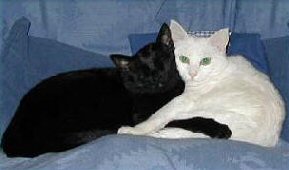
Alas, although Salem is popular with the ladies, he's always been the bridesmaid but never the bride.


