The Final Word
There is little doubt in most people's minds that the modern-day Technological Revolution, like its predecessor, the Industrial Revolution, brought about monumental social and economic changes in the world. At the beginning of the current millennium, a vast network of communication, entertainment and information became available to any and all who had access to a personal computer, cell phone, tablet or other similar electronic devices. By the end of the twenty-first century, all businesses, schools, homes and government agencies were incorporated into NetWeb, the mammoth international cyber network, and by the middle of the twenty-second century, the more traditional forms of communication had been abandoned entirely.
Not only was NetWeb faster, more reliable and more versatile than television and radio, but it was also interactive. Handwritten or typed letters, too, became obsolete, as did paper greeting cards. The delivery of both foreign and domestic mail had been slow and expensive, so postal services were limited to packaged goods only—items usually purchased from online vendors. Newspapers and magazines vanished from store shelves. News stories were better suited to websites in that they could be updated quickly and inexpensively, without consuming vast quantities of paper. Eventually, the entire book publishing industry perished, and bookstores and libraries were forced to close due to a lack of interest in printed materials. Most people kept abreast of important events via social media.
By the year 2300, only one man in America practiced the lost art of reading books. Boston-born Neville Farnsworth was one of those rare individuals who, like Henry David Thoreau, marched to the beat of a different drummer. Several generations earlier, the Farnsworth family had an elevated social position, great wealth and considerable political influence, but over the years the later Farnsworths suffered a reversal of fortune. Neville, although educated at the best schools in England, chose to retreat to the old family home on Beacon Hill after completing his studies rather than seeking a high-paying job or going into government service.
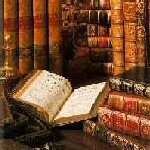
Upon returning to his native America, young Neville devoted his life to filling the inherited brick brownstone with countless stacks of books. The once-grand rooms contained thousands of volumes of reference and nonfiction books, as well as some of the world's greatest literature: Shakespeare, Dickens, Tolstoy, Dante, Austen, Chaucer, Fitzgerald and Hemingway, just to name a few.
Farnsworth, considered an eccentric hermit by the good people of Bean Town, spent the following decades haunting recycling centers and searching through mountains of garbage for salvageable books to add to his vast collection.
It's a lot like hunting for buried treasure, Neville thought as he enthusiastically dug through piles of trash to find discarded paperbacks and hardcover texts.
When Farnsworth was not rummaging through one of the city's waste management facilities, he was kept busy sorting, cataloging and maintaining his ever-growing collection. The main floor of his house contained nonfiction material. Books on the sciences including chemistry, physics, biology and astronomy filled the large living room and spilled out into the hallway. Biographies cluttered the kitchen, leaving Neville just enough room to cook and eat his three square meals a day. Books on art were piled high in the formal dining room where presidents, governors and leaders of industry had once been entertained by his Farnsworth ancestors. In short, all available space in the mansion, including the six bathrooms, closets, cabinets, basement and attic, was overflowing with books.
* * *
One day Neville entered his brownstone, proudly carrying his latest find: a hardcover edition of Lost Horizon, the classic utopian novel by James Hilton. He took the old, discarded book to his upstairs office where he strengthened its broken spine with thick cardboard from a shipping carton and repaired its yellowed and torn pages with cellophane tape. As he prepared a catalog card, jotting down all appropriate information for this particular edition, an amused Neville compared himself to the High Lama in Hilton's novel.
"We're in the same line of work, you and I," he boasted, as though mentally conversing with old Father Perrault.
While Boston was in no way the fabled Shangri-La, Neville nonetheless considered himself a self-appointed custodian of mankind's culture, and like the long-lived High Lama, he envisioned a day when society would undergo a great upheaval, and the world-weary people would long for the treasured volumes he had so lovingly maintained in his mansion. The only problem Neville foresaw was that, unlike Father Perrault, he would not live on for hundreds of years.
Who will care for my books after I'm dead? he wondered, fearing they would be destroyed once he was gone.
Little did Neville realize that as he skimmed through the worn pages of Lost Horizon, reading a paragraph here and there about Hugh Conway, Charles Mallinson, Chang and Lo-Tsen, three thousand miles away a computer genius in the Silicon Valley was preparing to unleash a virus that would bring an end to the technological behemoth known as NetWeb.
Cassius Jacobs had served in the trenches of the computer wars before domestic and international anti-trust laws were repealed and computer manufacturers merged, creating the existing colossal monopoly. After he graduated from MIT at the age of thirteen, the child prodigy spent years trying to make Microcom the leader in its field. It was not an enviable position since Cassius found himself in a high-stakes race with his competitors to see who could provide faster processors, more memory, higher quality, tighter security and lower prices. Undaunted, he persevered and became one of the wealthiest and most successful men in the world.
The emotional problems that eventually pushed Cassius over the edge did not stem from the pressures of his business, but rather from his personal life. When he was a vulnerable young man of seventeen, Jacob fell in love with Microcom's vice president of sales and advertising. After eight months of dating, which Cassius managed with some difficulty to squeeze into his busy work schedule, he and the woman of his dreams were married. Sadly, the union was doomed from the start since Cassius had even less time to spend with his wife as the years passed and he climbed the corporate ladder. Two months before their fifth wedding anniversary, Selena Jacobs left her husband for a man she had met through a NetWeb dating service.
From the moment he lost his beloved Selena, Cassius had been plotting his revenge—not on his unfaithful wife or the new man in her life, but on the technology that had brought the two of them together. Finally, the many long months he had spent secretly developing and testing the Humpty Dumpty virus were about to end in success. Cassius took the chip out of his pocket and inserted it into his computer's mega chip drive.
"There ought to be a drum roll or trumpet blast heralding this momentous event," he declared with a bitter laugh, as he touched the EXECUTE icon on the screen.
The irreversible step having been taken, Jacobs sat back in his ergonomically designed desk chair and waited. A smile appeared on his face when, five minutes later, he heard people cursing and shouting throughout the office complex as they panicked over failed attempts at retrieving their lost data. The pandemonium spread as one by one, then a thousand by a thousand and soon escalating to a million by a million computer systems all over the world came crashing down. In less than an hour, NetWeb was dead.
And all the king's horses and all the king's men can't put it back together again, the genius programmer thought with profound satisfaction as he celebrated his accomplishment with a cigarette—long forbidden in the workplace—and a bottle of expensive French champagne he had smuggled into his office that morning specifically to commemorate the special occasion.
The following day world leaders met for an emergency meeting at the United Nations building where the president and chief executive officer of International NetWeb addressed the assembled dignitaries.
"Yesterday, at 3:35 p.m., Eastern Standard Time, the entire NetWeb network was destroyed by an unidentified virus. I regret to say we cannot even begin to assess the damage or to estimate how many years of work and trillions of dollars we will need to spend to restore it."
Heated arguments broke out among many of the delegates assembled. How could this have happened? Why were there no backup systems to the backup systems? Some quick-tempered members assured NetWeb executives that there would be an immediate investigation, and heads would roll.
Some of the cooler-headed ambassadors, however, voiced more practical concerns. How long would it take to restore the postal service? How badly had the world's telephone equipment deteriorated? What about television and radio? Could these outdated systems be up and running within a reasonable period of time?
While the world's leaders were valiantly seeking the answers to these questions, most people, whose daily lives depended on NetWeb, walked about in a dazed stupor, much like First World War soldiers suffering from shell shock. From the moment their computer screens went blank, their lives irrevocably changed.
As technicians hastened to repair or replace downed telephone lines, switching stations and long abandoned broadcasting equipment, the average man, woman and child suffered from acute despair, anger and boredom. Unemployment, crime and suicide reached an all-time high, as people desperately sought a way to either fill or end their empty lives.
* * *
It was Neville Farnsworth, the eccentric hermit of Boston, the man who had spent decades rooting through heaps of trashed paper in search of books, who proved to be mankind's savior. It started with a single young boy whose school was closed until such time as the board of education could devise an appropriate curriculum in the absence of the institution's NetWeb-based learning programs.
Faced with an abundance of free time and no constructive pastime with which to fill it, the young lad began vandalizing local buildings. One day he tried to break into the aged Beacon Hill brownstone of the man his schoolmates had disrespectfully called "the mad librarian." Much to the boy's surprise, "Crazy Farnsworth"—another nickname used by Boston's youngsters—was at home at the time of the break-in.
"Hello, there," Neville said with a welcoming air when the boy crawled in through the window he had just broken.
The young man's courage faltered, and he turned back to the window.
"Please don't run off," Neville told the frightened child. "I never get any visitors these days. Come in and sit down."
The boy eyed him warily.
"My name is Farnsworth, Neville Farnsworth," he introduced himself. "What's your name?"
"Poindexter."
"Is that your first name or your last?"
"Poindexter Weems, but my friends just call me Dex."
"Well, Dex. I was just about to have tea—a habit I acquired a long time ago when I was at Oxford. Won't you join me?"
In place of a cup of tea, Poindexter accepted a chocolate chip cookie and a glass of milk. While he ate, he looked around the room at the huge stacks of books.
"What do you do with all these?" he finally asked his host.
"I read quite a few of them myself, but mostly I save them for other people."
"Who in their right mind would want a book?" Dex asked. "Everybody knows books are low-tech and old-world."
"Old-world?"
"Yeah. Old-world. They belong in the past. They serve no purpose in our modern, technological society."
"Have you ever read a book?" Neville asked with a smile.
"I never even saw one until now," Dex replied, picking up a heavy volume on the history of architecture.
"What about at school? Haven't you ever read Shakespeare or Dickens in your English literature classes?"
"Schools stopped teaching about those guys years ago. Fictional stories don't offer anything of value to a growing mind."
Neville was stunned by Poindexter's revelations about modern education and by his dismissive opinion of classic literature.
"What do you study then?"
"Computer sciences, mathematics, physics, chemistry, medicine, engineering—all the information we'll need to take our place in the world once we graduate."
"What about music and art? Did you ever listen to Beethoven and Mozart? What about paintings by Van Gogh or Picasso? Have you ever seen any of them?"
"I never heard of any of those people," Poindexter confessed.
Neville retrieved a book from the Queen Anne China cabinet in his formal dining room. He turned to the back of the book and scanned the index with his fingertip.
"What are you doing?" Dex asked.
"I'm looking for the name Vincent Van Gogh in the index of this book."
"What's an index?"
"It's a little like a search feature on your computer. And this," he announced, flipping to the table of contents at the beginning of the book, "is like a menu screen."
The boy seemed fascinated and took the book from Neville.
"What are all these pictures?" he asked as he thumbed through the heavily illustrated pages.
"They're paintings by some of the world's finest artists."
Poindexter's eyes widened as he beheld for the first time the works of da Vinci, Michelangelo, Rembrandt, Monet, Raphael, Botticelli, Caravaggio and Renoir.
"If you promise to bring it back, you can take the book home with you and read it."
That was the beginning of a period to be known as the New Renaissance, for not only did Poindexter Weems come back three days later to return the book on art history and borrow a copy of Charles Dickens's Great Expectations, but he also spread the word of Neville Farnsworth's generosity throughout the Back Bay neighborhood where he lived. Other youngsters and later their parents and grandparents came to the old Beacon Hill brownstone to borrow Neville's books. Soon there were so many volumes coming in and going out that despite his well-organized system, Neville found it near impossible to know for certain who had borrowed what.
"What does it matter?" he exclaimed with a laugh, eventually giving up all attempts to keep track of his precious volumes. "Books were meant to be read, not cataloged, cross-referenced and stored away on shelves."
The idea of reading as a form of entertainment—a novel idea in an age dominated by databases and digitized information retrieval systems—became increasingly popular. Books were no longer thought of as low-tech and old-world. Works of light fiction, classic literature and poetry were once again considered essential to a growing, healthy mind. People all over the world soon began searching their attics and basements for long-forgotten printed materials. Community volunteers explored former publishers' warehouses and abandoned schools and library buildings for books.
By the time the telephone systems were finally up and running again and mail delivery was resumed, people had already become adjusted to their new, non-computerized lives. The worthless hardware left over from the NetWeb days of world dominance was disassembled. Computer chips and boards were reprogrammed to perform printing and publishing functions. Men and women previously trained for technical jobs began writing mysteries, romances, science fiction and poetry.
* * *
Decades later, when a much older Neville Farnsworth entered a new bookstore on Boston's Boylston Street, he encountered the man who, as a young boy, had broken into his house with the intent of robbing him.
"Good afternoon, Mr. Farnsworth. Do you remember me?"
Neville squinted his eyes and stared at the young man's features for several moments.
"It's Dex, isn't it?" he asked with a smile spreading across his face. "I haven't seen you in quite some time. How are you?"
"Just fine, thank you. I've been keeping very busy. Do you like this bookstore?" Poindexter asked proudly. "I own it. And in my spare time, I'm writing a book."
"No kidding! What's it about?" Neville asked with genuine interest.
"It's about the greatest minds in history: Galileo, Plato, Edison, Einstein ...."
Dex led Neville to his private office where he kept a draft of his manuscript.
"It's not finished yet," he apologized as he handed the pages to the elderly man.
Neville carefully skimmed through the unbound sheets of paper, recognizing the names and photographs of the world's most famous philosophers, scientists, inventors, explorers, artists, composers and statesmen.
"It's quite a job. It must have taken you ...."
Neville stopped speaking as he stared down at Dex's manuscript and saw a photograph of his former Beacon Hill home, which had since become part of the Farnsworth Library of Harvard University. He was amazed to see below that picture a photograph of his own face, albeit years younger.
A tear came to his eye as he read the caption the young man had written below the picture: The Great Neville Farnsworth, the "Mad Librarian" of Boston. He tended the flame while the rest of us lived in darkness.
I can never have the final word with Salem.


