


 These larvae belong to the group of net-spinning caddis. On rocks and woody debris along the bottoms of riffles and runs, larvae build fixed crude shelters made of sand and plant matter.
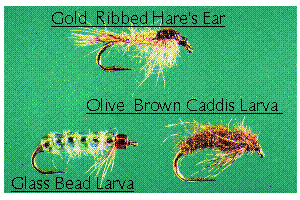 Look for net-spinning caddis hiding in shelters attached to submerged rocks in riffles and runs. Flowing water keeps the nets open; when removed from the water they collapse. So when a rock is lifted from the water, the shelter is visible, but often not the net.
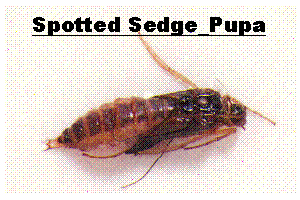 At maturity, this net-spinning larvae retreats into its shelter, seals the open end, and spins a cocoon in which to pupate. It takes two to three weeks for the pupa to develop.
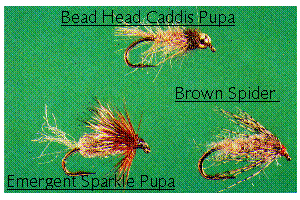 Spotted sedge adults found on streamside foilage during the early hours of the day indicate that an evening emergence has taken place. Pick a few submerged rocks and check for shelters built from sand and plant debris. Look for a closed shelter and carefully open it; remove pupa and match your imitation to its size and color.
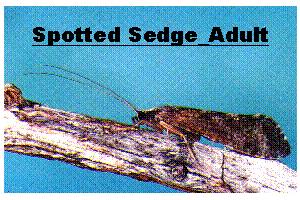 These Caddisflies emerge anytime from late afternoon until after dark. The pupa swims to the surface and splits open its shuck; the adult quickly emerges and flies off to hide. There, its body color begins to darken. One or two days later mating occurs.
 If theses Caddisflies have been hatching, you will notice the adults on or flying about streamside foilage near riffles and runs. Enough adults end up in the water during the day to keep trout interested so fishing a dry-fly imitation upstream along bushy banks is worth the effort.
