Info Related to Lenses
Table of Contents:
Depth of Field
Depth of field is the distance range within which objects in a picture look sharp.
Depth of field varies with the size of the lens opening, the distance of the subject focused upon, and the focal length of the lens.
Depth of field becomes greater in three ways - as the size of the lens opening decreases, as the subject distance increases, or as the focal length of the lens decreases and subject distance remains unchanged.
An object focused upon will be the sharpest thing in the picture and the farther an object is from this depth-of-field zone, the more out of focus it will appear.
You can use depth of field as a control in your picture to produce creative results.
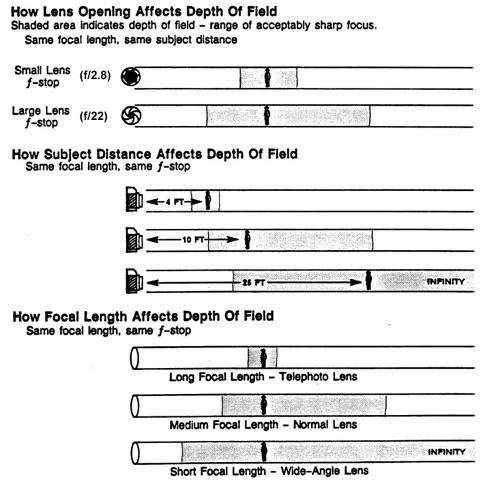
Click image for a larger view
back to top
Aperture
Aperture values, also known as f-numbers or f-stops, are derived from the ratio of the lens focal length to the diameter of the lens opening.
They tell you how much light can enter the lens. Small aperture numbers like f/2.8 or f/1.8 represent relatively large lens openings.
A large maximum aperture lets you use relatively fast shutter speeds, even in low light situations. (These lenses are usually referred to as fast lenses and most are APO.)
The fast lenses are preferred by photographers who do a lot of sports or wildlife photography. The ability to use faster shutter speed enable them to capture action at the most critical point.
Example of aperture:

Something else to remember about aperture is the ability to control your depth of field. The smaller the number the smaller the focal area and the larger the number the more you will get in focus.
back to top

