|
|
 |
Origin: In Thuringia, originally from the area of Sonneberg where
they spread over the whole of Germany .
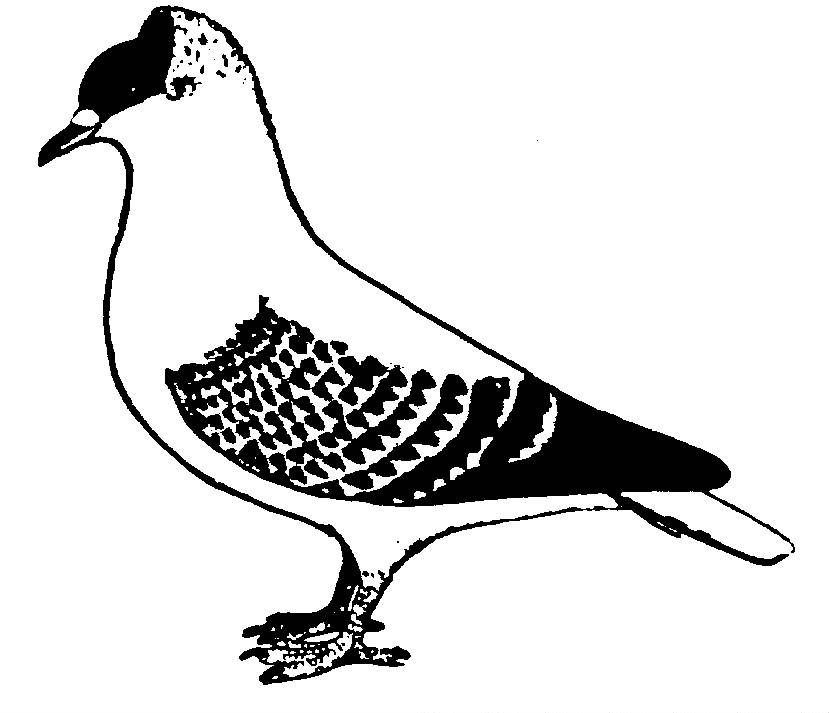
General Appearance: Similar to the clean legged field pigeon,
only of a more elegant stance and longer body (streamlined). The Thuringian Swallow is bred with two different head marking. The
spot marking, with or without a crest and the fullhead cap with a crest.
General Characteristics
Head: Longish and narrow, with medium high smooth forehead or with a crest in the form of a shell
directed forward close to the head which should be wide and full and end in two rosettes.
Eyes: Dark (bull) with narrow, smooth, flesh colored to red eye cere, smooth in texture.
Beak: Medium long and narrow. The upper beak slightly rounded at tip. Flesh-colored for reds and
yellows. The upper beak should be black for blacks and blues. Silvers should be horn-colored. The
lower beak should always be flesh colored.
Neck: Medium lenght, narrowing towards the head, slightly curved. Throat nicely cut.
Breast: Somewhat broad and tapering downward.
Wings: Long, well closed, resting on tail. Not extending beyond the tail.
Tail: Relatively long and narrow and carried well closed.
Legs: Short and free from feathers. The toe nails should be as close to the color of the upper beak
as possible.
Feathering Somewhat long feathers. Not too soft and laying tightly.
Colors: Black, red, yellow, blue and silver without bars, with white bars and a white spangled
marking. Blue with black bar and black check. Silver with dun bar and dun check. Also in
Reisserfluged (ash red and cream colored).
Color and Markings: Color pure and intense. Only the wings and head markings are colored, all
else is white. The white area (heart) on the back between the wings should be as large as possible in
order to make the colored wings look long and narrow. On black, red and yellow it is essential to
have a good gloss color to the colored areas. Blue and silver light wing shield color and darker
flights. Of all colors, the color of the wing must extend to the underside of the wing and when the
wings are in position the color should meet across the lower back and form a closure of the saddle
or heart shape.
Faults: Dark under beaks. Light beak points on dark colored birds or day beak point on light
colored birds. Traces of a bar on a barless bird. Faded flights or poor color. Colored feathers in the
white parts of the bird. White underwing. Too short or weak in body size. Feathers on legs and feet.
Bad saddle marking. Too broad a colored section.