United States Navy
 Aug.
17, 1959 - Aug. 12, 1963
Aug.
17, 1959 - Aug. 12, 1963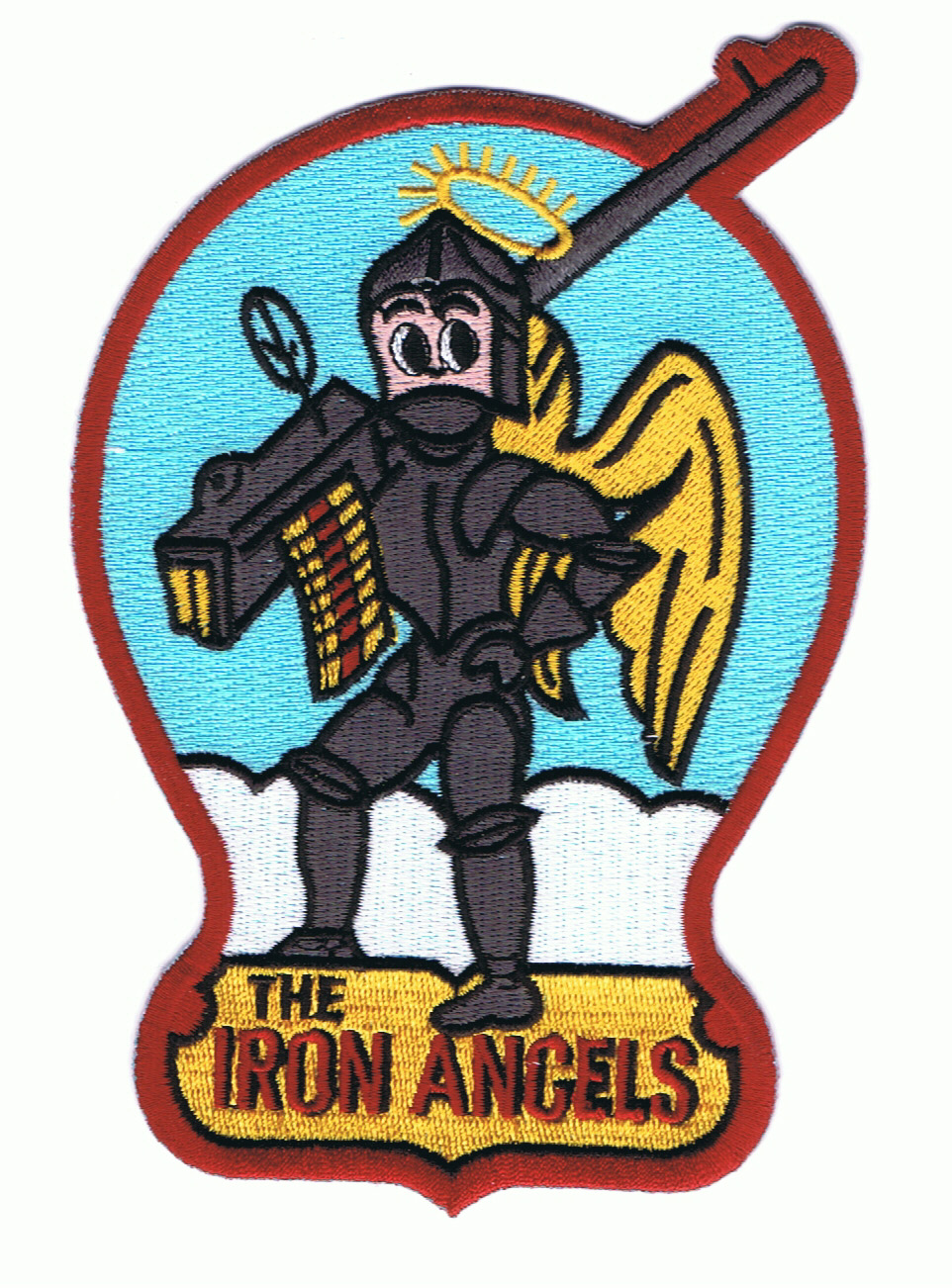

I went on active duty three days after my 17th birthday and thus was on what was called a "minority enlistment." That is, I had to be discharged before I turned 21. I was actually discharged two days before my 21st birthday, so I served on active duty for 3 years, 11 months and 26 days. I enlisted in Richland, Mo, and was sent to the Naval Training Center in San Diego.
Boot camp was hard, but it passed fairly quickly. During that time -- nine weeks -- I saw my very first jet airplane. The Training Center was very near the San Diego airport, and one day while we were on the drill field a 707 took off over our heads. Unfortunately for me, I looked up at it and missed a drill command. I spent next interminable amount of time holding my rifle (1903 Springfield) over my head while the rest of my company continue rifle drill. Probably the worst thing that happened to me in boot camp was the gas chamber. I either had a leaky mask or just didn't get it on correctly and, while I was struggling with it, I missed another command and, as punishment, had to stay in the gas chamber until everyone else was finished. Somewhere, I have a picture of me taken right afterwards -- my eyes squinted shut and burning, and my skin feeling like it was on fire.
After boot camp and an all to brief leave, I
went to Jacksonville, Florida, to Aviation Ordnance "A" school.
That was pretty cool. Though I thought I really wanted to be a Torpedoman
-- like Uncle Ivan -- I was assigned to become an Aviation Ordnanceman.
 It
turned out to be something I liked very much. School was hard, though. I had
dropped out of high school to join the Navy and felt right away the lack of
background knowledge and the study habits. But I made it through. I think
my favorite parts were (1) disassembling and reassembling a 20mm aircraft cannon,
then firing it, and (2) getting to start and taxi an airplane -- it was an
old prop plane, an A1-H of Korean War vintage (We called it a "Spad.").
It
turned out to be something I liked very much. School was hard, though. I had
dropped out of high school to join the Navy and felt right away the lack of
background knowledge and the study habits. But I made it through. I think
my favorite parts were (1) disassembling and reassembling a 20mm aircraft cannon,
then firing it, and (2) getting to start and taxi an airplane -- it was an
old prop plane, an A1-H of Korean War vintage (We called it a "Spad.").
 |
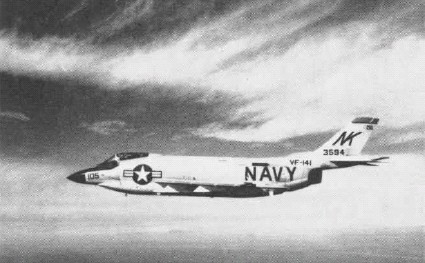
Once I completed "A" school, I was assigned to a Fighter Squadron at then-Naval Air Station Miramar (it's now a Marine Air Station), north of San Diego a few miles. When I first arrived there, I was assigned to a training squadron for 4 weeks, after which I was assigned to Fighter Squadron VF-141, in which I spent the rest of my enlistment. The squadron, which was flying F3-H Demons at the time, was called the "Iron Angels" (See the logo above).
 |
|
USS Oriskany, CVA-34 The Oriskany is now a sunken artifical reef off of Florida |
Ordnance was pretty simple on the F3 H. It carried mainly Sidewinders and Sparrow III missiles and sometimes 20mm cannons. It was also pretty much a daytime operator, so we didn't have to work very hard! I made two WestPac cruises with the F3-H's. In fact, when I first transferred to VF 141, The squadron was in the Far East aboard the USS Oriskany (CVA-34), so I had to meet it in Kobe, Japan. I made the trip over on a seaplane tender, the USS Pine Island. Of course, my second day at sea was awful: I got terribly sea-sick. The good news is that I never got sea-sick again. I loved seeing the Far East, especially Japan. I spent my 18th birthday at sea, but we stopped in the Philippines the next day, so I celebrated way more than I should have. Hong Kong was a wonderful place to visit; Okinawa was "interesting," but not quite as wonderful. I did, once, stop in one of the small villages and play baseball for awhile with a bunch of young kids. When the game was over, I bought them all Japanese popsicles from a passing vendor. On this, and all the other cruises, my favorite place was the forward end of the catwalk just under the flight deck. In the nice weather, when we weren't actually launching or recovering aircraft, I would sit in the basket at the end of the catwalk and read novels or write letters -- away from it all and everyone.
 |
 |
 |
|
USS Lexington, CVA 16
|
That's me on the far right end, front row
|
F3H-2 Notice the VF-141 designation on the aft fuselage. |
My second cruise was aboard the USS Lexington (Nov. 1961 to May 1962). I don't have a lot of specific memories from this cruise. I think this was the cruise, though, when we got between two typhoons. For awhile, the ship was rolling so hard that, as I walked down the passageways, I had to periodically put one foot on the bulkhead to stabilize myself. And, when we'd go out on the flight deck to check the tie-down chains on the aircraft, we'd have to put a cable around our waists and clip it to the barrier cables on deck.
Later that year, after we had returned to Miramar, I was assigned to a school on Nuclear Weapons handling. For a variety of reasons, including my objection to nuclear weapons, I didn't want to go. Though up to that time, I had thought I would make a career of the Navy, I told my Division Officer that, if he made me go, I would take my discharge the next August. He, literally, laughed at me and said, "You're a lifer!" So I went, as ordered, and learned how to put A-bombs on airplanes. Thus, when we went overseas again, I spent many a night rousing to a General Quarters alarm and rushing to my "battle station" on the hangar deck to drill on loading a bomb on an airplane.
 |
 |
 |
|
USS Constellation, CVA-64 (At this time, it was the newest, most powerful ship in the Navy) |
F8U Crusader, VF 141
|
Soviet TU-95 Long-range "Bear" Bomber (This not the one that actually flew over us. I have no good pictures of it.) |
That particular cruise was aboard the USS Constellation (CVA-64), either the first of second newest carrier in the fleet at that time. She was a palace compared to the other carriers. On that cruise, the squadron flew F8-U Crusaders, as the F3-H had been retired from service. The F8 was quite a different plane from the F3. For one thing, machine guns were more of an issue, so we spent lots of time loading seventy-five pound cans of 20mm belts into the airplane. Unfortunately for us, the ammo had to be lifted to the top of plane. Quite a challenge for a 145 pound me! The missiles were easier, though; the F8 carried four Sidewinders -- two on each side of the fuselage -- which were much lighter than the Sparrow IIIs we used on the F3s. I was by now an AO2 (Aviation Ordnanceman Second Class), so I wound up supervising the night crew, which was comprised of me -- a 20-year-old "old salt" -- and three 17-year-olds straight out of boot camp. I took my responsibility for the well-being of my crew seriously, so, when we launched aircraft, I took the inside position, which meant I was between two airplanes to pull the safety pins on the Sidewinders just a second or two before launch. I then had to lie down prone on the flight deck, hide my face, and hook my fingers into a tie down and let the plane's tail wings pass over me. The plane crouched as it was catapulted off, so there wasn't a lot of excess space between me and the tail wings; I was just afraid to let the "kids" do it.
 |
|
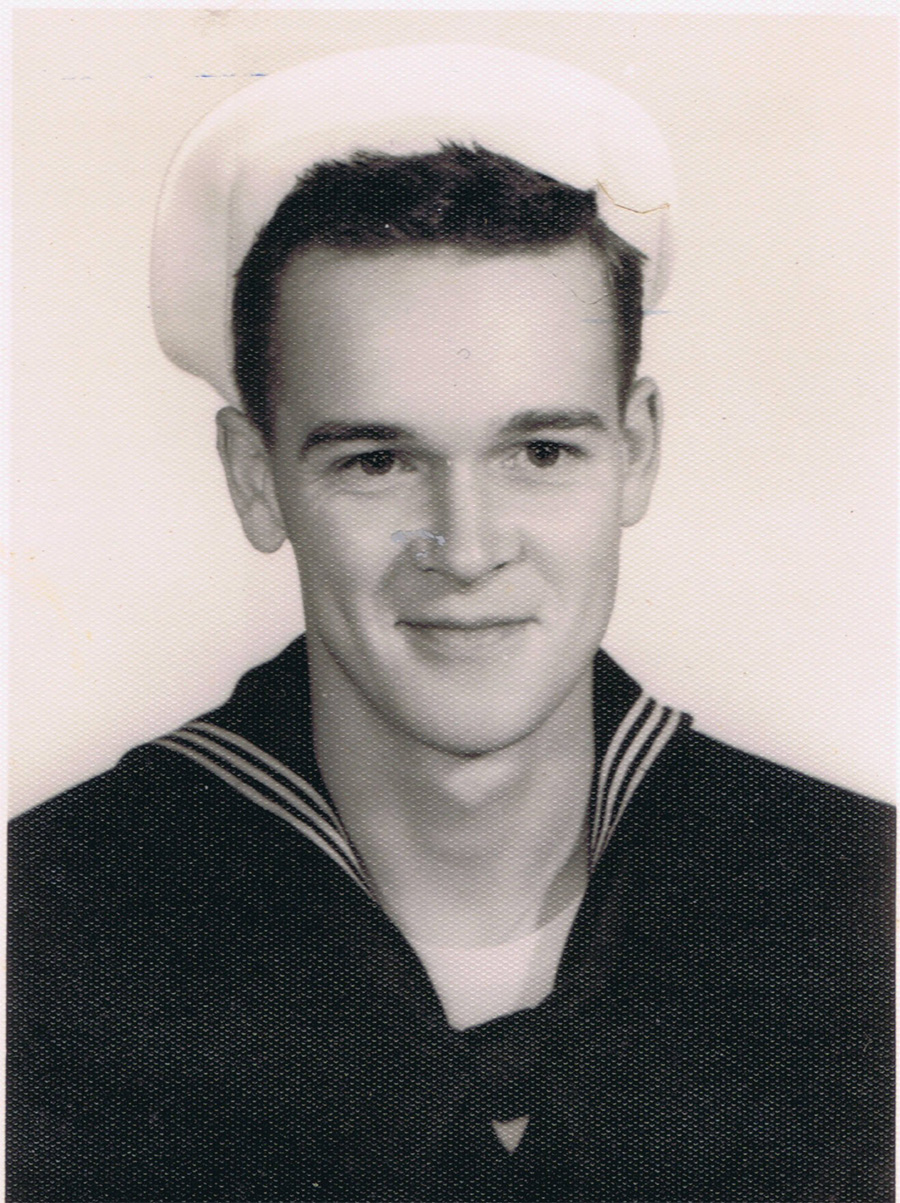
Here's me, the "old salt,"in 1962.
|
The most exciting thing to happen on this cruise, though, was the Russian fly-over by a huge Soviet "Bear" bomber (See picture above.) We had known it was coming for several hours, so all of us who could be were on the flight-deck as it arrived and flew over a scant hundred or so feet above us. We could see the faces of the crew. I, for one, almost panicked as it neared and the bomb bay doors came open, but there was nowhere to go! Fortunately, the bomb bay contained only a camera.
There were other exciting cruise moments, such as my bout with an allergic reaction to Yellow Fever vaccine. As a result of that one shot, I spent ten days in sick bay hooked up to a drip needle that kept me sedated most of the time. The Hospital Corpsman told me later that they let me wake up every 15 minutes to check my blood pressure, which had gone up to 220/180. At the end of the 10 days, they sent me to a doctor -- a neurosurgeon -- on the base at Subic bay. He judged me fit for duty, so I went back to work. Unfortunately, we weighed anchor the next day, so I completely missed liberty in the Philippines that year! I think, too, that was the cruise during which we sat in Hong Kong harbor for several days desalinating and pumping water to the city.
We also had a pretty bad fire as the result of a crash on the flight deck. Once again, there was nowhere to run, so we stayed and fought the fire. The plane hit the round-down (the rear end of the flight deck) as it was trying to land; it broke in half and the engine fell onto the fantail and set the hangar deck on fire. The front part of the craft skidded to rest near the island and set the flight deck on fire. It took a fearsome while to get it all put out. And, one time a storage locker near our ordnance shop containing kapok life-vests caught fire. (I never learned how it started.) It was an interior storage space with a small round hatch as the only access. Since I was pretty skinny at the time (besides being the most senior of the more junior petty officers in the shop), I was outfitted with a re-breather and a water hose and shoved through the hatch to fight the fire. Scared the crap out of me, but I got 'er done!
The cruise began in Feb. 1963. I left in early July to return to the States for my discharge. I was first sent from Sasebo, Japan, to Yokosuka, Japan, to await transportation. I was there a couple of weeks, during which I worked as a night-shift "Petty Officer of the Watch," which meant simply that I sat in an office most of the night. After awhile, I was assigned to travel home on a troop ship, the Daniel L. Sultan, I believe its name was. That was a miserable trip of about 3 weeks. The ship was crammed full with some 1200 soldiers being rotated home from Korea and a handful of us sailors. Sleeping quarters were fold-down bunks stacked five high. We were only allowed in the sleeping area at night. The rest of the time we had to stay on the open decks above. They only fed us twice a day, too. It was one miserable ride, which made me all the more glad I was getting out! When I finally got to San Francisco (Treasure Island), I expected to be discharged right away, but I got fooled again! I flunked the eye test part of my discharge physical, so I had to stay in until they could make me a pair of glasses. That took an amazing three weeks. (I suspected they were carving them out of stone with hand-tools, like the Flintstones might do!) In the meantime I was assigned to supervise a group of greenhorns awaiting transfer overseas. We were tasked with opening and sorting a warehouse full C rations or K rations, or whatever they were. The rations included things like loaves of bread sealed in large, round cans, cigarettes in olive drab packages, cakes in cans and about as old as I was, etc. WWII and Korean War stuff. It was sort of fascinating what was in those crates, but kind of gross that much of it was used in the mess halls! Finally, on Aug. 12, 1963, I got my separation papers and headed home. I joined the Navy Reserve, thinking a little spending money might be a good idea, but after I started college in February of 1964, it became a bit much and I quit going. There was no penalty for quitting, as I had already fulfilled my obligation, though I did have to stay in the Inactive Reserve until Aug. 1965. While I was in the active reserves (assigned to a cargo squadron at Olathe, KS), we made a flight to New Orleans in an old DC-6 -- I don't remember why we went -- probably just so the pilot could get his flight-time. While we were there I took a ride with one of the ordnancemen from the base out to the magazines to pick up some 5-inch rockets. When we got to the magazine, the guy told us to stay on the ordnance trailer while he opened the doors because there was a big cottonmouth who often laid just inside the door. Sure enough, when he opened the door, the most enormous wild snake I had ever seen way lying there. We dispatched it with 5-inch rocket heads.