Rotterdam
The city of Rotterdam has been officially in existence since 1328, when count Willem III granted "city rights" for the town that had been growing around a dam in the river Rotte. (Hence the name: Rotte-dam.) On 10 May 1940, the German army attacked the Netherlands. Part of the German 'Blitzkrieg' strategy was an extensive bombardment on the heart of Rotterdam on 14 May. Blockbusters and firebombs laid the heard of the city to waste. Casualties were numerous. Clearing away most of the rubble took over a year. The Dutch government was forced to capitulate after only five days of war in order to prevent further bloodshed. After five days of war five years of German occupation followed. But the damage had been done, and of all Dutch cities none suffered as greatly as Rotterdam did. The heart of the city was gone completely, most of it burned down during the firebombing in 1940 and the rest torn down because of severe structural damage and the subsequent danger of collapse.The period that followed World War II has been one long construction project. Disastrous as the 1940 bombardment has been, it did provide architects with a truly unique opportunity: the chance to reconstruct the heart of a large city from scratch. And that is exactly what they did. Nevertheless, the post-war reconstruction has given Rotterdam its unique architectural character. The process of construction and improvement still continues. Though it should be mentioned that some do not consider this an improvement at all. However, this did make Rotterdam an extremely interesing and unique European city for us to visit.
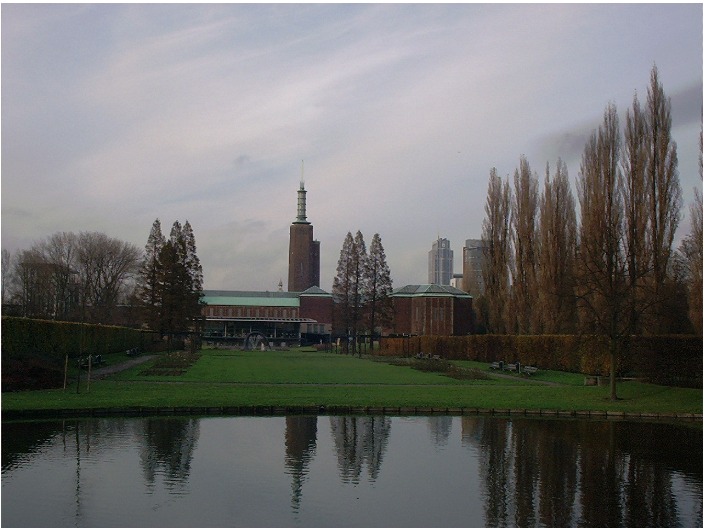
We visited the Art Museum in Rotterdam which featured several paintings by Rubens, Van Eyck, Van Gough, Monet, and Rembrant.