

 Aircraft ApplicationsAerospace AppplicationsCommerical, Automotive and Military Applications Marine Applications Sporting and Recreational Applications
|

|
Fiber-Reinforced Composites have become an increasingly attractive alternative to metal for many aircraft components. Composites are strong, durable, and damage tolerant. They meet design and certification requirements and offer significant weight advantages. Because they readily adapt to innovative manufacturing techniques, composites also can provide significant cost reduction. The composite materials used in the aircraft industry are generally reinforced fibers or filaments embedded in a resin matrix. |
The most common fibers are carbon, aramid, and fiberglass used alone or in hybrid combinations. Aircraft doors, rudder, elevator, vertical tail, horizontal tail, aileron, spoiler, flap, wing box, body, fairing, propeller blades and slats. Current production aircraft components are used extensively on current commercial production aircraft such as Boeing 757, 767 and Airbus A310, which employ about 1350 kgs each, while smaller planes such as the 737-300 use approximately 680 kgs. With the exception of small, detail parts, most composite components for commercial airplanes are of honeycomb sandwich construction. These may be either full-depth designs, such as the 767 outboard aileron or structures built of separate panels such as the 767 rudder. Structures such as fairing, fixed wing, and empennage trailing edge panels are generally fabricated as a sandwich. Face sheets for these panels are made of carbon fiber and carbon/fiberglass hybrid. Such panels most often employ 120 degree C curing systems, and are made either of tape or fabric materials, or with a layer of adhesive for bonding to the honeycomb core.
Phenolic coated fiberglass or honeycomb core is used. The phenolic resin system is used because of its excellent fire-resistant properties, including low flammability and low smoke and toxic gas emissions. The panels are fabricated in a single-stage curing process that provides significant cost advantages in addition to weight savings. Interior parts such as overhead luggage compartments, sidewalls, ceilings, floor galleys, lavatories, partitions, cargo liners, and bulkheads are routinely made of composite components. For relatively flat parts, unidirectional or woven fabrics can be used. For compound contours, stretchable, knitted fabrics are often necessary. The predominant fiber used in interior composites is fiberglass; however, carbon fiber use is increasing as structural applications increase. For example, a filament-wound door spring is employed on the Boeing-767. Using unidirectional carbon fibers in an epoxy matrix, the springs are only one-third as heavy as comparable steel springs and only half the weight of state-of-the-art titanium springs.
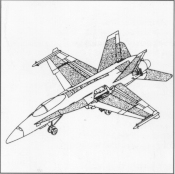
The major U.S. aerospace industry users of carbon fiber prepreg materials include McDonnel Douglas, Boeing, General Dynamics, and Northtrop. The largest application by far of composite materials is for military programs, which constitute more than 40% of the aerospace total. About 26% of the structural weight of the U.S.Navy's AV-8B is carbon fiber reinforced composites. Components include the wing box, forward fuselage, horizontal stabilizer, elevators, rudder and other control surfaces, and over-wing fairings. The wing skins are one-piece tip-to-tip laminae, mechanically fastened to a multispar composite substructure, the design of the horizontal stabilizer is similar to that of the wing. On the F-18 aircraft, carbon fiber reinforced composites make up approximately 10% of the structural weight and more than 50% of the surface area. They are used in the wing skins, the horizontal and vertical tail boxes, the wing and tail control surfaces, the speed brake, the leading edge extension, and various doors. The F-18 composite wing skins are solid laminate; their thickness varies from root to tip, with a minimum thickness of about 2 mm. The B-2 bomber employs a number of composite structural components. The dorsal longeron, weapons bay doors, aft equipment bay doors, and flaps use composites. The structures include laminae, full depth honeycomb reinforced panels, and composite face sheets bonded to aluminum core. The bay doors employ carbon fiber reinforced tape face sheets, aluminum honeycomb reinforced panels, and composite face wheels bonded to aluminum core. Because the doors are in a position that is particularly vulnerable to foreign object damage, an aramid fiber reinforced phenolic outer layer provides penetration resistance.
Back to Top PageUse of composite materials in primary structures of major aerospace vehicles was based on the successful use of composites in missiles powered by solid - propellant rocket stages. The space shuttle represents one of the first production applications of a metal matrix composites. It has 242 unidirectional boron-aluminum circular tubes used in the main-frame and rib-truss struts, frame - stabilizing braces, and nose landing gear-brace struts. The major structural components used in space can be grouped into the following categories: Trusses Platforms Pressure vessels and tanks Shells Truss and platform structures usually consist of an assemblage of tubes and flat panels bulkheads.
The tubes are designed to have a very high axial and bending stiffness and low CTE. Mechanical loads are generally low; however, the tube-to-end fitting joint must be designed to withstand thermal stresses caused by thermal cycling and should be stiffness-compatible to minimize the stresses caused by any imposed loads. If these structures are required to operate for long periods of time in low earth orbit, they must be protected from atomic-oxygen attack and degradation of material properties due to radiation. Pressure vessels and tanks are required to contain a wide variety of gases and fluids. Because most composite materials are porous, pressure vessels and tanks made from composites must contain some kind of liner. Therefore, the major design consideration for composite pressure vessels and tanks should be centered around the load-sharing and strain compatibility of the liner and composite under pressure / depressurization cycling, the thermal-strain compatibility of the liner and composite under thermal cycling, the stress-rupture and creep capability of the composite under long-term pressurized loads, and the leak-before-burst capability of the liner and composite systems.
Shell structure can be used in several applications. Like truss structures and pressure vessels, shells must be designed to withstand space environments and to meet the stiffness requirements imposed by the mission. The most critical design consideration for shells is the manner in which the shells are attached to each other, or to adjoining structures. The major structural components of most missile systems are the rocket motor cases, nozzle, skirts, and interstage structures, control surfaces, and guidance and control structural components. The design, material selection, and fabrication process for these components should result in the most cost-effective structure that satisfies all the mission objectives while maintaining all the imposed constraints.
Back to Top PageAerospace and aircraft applications are often considerably different from automotive application in that exterior surfaces are often an integral part of the primary structure of the product. The face that structural composite have been used extensively for both primary and secondary structures is due o low production rates and an emphasis on reduction of weight as opposed to the cost. The typical automotive composite parts include floor pan, rear compartment pan, motor compartment front panel, dash panel, roof panel, rear end panel, quarter inner panel, quarter outer panel, trunk lid interior panel, trunk lid outer panel, front fenders and hood assembly. The Chevrolet X-II hood, introduced in 1980, was the first major flat panel on a GM car. It provided surface finish and design-for-appearance experience for many subsequent applications. The current Corvette uses the design and processing criteria established by the front end panel and X-II applications. All GM General and Astro trucks have three - piece SMC doors that replaced seven-piece steel assemblies and feature modular hardware access. The Fiero program uses the first composite-skinned vehicle operating at high production line rates. Filament wound leaf springs were introduced on high-volume car and van programs.

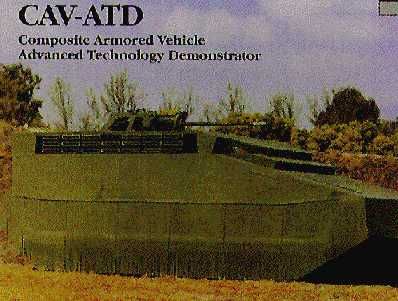
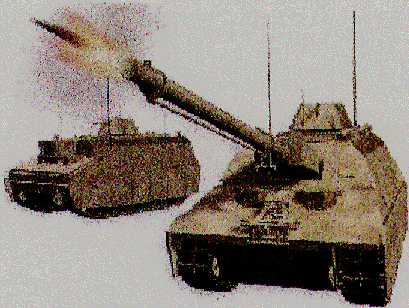
Although the multitude of composite materials and processes now available can make design process decisions difficult, most major companies have developed material selection and design criteria based on continuous improvement and past experience. This section features these points that must be considered when determining which materials are best suited for automotive body panels. In general, the structural qualities of panels can be categories by stiffness and strength requirements. The stiffness requirements provide the rigidity necessary to resist deflection, oil-canning and buckling, and to ensure the desired vibration response. The strength requirements provide the needed failure resistance under service loading. In addition, certain panels contribute to crash resistance and energy management when a vehicle is tested under safety loading conditions. In the case of body panels the equal stiffness requirement is selected as the only performance constraint. This can be justified for preliminary design evaluation because experience has shown that stiffness requirements are usually the most restrictive. A structural panel can be evaluated for strength after it has been designed for stiffness, and modifications for strength can be added.
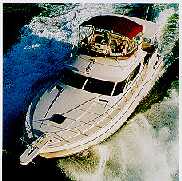
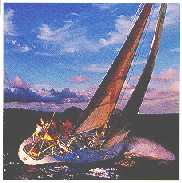
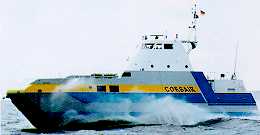
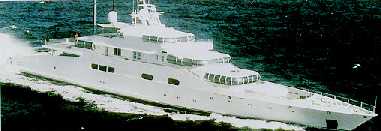
The marine use of fiber-reinforced materials is extensive. Mine warfare vessels, future large ship hulls, sonar domes, submarine structures, submersibles, navigational aids, offshore engineering, hydrofoils, hovercraft, passenger ferries, powerboats, racing yachts, pleasure boats and luxury yachts, composite masts and laminated sailcloth utilize composites in their construction. The primary advantages of using composites in marine applications are Weight reduction and therefore lower purchase procedures and running costs Improved safety due to increased toughness Increased comfort due to the vibration damping properties of the composites used Higher speed (28 knots) The main hull girder is fundamentally a simple single-skin monocoque structure without any longitudinal or transverse reinforcements other that main decks and main bulkheads.
Glass-reinforced plastic tankers, trawlers, and ferries of up to 80 m are currently economically viable. Filament wound ship hulls up to 60 m have also been produced. LeComte Holland BV produces series of simple, versatile, FRP landing craft by using vacuum-assisted injection molding process. The primary resin system used is polyester, along with S- and E-glass, carbon and aramid fibers. The use of composite hulls is found to produce 1.7 knot increase in speed at identical horsepower, fuel consumption dow 20 L.h at full throttle and a two-point decibel reduction sound levels in the boats. Glass-reinforced plastics are also used in sonar domes. These structures are almost constantly immersed in the sea, and are subject to slamming pressures in rough weather.
Submarine structures use GRP structures in the fairwater for limiting excessive wake, vibration, and noise produced by periscopes, antennas, and masts. The use of glass-reinforced plastic for pressure hull and buoyancy structures is also found in submersibles. Submersibles for commercial operations hdow to 457 m have been built using GRP pressure hulls. A third-generation remotely operated vehicle, Solo, has been developed by Slingsby Engineering Limited. Designed for a variety of inspection and maintainence functions in the offshore industry, it carries a comprehensive array of sophisticated equipment and is designed to operate at a depth of 1500 m under a hydrostatic pressure of 15.2 Mpa. Glass fiber woven roving is used in the construction of the pressure hull, chassis and fairings. Unidirectional fabric is used in stressed and jointed areas, and chopped-strand mat is used in sections to be machined.
Navigational Aids: Soft plastic materials including GRP, polyethylene foam/polyurethane elastomer, and syntactic foams are being used for the progressive replacement of exists steel buoys in the North Sea because of increase concern to damage in vessels that serve as navigational aids. Balmoral Glassfiber produces a comprehensive range of buoys and a light tower made of glass-reinforced plastic that can withstand winds to 56 m/s (125 mph). Buoys are also available for a variety of tasks. Anchor mooring buoys applied to the Egyptian offshore oil industry are believed to be the largest ever produced using GRP (4 m in diameter and 15000 kgs) capacity.
Offshore Application : Composite materials also provide a multitude of services in offshore hydrocarbon production, where they usually replace steel because of their lightness, corrosion resistance, and good mechanical performance. It has been proposed that submarine pipelines could be constructed with circumferential carbon fibers for resistant to external pressure and longitudinal glass fibers for lengthwise flexibility. Drilling rises for use at greater water depth are subject to compression and possible failure because the longitudinal resonant period of the disconnected rising is close to that of typical wave periods. The mass reduction on changing from steel to composites materials significantly reduces the dynamic stress and therefore increases either the working depth or the safety f deep-water drilling. It has been reported that 15 m lines manufacture d from carbon and glass fibers have a burst pressure of 168 Mpa. Self-righting, totally enclosed, motor - propelled survival craft and open lifeboats are manufactured in glass-reinforced plastic using fire-retardant resins. The craft range in size from 6.2 m to 8.75 m up to 66 persons capacity. As part of the certification trials, the survival craft must withstand 30m high kerosene flames and temperature of 1150 degree C, which is satisfied adequately by the composites design. A new type of rigid-hull, inflatable, rescue boat has been introduced by LeComte. The deep V-hull is fabricated in one piece with the deck by vacuum-assisted injection molding of Aramid hybrid aramid-glass fabric around a polyurethane foam core. The boat speeds are above 25 knots, and a 25% weight saving is realized when using hybrids in place of glass fiber.
Hovercraft blades of hybrid carbon-glass fiber reinforced plastic have a successful in-service record in hostile environment of seaspray with sand which causes erosion and corrosion. These problems and the noise level can be reduced by lowering the propeller tip speed, but the blade length must be increased to retain the same thrust. The composite blade replaces the 2.7 m SRN6 duralumin blade, consisting of a polyurethane foam core covered with GRP skin. The blade is stiffened with carbon fiber reinforced plastic and a polyurethane strip to protect the leading edge. The spars carry both the centrifugal and bending loads. The textile reinforcement of elastomers is extensively used in the fabrication of the skirts that confine the air cushion of hovercraft. Both the fabric fiber/rubber bond resists fatigue and tearing as a result of flexure or abrasion.
Passenger Ferries Several passenger ferries utilize large amount of composites in their construction. For example, the Norwegian company Brodence Aa recently launched a 184-passenger commuter ferry. The 27-m catamaran has a beam of 9 m and a draft of 1.05 m. Construction is PVC foam cored glass-reinforced polyester built on a timber skeleton mold. The structural laminate used for internal bulkheads is given a final coat of colored resin to provide a practical, cleanable, textured surface without adding finishing weight, thus allowing the vessel to achieve a maximum speed of 33.5 knots.

Fishing rods, tennis rackets, golf sticks, baseball bats: These are just a few examples of advanced composites applications. Modern high-quality composite rods use a hollow tubular structure to minimize weidght and to optimize the strength and sensitivity of the rod in sport fishing. All such tubular fishing rods are created around a removable metal mandrel, which forms the tapered inner diameter of the finished product. The taper and diameter of this cylindrical cone constitute the starting point of the design. On this inner mandrel are placed the various fibers that provide the strength of the fishing rod and the resin that bonds the fibrous structure together. By altering the mandrel and changing the amount and locations of the fibers used in construction, fishing rods of different characteristics can be made for all segments of the market on a few basic pieces of manufacturing equipment.
Golfing :The major stress on a golf club occurs when the golfer misses the ball and hits the ground. Both the torsional and bending loads applied to golf club shafts, either in mishap or in hitting the ball, must be considered in golf club design. The construction of a golf club is similar that of a fishing rod, however the designer pays more attention to torsional loading, and the requirement of feel or control, has an entirely different meaning. To golfers, the control of the club is tied to a sweetness upon impact plus the ease and reproducibility of directional control of the ball. To combat crushing loads, the manufacturing process begins with a close spiral wrap (to prevent the collapsing-straw effect), followed by a second spiral wrap that places the fibers at a lesser angle relative to the shaft axis. These layers form the effective core that handles torsional and radial impact loads.
Pole Vaulting: as never imposed any particular constraints on the construction or design of the pole. However, there was little change in the design or materials of construction until the advent of fiberglass composites. The poles had been made of bamboo, steel, or wood, but recently fiberglass-resin poles were successfully introduced. The engineering problem involves the design of a very light, highly efficient tubular spring that is loaded by impact when the running vaulter places one end of the pole in the planting box beneath the vertical bars of the vault. The kinetic energy of running must be converted into a rotation energy that is sufficient to carry the vaulter to a vertical position and over the measuring rod. The strength of a composite fiberglass poles per unit weight is greater than earlier materials. Carbon and glass fibers are used to improve the stiffness.
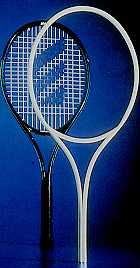
Tennis Rackets: Graphite tennis rackets are becoming increasingly popular over recent years. They provide light weight yet high stiffness advantages.
