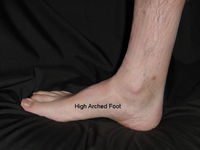
 The
high arched foot can be flexible or rigid and can lead to pain at the
"ball of the foot or fore foot" or bottom of the heel as well as painful
calluses. This is a serious problem especially with people having poor
circulation or diabetes. Because this foot has very little ability to
adapt to the ground it is easy to injury the foot. This type foot commonly
will get calluses and forefoot pain which can lead to ulcers and even
amputations in people with diabetes or poor circulation. This problem
can lead to pain in the knees, hips and back as well as the heel due
to inability of the feet to provide motion for shock absorption. This
is especially true with the rigid type of high arched foot.
The
high arched foot can be flexible or rigid and can lead to pain at the
"ball of the foot or fore foot" or bottom of the heel as well as painful
calluses. This is a serious problem especially with people having poor
circulation or diabetes. Because this foot has very little ability to
adapt to the ground it is easy to injury the foot. This type foot commonly
will get calluses and forefoot pain which can lead to ulcers and even
amputations in people with diabetes or poor circulation. This problem
can lead to pain in the knees, hips and back as well as the heel due
to inability of the feet to provide motion for shock absorption. This
is especially true with the rigid type of high arched foot.
 Custom
functional orthotics:
Custom
functional orthotics:
These can address several components of the problem at the same time
including protection and correcting the dysfunction of the way you walk.
However, your feet may still need surgery and this will need to be assessed
by your Podiatrist. Good shoes will also be needed to protect the feet
and accommodate your orthotic device.
 Prolabs:
These are good for helping correct the dysfunction of the way you walk
but do not provide "protection" or cushioning. Remember good fitting
shoes will be needed as well.
 Spenco Cross Trainer:
This a good supportive insert that provides extra cushioning. This device
is especially good for the aging foot. It does not provide a large degree
of foot control. It does provide good protection for the bottom of your
foot.
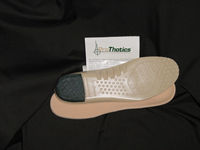 Prothotics therapeutics:
This is another good insert to provide cushion. This is a good over
the counter type of insert for people with poor circulation and or diabetes
that need protection for their feet. It does not provide a large amount
of foot control.
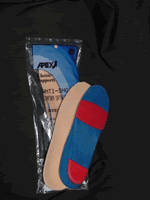 Apex Anti-shox:
This is a high quality supportive type over the counter insert. It is
recommended especially for people with poor circulation or diabetes
as they offer excellent cushioning. They do not provide a large amount
of foot control.
All people with diabetes, poor circulation, burning or numbness
in their feet or who have had previous ulcers absolutely need to see
their foot doctor before and after obtaining any type of foot device
including diabetic custom orthotics to prevent injury to their feet
that could lead to loss of their feet.