
The Home Page · The Integral Worm · My Resume · My Show Car · My White Papers · Organizations I Belong To


Technical Writing · Exposition & Argumentation · Non-fiction Creative Essays · Grammar and Usage of Standard English · The Structure of English · Analysis of Shakespeare
Analysis of Literary Language · Advanced Professional Papers · First Internship: Tutoring in a Writing Workshop · Second Internship: Advanced Instruction: Tutoring Writing
Visual Literacy Seminar (A First Course in Methodology) · Theories of Communication & Technology (A Second Course in Methodology) · Language in Society (A Third Course in Methodology)
UMBC'S Conservative Newspaper: "The Retriever's Right Eye" · UMBC'S University Newspaper: "The Retriever Weekly" · Introduction to Journalism · Feature Writing · Science Writing Papers
|
 |
The First Users' Manual for Dummies: Analysis of Geoffrey Chaucer's "A Treatise on the Astrolabe"
Clear as Mud: The Controversy over the Use of That versus Which
Islamofascism: Controversy over the Use of the lexicon in Political Language
 |

"But if thought corrupts language, language can also corrupt thought."
George Orwell
"It is a heretic that makes the fire/ Not she which burns in it."
The Winter's Tale II.iii. 144-5 (Paulina)
Fascism defined by the OED is "the principles and organization of Fascists. Also, loosely, any form of right-wing authoritarianism," first recorded in 1921 (OED). A Fascist is defined as the following:
Orwell, if alive, would consider Islamofascism a "meaningless word," for in his essay specifically refers to the political word Fascism and in 1946 said, "The word Fascism has now no meaning except in so far as it signifies 'something not desirable'" (4). Nunberg agrees with Orwell and quotes Orwell with the following:One of a body of Italian nationalists, which was organized in 1919 to oppose communism in Italy, and, as the partito nazionale fascista, under the leadership of Benito Mussolini (1883-1945), controlled that country from 1922 to 1943; also applied to the members of similar organizations in other countries. Also, a person having Fascist sympathies or convictions; [loosely defined], a person of right-wing authoritarian views. Hence as [an] adjective, pertaining to, or a characteristic of Fascism or Fascists (OED).
In 1937, George Orwell was complaining that the communists had reduced the word to meaningless: "I have heard it applied to farmers, shopkeepers, Social Credit, corporal punishment, fox-hunting, bull-fighting, the 1922 Committee, the 1941 Committee, Kipling, Gandhi, Chiang Kai-Shek, homosexuality, Priestley's broadcasts, Youth Hostels, astrology, women, dogs and I do not know what else" (Going Nucular 140).
 |
Not all historians agree on the "definition of Fascism but they do to [some degree], agree with certain aspects of it," such as, "fascists believed democracies didn't work" (Raz Part 2). World War II Historian Michael Burleigh wrote, "fascists are completely contemptuous of liberal democracy and the rule of law, both domestically and in the international sphere" (Raz Part 2). Fascists believed that Jews, Communists, and Americans created the center of a "cosmic conspiracy" (Raz Part 2). Robert Paxton, a Columbia University professor and author of Anatomy of Fascism added, "fascism was a form of 'consensual dictatorship'" in which "people had grown to feel that the democratic way wasn't strong enough to get the country out of a crisis" (Raz Part 2). This background establishes a brief description of the meaning fascist and fascism.
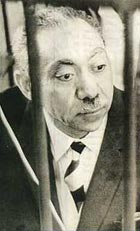
To determine why writers/speakers compound the prefix Islamo and the word Fascism, one must look back to 1966 to the Islamist writer Sayyid Qutb (Raz Part 2). Qutb's "ideas were strikingly similar to the European doctrines one might find in the readings of Nazi or Fascist philosophers in the 1920s and '30s" (Raz Part 2). Melody Joy Kramer said Sayyid Qutb was an Egyptian religious leader who "was one of the first to call for a violent revolution to establish an independent Islamist state" and that "his contempt for America and the West influenced Osama bin Laden and other al-Qaida leaders.
 |
Most times, those using the lexicons Islamofascist and Islamofascism refer specifically to Islamist radical groups such as al-Qaida, Hamas, Hezbollah, and the Taliban whom intend to impose their system of beliefs on other people through any means possible. According Newt Gingrich, former conservative Republican House Speaker, "They [al-Qaida] are all prepared to use the power of the state to impose a totalitarian system on others" (Raz Part 2). After performing numerous searches through Lexis/Nexis, Gingrich has never used the words Islamofascism or Islamofascist because according to Katha Pollitt, Gingrich claims, "Perhaps there can be no one word, because there is no one phenomenon. The point of 'fascism,' Islamo- or otherwise, is not to explain our world, however, but to portray Bush critics as isolationists and appeasers, like 'those who enabled Hitler' (Pollitti). This not only establishes that Gingrich has never publicly used these words but also his reasoning why he opposes their use.
Nunberg disagrees, "It's more of a stretch when people, generally on the right, use phrases like Islamofascist to describe Islamic fundamentalists" (Going Nucular 142). He claims that the Taliban government "may have been a representative theocracy, but it wasn't particularly reminiscent of Hitler or Mussolini's regimes" (Nunberg 142). Hitler and Mussolini tried to make religion subordinate to the state and the leader. Nunberg states, "It's as if the evils of the Taliban and bin Laden aren't sufficient to the day-we [the U.S.] can't go after anyone without comparing the campaign to the 'good war' against Hitler, the embodiment of inexplicable evil, and everybody's favorite argument in favor of preventive war" (Nunberg 142). Nunberg suggests that "Americans may not have a vivid sense of history, but you can count on them to reject anything if you can persuade them to picture it in a high-peaked cap" (Nunberg 143). The high-peaked hat Nunberg refers to was part of the uniform for Mussolini's Italian Nationalist military.
I disagree with Nunberg's statement on the basis that many Americans are not well read; especially history, but they quickly associate the word fascist with a restriction of freedom. Therefore, if a writer/speaker compounds a word with fascist, Americans immediately envision restrictions of civil liberties and a totalitarian regime. The writer/speaker knows few people are likely to research the definition of fascist or fascism because most people do not read critically. These readers rarely consult a dictionary for the definition of unfamiliar words. The writer/speaker relies on this in addition to that the fact that historically, Americans will do anything, including dying, for the cause of protecting their freedom. Therefore, the writer/speaker counts on the reader/listener to ignorantly rally around their cause based on emotional charge and not critical thinking.
Why Compound Islamo and Fascism?
Other phrases such as radical Muslim jihadists, radical Muslim terrorists, radical Islamic terrorists, Islamic radicalism, militant jihadist precisely define the instigators conducting a war of jihad against Western nations. Most Muslim leaders and Muslims in general prefer these terms. This phraseology directly singles out the 1% of the Muslim population that is responsible for committing terrorist acts.
In 1990, only "eleven stories in major newspapers and magazines" used the word fascist in referring to Saddam Hussein's regime (Nunberg 142). As of 2004, Nunberg said more than 150 major newspapers and magazines used the word fascist (142). Even though the three words, fascist, Islamofascist, and Islamofascism are not the same, I queried the web search engine most people use, Google, on December 5, 2006, using the words Islamofascist and Islamofascism. Using the search term Islamofascist produced 491,000 hits using the word. One has to consider that the majority of hits probably find the word used in blogs, org's and com's. Checking the first four pages of hits, I determined that out of 38 hits, nine major newspapers and magazines used Islamofascist in an article. Islamofascism yielded 708,000 hits. Checking the first four pages once again, out of 40 hits, 15 major newspapers and magazines used the lexicon Islamofascism. This is not a scientific analysis, but this search does illustrate how these two words are gaining popularity in the English language. I noted that several of the articles I cited and researched by alternative means appeared in the first four pages of both search terms. In addition, Wikipedia.com was the first hit in both cases.
This is fascinating because the Wikipedia is an online encyclopedia edited by the masses on the Internet. Academia frowns on using Wikipedia for genuine research because the site is not scholarly refereed, the entries may change in a matter of days, and the contributors rarely list their sources of information. Also interesting to note was that these entries were extremely large, provided legitimate sources for their information, and links to other legitimate sources for additional information. Once again, it was fascinating to note that some of the sources I was provided with by Dr. Orgelfinger were also cited within the Wikipedia entries. That is not to say that Wikipedia should be used as a legitimate research source but that in this case, Wikipedia was an excellent source for finding other legitimate news sources on this topic.
Why are these two compounded words that lack the precision of three word phrases such as radical Muslim jihadists, radical Muslim terrorists, and radical Islamic terrorists quickly gaining popularity over others? According to Safire, the lexicon Islamic radicalism "seems long, bookish and weak, because a radical need not be any kind of terrorist" ("Islamofascism: Careful How We Name That Enemy"). "Militant jihadist is redundant if you take jihad to mean 'holy war'" (Safire "Islamofascism: Careful How We Name That Enemy"). The problem with the word jihad is "some Muslim scholars translate the Arabic word as 'spiritual struggle,' from jahada, 'to strive,' and besides, jihad is too unfamiliar to many English-speakers to register quickly as a label" (Safire "Islamofascism: Careful How We Name That Enemy"). None of the aforementioned phrases roll off the tongue as easily or as smoothly as Islamofascist or Islamofascism. Speakers of most languages are typically lazy and where one word can be used to replace three, so much the better (Millward 11). Safire and Millward support my theory as to why Islamofascist and Islamofascism are becoming the preferred compounds despite their repugnant connotations.
Why the connective 'o' and not a divisive 'ic'? Euphony; the Greek construction flows more easily. That's why Islamofascisim may have legs: The compound defies those terrorists who profess a religious mission while embracing totalitarian methods and helps separate them from devout Muslims who want no part of terrorist means (Safire "Language: Islamofascisim, Anyone?").
The problem with using the lexicon Islamofascist becomes a matter of precise definition and this has outraged Muslim nations and Muslim people in general. They fear that like so many other similar lexicons of the past, Islamofascist will become a lexicon labeling all worshipers of Islam as fascists. The lexicons, Islamofascist and Islamofascism suggest that "many people of Islam are fascists," a statement far from the truth. This would be the same as saying that most Catholics and Jews are democrats or that most Protestants are republicans. This represents an umbrella statement that results in false logic. Historian, Michael Burleigh has said the problem with using a term like Islamofascism "is that it suggests to many people that Islam itself is fascist (Raz Part 2)." Douglas Streusand who teaches Islamic history at the Marine Corps Staff College in Virginia "believes most Muslims interpret 'Islamofascisim' as a slur, one that leaves many in the Muslim world feeling alienated" (Raz Part 2)
Considering the highly negative connotations in using the lexicons, Islamofascist and Islamofascism, President George W. Bush has begun to use them in 2006 speeches regardless that previously "there was a conscious desire not to use just one definitive word" according to Michael Gerson, the President's former chief speechwriter previous to 2006. (Safire Language: Islamofascism, Anyone?"). Gerson reasoned, "There wasn't a perfect word" to use as cited by Safire (Language: Islamofascism, Anyone?). Apparently, the perfect word does not exist to date, but judging from the controversy these two lexicons are creating there must exist less inflammatory words other than Islamofascist and Islamofascism.
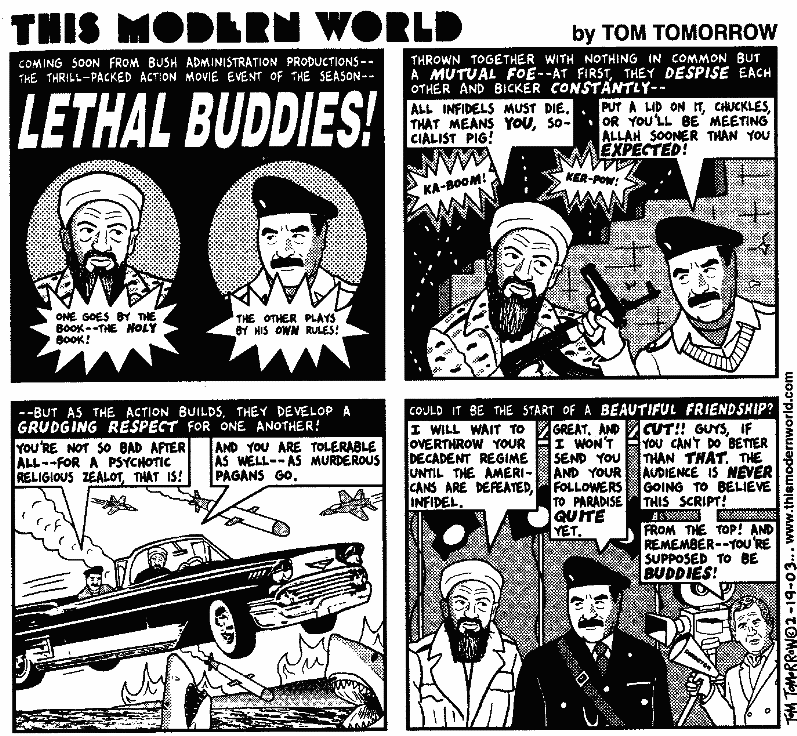
Will the Real Creator of the Lexicon Islamofascism Please Step Forward
Who first compounded the two words remains highly debatable and indeterminable to date. The OED, the bible of the English language, has not defined the word as to date; therefore, whether the compound will become a word in the English language remains indeterminate. If the OED deems that Islamofascism will become a word within the English language, countless hours of research will determine who created these lexicons first.
To date, Michael Savage, of "The Savage Nation," a nationally syndicated radio political commentary show, who currently airs on WCBM-AM 680 Mondays through Fridays 11 p.m. to 1 p.m. takes as the originator of the lexicon. Michael Savage in his third book, Liberalism is a Mental Disorder, published 2005 provides an appendix of lexicons he claims that he has created. Savage used the lexicon Islamofascist three times in a total of 27 pages in a chapter entitled "Unmasking Islamofascism" ("Liberalism is a Mental Disorder"). Savage defines Islamofascist as "dirty nightshirt-clad radical Muslims who walk with a Koran in one hand and a bloody, rusty knife in the other." Considering the title of the chapter, one finds the lexicon hardly used. After scanning Savage's entire second book, The Enemy Within, published in 2003, one cannot find the lexicon Islamofascism or Islamofascist between the 233 pages of text; therefore, Savage may not have originated the lexicon.
However, William Safire of The New York Times, said Christopher Hitchens, who writes for The Atlantic Monthly, Vanity Fair, and Slate popularized Islamofascisim" (Safire "Language: Islamofascisim, Anyone?"). Within the same article, Hitchens has gone on record declining coinage credit. He informed Safire that "he wrote the 9/11 attacks represented 'fascism with an Islamic face,' ..." (Safire "Language: Islamofascisim, anyone?"). Safire in the article, "Islamofascisim, anyone?" said, "The first use I can find is in The Independent of Sept. 8, 1990: 'Authoritarian government, not to say 'Islamo-fascism,'' wrote Malise Ruthven, 'is the rule rather than the exception from Morocco to Pakistan'" (Safire "Language: Islamofascisim, anyone?"). Safire's research not only refutes Savage's claim as being the first to create the lexicon, but Safire said a second article that the lexicon was used 1990 by the British ("Porn Beyond Sex: Some Coinages are 'More Equal Than Others'"). If the OED proves Safire as correct, what does this say about Savage and the truth of his daily political discourse on radio?
Analysis of Specific Work done with the Lexicon Islamofascist
Michael Savage on his radio show beats his chest in the political commentary jungle as the originator of the lexicon, Islamofascist. I purposefully constructed this phrase to do specific work and to illustrate a point as how political language is constructed in such a way as to subtly manipulate the mind of a less critical reader/listener. I deliberately crafted an image of Savage in the reader's mind of Tarzan or an ape within the jungle beating his fists on his chest, making menacing noises, showing full teeth, and probably jerking his head back and forth with drool thrown from the mouth in every direction. I rely on the readers/listeners imagination to conjure up old movie images to re-create an image of a creature taking a menacing posture to warn all who observe that "I am king of the jungle." By nudging the reader's mind towards this image of Tarzan or an ape, I have reduced Savage to sub-human at best with the Tarzan image or worse an animal with the ape image. With the word "jungle I have nudged the readers/listeners mind into visualizing the space of political commentary as uncivilized. "Jungle" conjures images of a wild natural state, a rain forest, where the phrase "survival of the fittest" typically applies.
My sentence construction relies on the assumption that humans will gravitate towards Machiavellian behavior-humans will seek strategies of maximum individual advantage-the reader/listener will gravitate towards concentrating on the I or the self in all behaviors including communicative behaviors (Chilton 17). One can argue that "individual interest can be maximized by the strategic sharing of information," but on the other hand, language not only consists of "sharing information but also used for signaling group identities. A group of us code and share information in our own language" so "people outside of the group cannot get the information, and, as an extra benefit, we all know who is in the group and who isn't" (Chilton 17-18). More can be accomplished functioning as a group versus as an individual, establishing one benefit, but a second benefit is "if you can guess other individuals' intentions, then machiavellian intelligence can make counter plans" (Chilton 18). This assumes communicative cooperation and that the writer/speaker presents a truthful message because readers/listeners have an "innate 'cheater detection' ability" (Chilton 21). Therefore, either the writer/speaker must convey the truth or mask the message within language that evades the readers/listeners 'cheater detectors.' This creates a space of freedom in which the recipient of the message may either accept the message as the truth or reject the message and challenge the writer/speaker to reveal one's logic or facts that support the message which leads to discourse and criticism.
This establishes three principles. First, one can think of “language and political behavior” as based on the “cognitive endowments of the human mind rather than as social practices” (Chilton 28). Second, “language and social behavior are closely intertwined” and most likely consist of “innate mechanisms of the mind” (Chilton 28). Third, “human linguistic and social abilities are not a straightjacket; rather language is linked to the human cognitive ability to engage in free critique and criticism” (Chilton 28).
Chilton states that political discourse uses four linguistic strategies but he reduces them to three. The three linguistic strategies are as follows: coercion, legitimization/delegitimization, and representation/misrepresentation (45-47). I will only look at legitimization/delegitimization in order to limit the scope of this article.
Strategies of delegitimization (of the other) and legitimization (of the self) conceptually lie at opposite ends of a scale (Chilton 47). Delegitimization as an extreme denies the humanness of the other, considers the other lacking moral character, in addition to not possessing rationality and sanity (Chilton 47). Henceforth, us (the collective self) is human, has moral character, and possesses rationality and sanity (Chilton 47). This is not a new concept. This concept probably extends back in time to when the first tribe encountered a second. Both tribes probably spoke two different languages. Millward supports this theory, “The first impulse upon meeting someone who did not understand their language and whose language they could not understand must have been to assume that this person was stupid, inferior, and probably dangerous” and so most likely the first political lexicon developed from this encounter, the lexicon barbarian (50). Barbarian meaning “a foreigner, one whose language and customs differ from the speaker's” (OED). Millward informs us that “the word barbarian is related to the word babble-a barbarian is someone whose speech is incoherent” (50). Hence, a barbarian is not like us and is other.
The concept of delegitimization (of the other) and legitimization (of the self) can be visualized on an XYZ plane in mathematics (Chilton 58). Chilton suggests locating the self or I at the center of the axis as viewed in figure 1.

Referring to the description of Savage “Michael Savage on his radio show beats his chest in the political jungle as the originator of the lexicon, Islamofascist,” by using the words, “beating his chest” I count on the reader considering him or herself a civilized person who has no need to beat their chest in order to express superiority (Chilton). Therefore, I rely on my readers to unite as a collective I forming us and that this collective us is civilized. Only other would perform such an action and Chilton places other in the same plane as us, but extremely far away from the origin of the XYZ plane (fig. 1). Most of us do not live in a jungle; therefore, I have placed Savage in a virtual space not only distant from most reader’s physical habitats but also in a space that most average readers have little specific knowledge. I rely on the fact that most people do not read critically.
Michael Savage defines Islamofascists as “Dirty nightshirt-clad radical Muslims who walk with a Koran in one hand and a bloody, rusty knife in the other” (“Liberalism is a Mental Disorder”). In very few words, he has created a terrifying image. As I have done in my phrase, Savage has quickly instilled imagery in the reader’s mind that carries nothing but negative connotations. Both of us have created in the reader’s mind a physical plane or space containing an us and an other. I will argue that Savage has created the most heinous of descriptions in defining the lexicon, Islamofascist.
Dirty nightshirt ridicules the dress of particular sects of the Islam religion. The proper name for the dirty nightshirt is a tunic. Men and women wear tunics in religious observance because the Koran says “…to the believing men that they should lower their gaze and guard their modesty; that will make for greater purity for them; and Allah is well acquainted with all that they do…” (Quran 24:30-31). Plus, Savage uses the word dirty as a modifier to place in the readers/listeners mind an image that Islamofascists are not civilized people. Savage implies Islamofascists are less human because they do not bathe or wash their clothes regularly. I argue that poor people in this country do not bathe or wash their clothes on a regular basis because they cannot afford to. Intelligent people understand and accept this as an outcome of poverty.
Savage uses the word radical accurately. A radical in political terms is the following: “An advocate of ‘radical reform;’ one who holds the most advanced views of political reform on democratic lines; one who is an advocate of any thorough political or social change; one who belongs to the extreme section of a political party; a member or supporter of a radical movement” (OED). Radical precisely defines this group’s political ideologies but too many readers/listeners will forget the word radical before Muslims and associate all Muslims with the lexicon versus only radical Muslims.
The phrase “Koran in one hand and a bloody, rusty knife in the other” instills a frightening image that not think even Hollywood could make worse. Walk with a Koran in one hand suggests that Islamofascists hide behind religion and use religion as a shield to defend their actions, “This is what God expects us to do. We are carrying out God’s will.” Placing the adjectives in front of the noun knife creates an unforgettable image: an image that radical Muslims are sub-human, without morals whatsoever, irrational, clearly not sane, and essentially killing machines. One can easily envision Jason from “Friday the Thirteenth” walking down the street. Only his goalie mask has disappeared.
In a chapter titled “Unmasking Islamofascism,” Savage uses the lexicon three times in a text with approximately 10,530 words. To arrive at this figure, I counted the number of words in an average full line of text equaling 13 words, counted the average number of sentences per page; 30 sentences, then multiplied by the number of pages in the chapter, 27 pages to arrive at an approximation of 10,530 words within the text. I scanned the text for the lexicons Islamofascism and Islamofascist to find the word Islamofascism used once, Islamofascist and its plural Islamofascists each used once. I find this intriguing for three reasons. One, Savage on the radio often claims he coined the lexicon and two, in a chapter with the title “Unmasking Islamofascism” one would think someone who coined the lexicon would use it more often, and three, because he has given the lexicon the most colorful of all definitions.
Examining the sentence structures that use the lexicons reveal little. “Because those who speak out against Islamofascism are labeled intolerant” tells us little about Islamofascism, but reveals those who use the lexicon are considered “intolerant” (Savage “Liberalism is a Mental Disorder” 48). “The Islamofascists are today, right now, plotting a nuclear attack on our country” again reveals little about Islamofascists but does instill fear in the reader/listener with the phrase “nuclear attack” (Savage “Liberalism is a Mental Disorder” 49). The combination of words and the use of the phrase “our country” places this possible event in the readers/listeners mind exactly where Savage wants it, right next to I and anything that refers to I in writing/speech grabs the readers/listeners attention according to Machiavellian behaviors. The reader/listener can only think of self and associates the placement of this bomb in one’s own backyard, one’s own street, one’s own neighborhood, town or city. The best way to stimulate people to act is through the use of fear tactics.
Providing the full text around the last sentence was necessary because the single sentence has little significance without it.
The sentence using the lexicon suggests the religion of Islam creates the problem and not radical Islamic terrorists and also takes a shot at liberals as a possible cause as to why radical Islamic terrorists may get the opportunity to detonate a dirty bomb in the U.S.In spite of warnings such as this, [“this” referring to the threat of detonating a dirty bomb in this country] the libs refuse to acknowledge the truth about Islamofascists: Everywhere they go, they [Islamofascists] spread war. Just look at the fifteen major religion-based conflicts in the world today. From Afghanistan to Bosnia, Chechnya to Indonesia, Kosovo to Nigeria, the Philippines to the Sudan. Every last one of them involves Muslims fighting with their neighbors (Savage “Liberalism is a Mental Disorder” 50).
Savage does make it perfectly clear as to what he means and does not mean. On page 37, Savage said “…let me say that this is not a blanket condemnation of Islam or all Muslims” (“Liberalism is a Mental Disorder”). He continues, “I’ll be the first to say that Islam doesn’t kill people-Islamists do. But that’s just the point. Every single major terrorist attack against the United States has been committed by radical Muslims (Savage “Liberalism is a Mental Disorder” 37). Savage makes it clear he understands Islam and Muslims are not the problem but only a small percentage of religious fanatics create the problem and the problem is in the way that they interpret the Koran. This disclaimer if you will, takes up one-half page of his chapter and appears about half-way into the chapter. I believe that less critical readers will forget this particular portion of what he said and simply turn to the index to find Savage’s definition of the lexicon and when taken out of context contains extremely inflammatory and dangerous language.
Papers that are not American publications such as the BBC and Asia Times Online, watch Bush’s usage and the American press’ use of these lexicons closely. According to Greene in an August 12, 2006 article said that President Bush used the compound words on “two separate occasions in the past week” (“Bush’s Language Angers US Muslims”). Asia Times Online maintains their finger on the pulse with vigor. Lobe said, “Nexis cited 56 uses of Islamofascist or Islamofascisim in separate programs aired by Fox News, compared with 24 by CNN, 115 different articles or columns in the Washington Times and eight in the Washington Post, Over 100 times in the New York Sun compared to 50 times in the New York Times over the same time period in 2006” (“Fascists? Look Who’s Talking”). Lobe illustrates that conservative publications (publications with political ideology leaning towards the right) are more likely to use the lexicons, Islamofascist and Islamofascisim than liberal publications (publications with political ideology leaning to the left.)
Green in a BBC news article discusses how American Muslims are angered by these new lexicons Islamofascist and Islamofascism (“Bush’s language angers US Muslims”). Ahmed Younis, the national director of the Muslim Public Affairs Council (Mpac) said, “The use of the term casts a shadow upon Islam and bolsters the argument that there is a clash of civilizations, between Islam and the West” (“Bush’s language angers US Muslims”). According to Greene, Younis said “it was wrong to link the actions of violent Muslims to their religion” (“Bush’s language angers US Muslims”). Younis himself said, “There is nothing Islamic about their fascism. The Prophet [Muhammad] and the Koran clearly articulate that this type of activity is outside the bounds for Muslims” (“Bush’s language angers US Muslims”). During the week of August 12, 2006, President Bush used the terms on two separate occasions. The chairman of the Council on American-Islamic Relations, Parvez Ahmed wrote to Bush and condemned his “use of ill-defined hot-button terms,” which, Ahmed said, “feeds the perception that the war on terror is actually a war on Islam” (“Bush’s language angers US Muslims”). Neither the White House nor the State Department responded to either Ahmed or the BBC for clarification setting up a clear and grave message.
Daniel Benjamin, a security expert of the Center for Strategic and International Studies agreed that these terms are meaningless. “There is no sense in which jihadists embrace fascist ideology as it was developed by Mussolini or anyone else who was associated with the term. This is an epithet, a way of arousing strong emotion and tarnishing one’s opponent, but doesn’t tell us anything about the content of their beliefs.” I have already illustrated this point where people in order to reduce someone else to sub-human or other will attach the word fascist to the end of any other word using the term fascist as a suffix for the purpose of conjuring negative connotations in the readers/listeners mind.
According to Greene, Zeinab Chami, a Muslim community activist in Dearborn, Michigan said, “the administration had seized upon a new term to frighten people. “The word terrorism has lost its edge… but such language does have an effect on how Americans view Muslims (“Bush’s language angers US Muslims”). As a writing tutor I can support this view but rather from the Muslim viewpoint of fear. My Muslim tutees fear expressing their viewpoints. As international students, they write about events that occurred in their homelands and guard their dialog with me. I suppose they fear that I will judge what they have said. I cannot deny their experiences for to do so would demonstrate my ignorance that all views hold some semblance of the truth. These students write their viewpoint of the truth. All views must be considered if we are to arrive at the truth with a capital T.
Green quoting Younis said, “the President’s linking of Islam with Fascism would alienate ‘moderate Muslims’ who are needed at the front line of any effort to counter terrorism or extremism by Muslims,” yet Chami claims “it is already too late… the Muslim community here [in the U.S.] do not believe in the administration” (“Bush’s language angers US Muslims”). Chami continues, “They [the U.S. Muslim community] rightfully discount much of what President Bush says. They have closed their ears to him” (“Bush’s language angers US Muslims”). In other words, Bush has alienated the Muslim community through the use of these lexicons.
According to Shanglin, Ingrid Mattson, president of the Islamic Society of North America said, “I am convinced that it is not only inaccurate, [‘recasting the war on terrorism as a war on Islamic fascism’] but unhelpful. If our major concern is security, security of this country, [the U.S.] this is a term that has very bad resonance in the Muslim majority world and makes us feel uncomfortable here” (“U.S. Muslim Group’s Leader: Bush Term ‘Islamic Fascism Inaccurate”). Mattson said the group argues for a change in rhetoric away from the lexicon Islamofascism and “hopes that there can be some adjustment to this language and that we are trying to voice that opinion to those who are circulating this term” (Shanglin). From the number of times the lexicon has been used in the past year by major media in the past year, and as cited by Lobe, it appears that Mattson has a monumental task in front of her.
The national media and President Bush literally dig a grave for America by using these compound lexicons Islamofascist and Islamofascism when we consider how these lexicons are inflaming Muslim Americans and the rest of the world at large. Popularity and increased usage of the compounds Islamofascist and Islamofascism do not necessarily make them precise definitions for a group of people we have no precise one-word definition for. The fact that people are notoriously lazy speakers and gravitate towards words with less syllables does not constitute an acceptable reason for bringing the word into the English language. Hopefully, the OED will have the good common sense not to accept the word into the dictionary or if they do, they will label Islamofascist and Islamofascism as derogatory terms for radical Muslim terrorists. Only time will tell which choice the OED will make.
Chilton, Paul. Analyzing Political Discourse: Theory and Practice. New York: Routledge, 2004.
Greene, Richard Allen. “Bush’s Language Angers US Muslims.” BBC News. 12 Aug. 2006. Sourced 6 Dec. 2006. http://news.bbc.co.uk/2/hi/americas/4785065.stm.
Lobe, Jim. “Fascists? Look Who’s Talking.” Asia Times Online. 2 Sept. 2006. Sourced 5 Dec. 2006. http://www.atimes.com/atimes/Middle_East/HI02Ak04.html.
Millward, C. M. A Biography of the English Language. 2nd ed. Fort Worth: Harcourt, 1996.
Nunberg, Geoffrey. Going Nucular: Language, Politics, and Culture in Confrontational Times. New York: Public Affairs, 2004.
Orwell, George. “Politics in the English Language.” 1946. Ed. Vincent Ferraro. Resources for the Study of International Relations and Foreign Policy. Apr. 2006. South Hadley, MA. Sourced 9 Nov. 2006. http://www.mtholyoke.edu/acad/intrel/orwell46.htm.
Oxford English Dictionary: The Definitive Record of the English language. 2nd ed. Online. Oxford: Oxford University Press, 2006. Sourced 13 Nov. 2006. http://www.oed.com.
Pollitt, Katha. “Islamo-Fascism--Take Two” The Nation. 25, Sept. 2006. Sourced 13, Dec. 2006. http://www.thenation.com/doc/20060925/pollitt.
The Holy Quran. Trans. Usuf Ali, Marmaduke Mohammad Pickthall, and M. H. Shakir. USC- MSA Compendium of Muslim Texts. University of Southern California. Sourced 5 Dec. 2006. http://www.usc.edu/dept/MSA/quran/024.qmt.html.
Raz, Guy. “Exploring the Language of Post-Sept. 11 U.S. Policy: Overview.” All Things Considered. Exploring the Language of Post-Sept. 11 U.S. Policy: A Five Part Series on the Political Lexicon of Our Times. Natl. Public Radio. WYPR-FM, Baltimore. 30 Oct. 2006. NPR.org. Sourced 13, Nov. 2006. http://www.npr.org/templates/story/story.php?storyId=6406405.
---. “Part 2: Why 'Islamofascism' May Create New U.S. Enemies.” All Things Considered. Exploring the Language of Post-Sept. 11 U.S. Policy: A Five Part Series on the Political Lexicon of Our Times. Natl. Public Radio. WYPR-FM, Baltimore. 31 Oct. 2006. NPR.org. Sourced 13, Nov. 2006. http://www.npr.org/templates/story/story.php?storyId=6412169.
Safire, William. “Islamofascism: Careful How We Name That Enemy.” The New York Times Magazine. 1 Oct. 2006.
---. “Language: Islamofascism, Anyone?” The New York Times. 1 Oct. 2006. Sourced 6 Dec. 2006. http://www.iht.com/articles/2006/10/01/news/edsafire.php.
---. “Porn Beyond Sex: Some Coinages are ‘More Equal Than Others.” The New York Times Magazine. 5 Nov. 2006.
Savage, Michael. The Enemy Within: Saving America from the Liberal Assault on our Schools, Faith, and Military. Nashville, TN: WND Books, 2003.
---. Liberalism is a Mental Disorder: Savage Solutions. Nashville: Nelson Current, 2005.
Shanglin, Luan. “U.S. Muslim Group’s Leader: Bush’s Term ‘Islamic Fascism’ Inaccurate.” China View. 2 Sept. 2006. Sourced 5 Dec. 2006. http://news.xinhuanet.com/english/2006-09/02/content_5038118.htm.
Chilton, Paul. Analyzing Political Discourse: Theory and Practice. New York: Routledge, 2004.
Greene, Richard Allen. “Bush’s Language Angers US Muslims.” BBC News. 12 Aug. 2006. Sourced 6 Dec. 2006. http://news.bbc.co.uk/2/hi/americas/4785065.stm.
Lobe, Jim. “Fascists? Look Who’s Talking.” Asia Times Online. 2 Sept. 2006. Sourced 5 Dec. 2006. http://www.atimes.com/atimes/Middle_East/HI02Ak04.html.
Millward, C. M. A Biography of the English Language. 2nd ed. Fort Worth: Harcourt, 1996.
Nunberg, Geoffrey. Going Nucular: Language, Politics, and Culture in Confrontational Times. New York: Public Affairs, 2004.
Orwell, George. “Politics in the English Language.” 1946. Ed. Vincent Ferraro. Resources for the Study of International Relations and Foreign Policy. Apr. 2006. South Hadley, MA. Sourced 9 Nov. 2006. http://www.mtholyoke.edu/acad/intrel/orwell46.htm.
Oxford English Dictionary: The Definitive Record of the English language. 2nd ed. Online. Oxford: Oxford University Press, 2006. Sourced 13 Nov. 2006. http://www.oed.com.
Pollitt, Katha. “Islamo-Fascism--Take Two” The Nation. 25, Sept. 2006. Sourced 13, Dec. 2006. http://www.thenation.com/doc/20060925/pollitt.
The Holy Quran. Trans. Usuf Ali, Marmaduke Mohammad Pickthall, and M. H. Shakir. USC- MSA Compendium of Muslim Texts. University of Southern California. Sourced 5 Dec. 2006. http://www.usc.edu/dept/MSA/quran/024.qmt.html.
Raz, Guy. “Exploring the Language of Post-Sept. 11 U.S. Policy: Overview.” All Things Considered. Exploring the Language of Post-Sept. 11 U.S. Policy: A Five Part Series on the Political Lexicon of Our Times. Natl. Public Radio. WYPR-FM, Baltimore. 30 Oct. 2006. NPR.org. Sourced 13, Nov. 2006. http://www.npr.org/templates/story/story.php?storyId=6406405.
---. “Part 2: Why 'Islamofascism' May Create New U.S. Enemies.” All Things Considered. Exploring the Language of Post-Sept. 11 U.S. Policy: A Five Part Series on the Political Lexicon of Our Times. Natl. Public Radio. WYPR-FM, Baltimore. 31 Oct. 2006. NPR.org. Sourced 13, Nov. 2006. http://www.npr.org/templates/story/story.php?storyId=6412169.
Safire, William. “Islamofascism: Careful How We Name That Enemy.” The New York Times Magazine. 1 Oct. 2006.
---. “Language: Islamofascism, Anyone?” The New York Times. 1 Oct. 2006. Sourced 6 Dec. 2006. http://www.iht.com/articles/2006/10/01/news/edsafire.php.
---. “Porn Beyond Sex: Some Coinages are ‘More Equal Than Others.” The New York Times Magazine. 5 Nov. 2006.
Savage, Michael. The Enemy Within: Saving America from the Liberal Assault on our Schools, Faith, and Military. Nashville, TN: WND Books, 2003.
---. Liberalism is a Mental Disorder: Savage Solutions. Nashville: Nelson Current, 2005.
Shanglin, Luan. “U.S. Muslim Group’s Leader: Bush’s Term ‘Islamic Fascism’ Inaccurate.” China View. 2 Sept. 2006. Sourced 5 Dec. 2006. http://news.xinhuanet.com/english/2006-09/02/content_5038118.htm.
The Home Page · The Integral Worm · My Resume · My Show Car · My White Papers · Organizations I Belong To
Contact Me · FAQ · Useful Links